







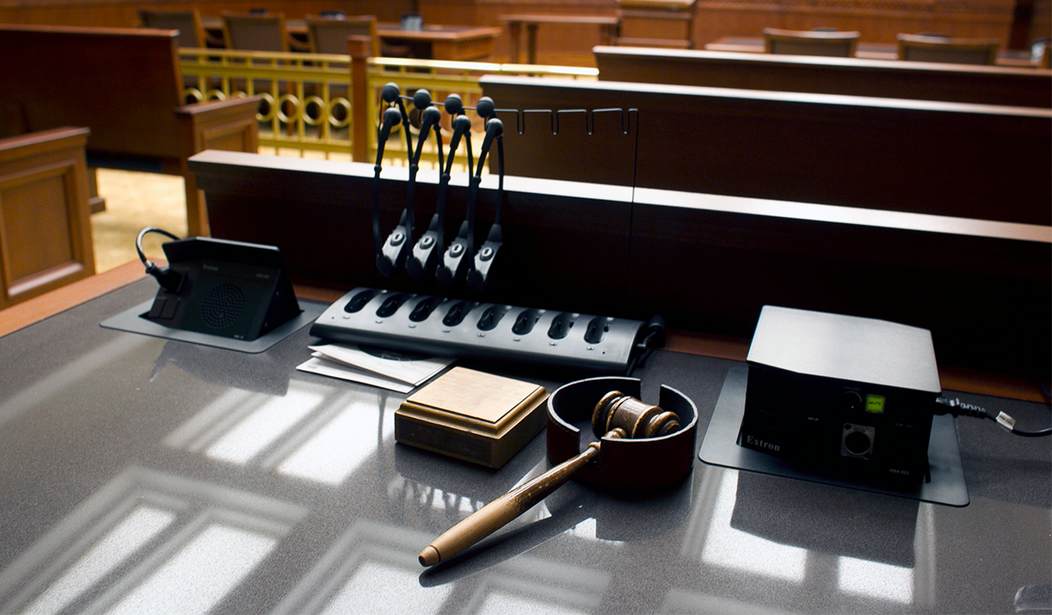
President Donald Trump just picked up two significant federal appellate vacancies, and the legal world knows exactly what that means.
Chief U.S. Circuit Judge Debra Ann Livingston of the New York-based U.S. Court of Appeals for the Second Circuit notified the White House that she's taking senior status on July 1, 2026.
Chief U.S. Circuit Judge Jeffrey Sutton of the Cincinnati-based Sixth Circuit Court of Appeals also notified the administration that he will assume senior status, on Oct. 1, 2026.
These announcements are on the federal judiciary's official vacancies list.
Livingston leads one of the most powerful courts in the country; the Second Circuit covers New York, Connecticut, and Vermont, handling major financial regulation cases, immigration disputes, national security questions, and constitutional challenges that create nationwide ripples.
Sutton leads the Sixth Circuit, covering Ohio, Michigan, Kentucky, and Tennessee. His court regularly hears cases involving gun rights, religious liberty, federal agency authority, and state sovereignty. Sutton has earned a reputation as a careful constitutional thinker with influence beyond his circuit.
When chief judges step into senior status, they retain a reduced caseload, but their full-time seats become available, creating lifetime appointments for new judges.
Trump now has the chance to appoint two new appellate judges in circuits that already play a major role in shaping federal law. It's not simply procedural trivia; it's a structural change.
I don't need to tell you this showed up on Democratic radar screens, triggering their alarm. During Trump's first term, he appointed over 200 federal judges, including three Supreme Court justices. Many of those nominees embraced textualism and originalism, reading statutes as written, while grounding constitutional interpretation in historical meaning.
Lefty critics argue that such judges limit policy flexibility, while supporters argue that judges aren't legislators wearing robes.
Both sides, however, understand the stakes.
The overwhelming majority of federal cases are resolved through federal appellate courts, while the Supreme Court reviews just a fraction, meaning the Second and Sixth Circuits decide thousands of cases that never reach Washington.
Livingston and Sutton were both appointed by President George W. Bush: Livingston in 2007, becoming chief judge in 2020, while Sutton was appointed in 2003, becoming chief judge in 2020 as well. Their departure from active service doesn't signal a crisis, but it does create rare openings in influential courts.
Trump's potential nominees come from a pool of federal district judges, respected constitutional scholars, or state supreme court justices with strong originalist credentials. During his first term, Trump relied on recommendations from legal organizations focused on constitutional interpretation, a pattern that might continue.
What the left finds frustrating is the simple logic that lifetime appointments outlast election cycles. While campaign rhetoric fades, judicial opinions remain binding.
Critics on the right suggest that reshaping the judiciary amounts to partisan court packing, highlighting lefty presidents nominating such constitutional geniuses as Supreme Court Justices Kagan, Sotomayor, and Brown-Jackson.
That claim also ignores a basic fact: the Constitution clearly spells out that the President nominates and the Senate confirms or rejects, while Trump continues to use the authority voters gave him.
Will the room temperature rise as confirmations move forward? Do I make my shoes smell?
Confirmation hearings have grown more contentious over the past 30 years, with senators using them to perform for the camera rather than probe for legal reasoning.
Trump has shown consistent persistence; his first term transformed several circuits that once leaned heavily progressive. With Livingston and Sutton assuming senior status this year, that transformation continues.
Federal courts decide how far agencies regulate, how states enforce their laws, and how constitutional protections apply in modern disputes — decisions that influence immigration enforcement, gun ownership, religious expression, business regulation, and executive authority.
Shaping those outcomes boils down to judicial philosophy.
Trump has clearly shared his belief that he wants judges to apply the law as written, resisting creative expansion of federal power. Opponents, however, want judges who treat the Constitution as an evolving entity.
That divide will clearly sharpen during the coming nomination process.
America has reached another turning point, not with protests, rallies, or speeches, but with two formal notices filed in the quiet machinery of the judiciary.
That's how this works, illustrating how long-term change should happen.
Recommended: Royal Theater, Silent Streets: Loud on Epstein Ties, Silent on the Roving Gangs
Editor’s Note: With President Trump back in the White House, the state of our Union is strong once again.
Support PJ Media’s coverage of the president’s State of the Union Address and help us report the truth the radical left doesn’t want you to hear. Join PJ Media VIP and use promo code POTUS47 to get 74% off your VIP membership during our SOTU promotion!


Join the Conversation
VIP members get the ability to comment on articles.