


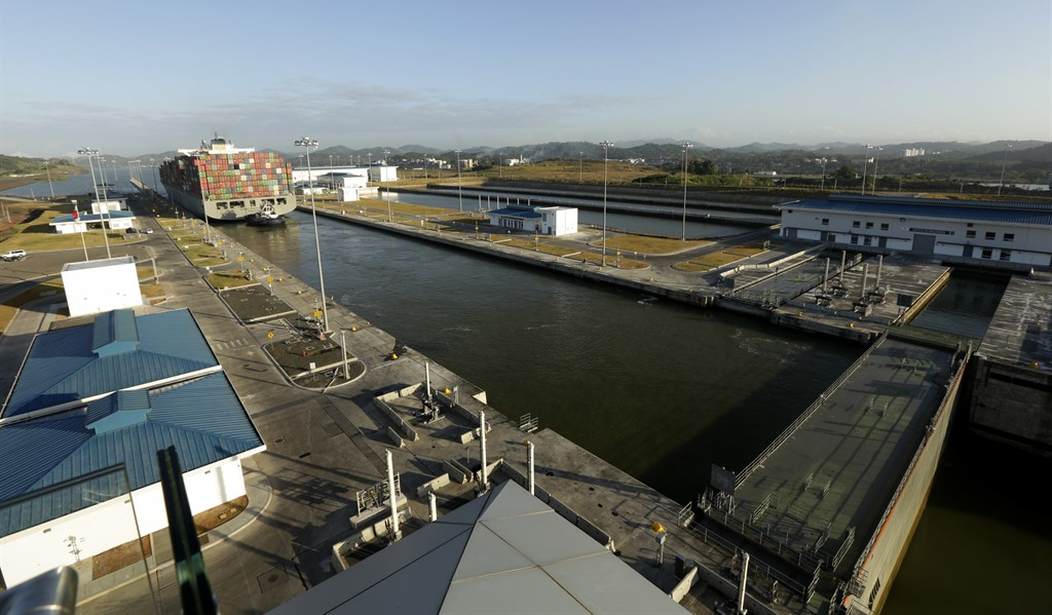
A shopkeeper who has to rebuild from the results of a riot expects to be protected the next time trouble brews, not expecting the deed to his storefront to be handed to the same crowd that destroyed his windows.
History tends to reward people who secure order, not those who pretend chaos simply sorts things out by itself.
On December 31, 1999, the country of Panama assumed complete control of the Panama Canal, closing a chapter that started long before treaties and ceremonies.
Instead, the canal's history began with violence, instability, and a hard lesson about protecting people, commerce, and a narrow strip of land.
However, before all of that happened, a drunken American wanted a slice of fruit.
A Riot Over a Slice of Fruit
Before there was a canal, there was a railroad performing the same task. People from New York wanting to try their luck in the California Gold Rush would sail to Gran Colombia, the specific port site in modern-day Panama, a route that reduced travel time by several months because they didn't have to sail around Cape Horn.
Using local labor, a railroad was built to ferry people to their respective coastlines, where they'd set sail. Before they'd leave one side of the isthmus, American businessmen opened stores, taverns, and hotels to provide a distraction for travelers waiting for their train. And, of course, there was all that money to be made.
Things were quietly functional until the Watermelon Riot of 1856, which erupted along the Panama Railroad. An argument ensued between a drunken American and a local vendor over a 10¢ slice of watermelon.
Tensions escalated to the point where the vendor fired a gun at the American, and shortly afterward, mobs surged through Panama City.
U.S. businesses tied to the railroad were looted and then burned; several Americans and Panamanians died. Once the rail service stopped, any semblance of order disappeared.
The rioting exposed an open wound in the form of unrest; commerce couldn't survive unless there were a force standing behind it, providing stability, but not goodwill.
Why Control Became Necessary
As I mentioned before, there were good reasons why the United States maintained a presence in Panama: the route mattered because traffic to the gold rush depended on it, as did global trade.
When violence shut down the railroad, a message landed clearly: Whoever controlled the passage controlled the peace.
The Watermelon Riot was the first time American forces needed to intervene because of repeated clashes along the rail line. As time passed, the responsibility for peace hardened into policy.
Soon, order prevailed.
Building the Impossible
When President Teddy Roosevelt ordered the construction of the canal, he was aware that it would rank among the greatest engineering feats in history. Workers carved the canal through jungle, disease, and terrain that defeated earlier efforts.
The railroad shortened global shipping, but the canal improved routes, tying oceans together. The Panama Canal also became an unmatched strategic asset.
American administrations kept the canal open, neutral, and secure for decades, through world wars. Trade surged because ships passed through regions once filled by rioting and sabotage.
The Push to Give It Away
Pressure grew for the United States to surrender control of the canal. By the 1970s, arguments centered on symbolism and sovereignty, with critics framing the American presence as outdated. People supporting the transfer promised goodwill and stability.
Unfortunately for the supporters, they probably ate fermented fruit because they ignored history; the canal existed because chaos once ruled the isthmus, and authority was the solution to that problem.
Removing authority invited uncertainty back in.
A Deal Sealed by Idealism
President Jimmy Carter signed agreements that returned the canal to Panama by the end of 1999, with supporters praising moral clarity and critics warning of strategic blindness. Carter and supporters forgot that the canal had never been a vanity project; it was instead a guarantee.
Ceremonies marked the moment when Panama took over as progress. However, history provided zero evidence that surrender strengthened unity, only proving that achievements built through sacrifice can be traded away by leaders chasing approval and legacy.
Final Thoughts
The shopkeeper learned fast whether protection still stands after the smoke clears. The Panama Canal existed because order replaced riot, and giving it away didn't erase the past; it ignored it.
History rarely forgives nations that forget why strength mattered in the first place.
Was giving the canal to Panama the right choice? Before answering yes, remember how the Trump administration reacted after learning that China was set to purchase areas along the canal.
I would hope that'd be enough of an answer.
PJ Media's YUGE Christmas and New Year's sale is on — now at our lowest rate of the year! This huge sale on our VIP Memberships ends on January 1, so make sure you join the club to get our special behind-the-scenes look at the news. Receive 74% off by following this link and using our promo code MERRY74.




Join the conversation as a VIP Member