





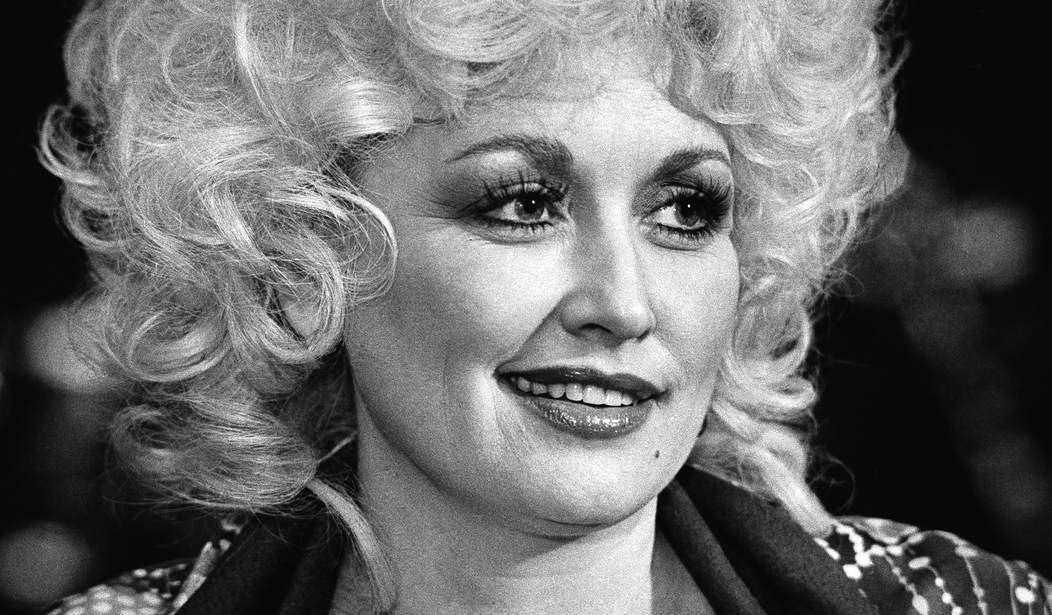
I’ve written extensively here and on my Substack about the musical influences on my life. My mom and aunts were the primary agents of my musical exposure. My mom was a massive fan of The Carpenters and early Beatles, and she had the radio on all the time in the car. My aunts opened my ears to what we now call “classic rock.”
My dad was a different story. His musical tastes were much narrower in the ‘70s. I remember that he had a sticker advertising WPLO, a country station, on his Jeep, but I remember him listening to WBIE (I can still hear the jingle: “WBIE! Georgia’s! Country! Giant!”). He also had two 8-tracks: One was a greatest-hits compilation from Porter Wagoner and Dolly Parton, and the other was what was then Dolly’s current album, Here You Come Again.
The title track connected my parents’ distinct musical worlds. Since it was Dolly’s first hit to crossover to the pop music marketplace, I heard it on the radio in our apartment or in the car with my mom, and I also heard it on the 8-track when I was riding with my dad.
I might be wrong, but I think "Here You Come Again" was the first radio song that I learned all the lyrics to. My mom also had the sheet music, and I remember her playing it as I sang along. It was one of my favorite songs on the radio at the time, and it remains my favorite Dolly track.
Related: Dolly Parton Passes Away at 80
The album was part of a calculated move on the part of Dolly and her management team to expand her horizons beyond country radio. Her previous album, 1977’s self-produced New Harvest … First Gathering, deliberately incorporated pop and R&B elements but made no splash outside the country marketplace.
For Here You Come Again, Parton turned to Los Angeles-based producer Gary Klein, who enlisted top-notch studio musicians, including keyboardist (and later ultra-pop producer) David Foster and drummer Jim Keltner, to play on the album. The title track, which was also to serve as the first single, wasn’t one of Dolly’s compositions. Instead, “Here You Come Again” came from the pens of Brill Building stalwarts Barry Mann and Cynthia Weil.
Side note: I was precocious enough at age five to be able to read the lyrics and credits on the sheet music. I saw those names, and I couldn’t believe that people would sing songs that other people wrote unless they were in a movie!
Even though the album — and especially its title cut — was part of a specific strategy to launch Dolly to pop stardom, Dolly wasn’t about to leave country behind. She talked Klein into adding subtle steel guitar to “Here You Come Again,” and that small detail helped ground the song in both stylistic camps.
Listeners could tell that this song was something different from the intro. Mix Online explains:
The rhythm section on the track included Dean Parks (guitar), David Foster (keyboards), David Hungate (bass) and Jim Keltner (drums). The track opens with Foster’s Fender Rhodes. He recalls the session as fairly groundbreaking:
“I played the Fender Rhodes on the basic track,” Foster says. “Then I came up with the idea of duplicating exactly the same part on the acoustic piano, something I—or to my knowledge, no one—had ever done before. It became an interesting sound that years later became a stock ‘push of a button’ sound on many synthesizers, which some even called ‘Fosterized.’ “Also, I remember that while waiting to overdub the acoustic piano, no music was playing in my headphones and the tape op [second engineer] suddenly realized that he still had every track In Record and he ended up erasing about the first 20 seconds of the master,” Foster continues. “They had to go to an earlier take, splice them together and then I did my overdub acoustic piano part.”
Keltner and engineer Armin Steiner said that Dolly’s scratch vocals, which she recorded live with the band, were so good that some of them made the finished record. The arrangement proved that even though “Here You Come Again” was tailor-made for both country and pop radio, it wasn’t a simple track.
The song crosses five keys throughout its journey, which made the song even more effective. If you're not musically inclined, you may think I'm geeking out a bit; if so, skip a paragraph or two. ChatGPT helped me chart out those key changes.
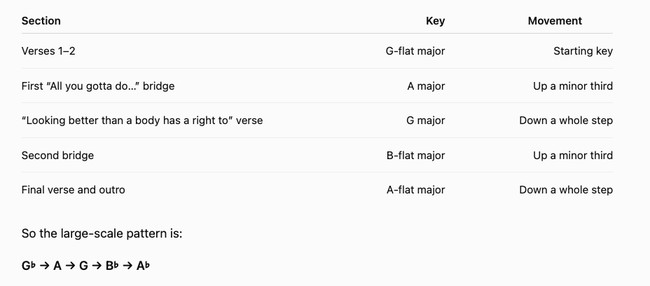
The key changes get Mann and Weil's point across: Whenever Dolly (as the protagonist) thinks she’s gotten it all together, here comes that old flame back into her life to knock her off her equilibrium. Each time she thinks she has regained her footing, the song returns in a new key, familiar but no longer quite where she left it. Even before I was better versed in music, I knew that there was something about the sound of the song that was interesting and different.
The crossover gamble paid off. “Here You Come Again” hit number three on the Billboard Hot 100 and number two on the easy listening charts, but it also spent five weeks atop the country charts and won her a Grammy for Best Country Vocal Performance, Female — her first. Better still, it launched her career into the stratosphere.
Recommended: Pour Out a Penny: Columbia House Is Finally Calling It Quits
The band and crew recognized something special in Dolly. Her talent and personality dovetailed to make her more than just an ordinary entertainer.
“As a human being—forget about her great gifts as an entertainer— this is the one of the most delightful people we’ve ever had in the entertainment industry,” Steiner told Mix Online. “As a human being, she’s extraordinary. And she has such a beautiful voice, an incredibly identifiable sound, identifiable diction; she’s a fine writer and a great interpreter of lyrics. You believed what she sang. It’s all part of the talent and part of the human being. That’s part of the God-given talent you’re born with. It’s not something you can teach.”
Nearly half a century later, I can appreciate the craftsmanship that I couldn’t have understood at five: Foster’s layered keyboards, the subtle steel guitar, the improbable sequence of key changes, and Dolly’s effortless vocal holding it all together. But when I hear “Here You Come Again,” I still hear my mom playing it on the piano, the radio in her car, and that 8-track in my dad’s Jeep.
Dolly made a record that she intended to cross musical boundaries without leaving its country identity behind, and in our family, it did exactly that. It brought my parents’ different musical worlds together and gave me a song that has followed me for most of my life. Now, whenever those opening notes begin, here she comes again — and for three minutes, I’m five years old all over again.
Dolly Parton proved that you can reach a wider audience without abandoning the people and principles that brought you there. That’s a lesson worth remembering well beyond the music business.
PJ Media will keep bringing you thoughtful commentary, deeper dives, and the stories the corporate media would rather ignore. Join PJ Media VIP today and get 60% off with the promo code FIGHT. Your membership directly supports the work we do — and helps us keep telling the truth without sanding off all the interesting edges.


Join the Conversation
VIP members get the ability to comment on articles.