





Biblical archaeology has always fascinated me. It’s interesting to see the findings that archaeologists come up with, particularly when the digs turn up evidence that bolsters the veracity of biblical accounts.
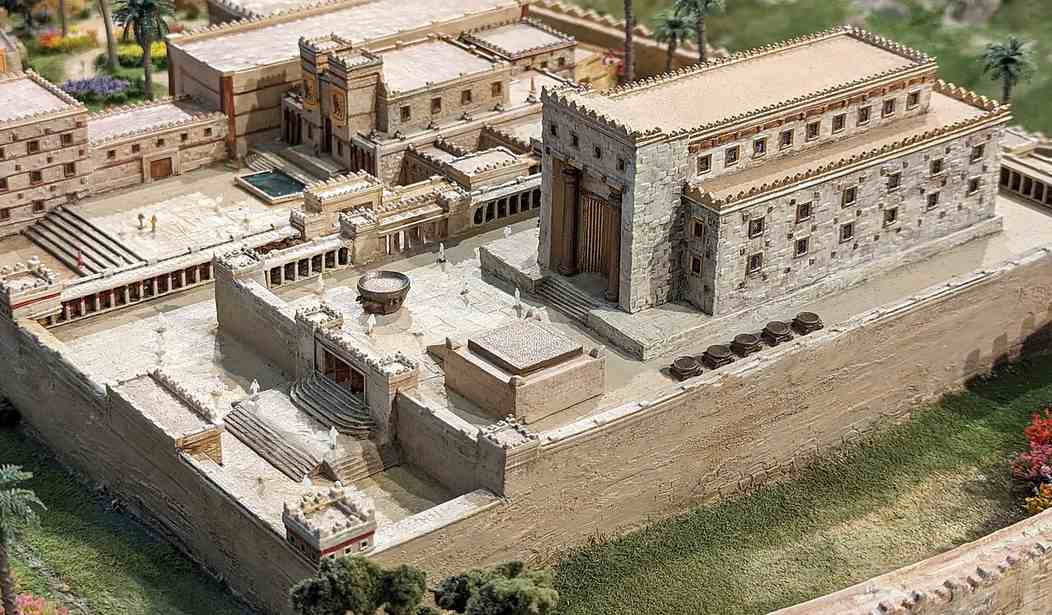
A recent find has scholars taking a look at the destruction of the First Temple in Jerusalem. 2 Chronicles 36:17-21 gives us that account:
Therefore he brought up against them the king of the Chaldeans, who killed their young men with the sword in the house of their sanctuary and had no compassion on young man or virgin, old man or aged. He gave them all into his hand. And all the vessels of the house of God, great and small, and the treasures of the house of the Lord, and the treasures of the king and of his princes, all these he brought to Babylon. And they burned the house of God and broke down the wall of Jerusalem and burned all its palaces with fire and destroyed all its precious vessels. He took into exile in Babylon those who had escaped from the sword, and they became servants to him and to his sons until the establishment of the kingdom of Persia, to fulfill the word of the Lord by the mouth of Jeremiah, until the land had enjoyed its Sabbaths. All the days that it lay desolate it kept Sabbath, to fulfill seventy years.
Sarah Katz writes at Israel365 News:
Charred beams pulled from the earth in Jerusalem’s City of David are forcing archaeologists to rewrite their timeline of the First Temple’s destruction — and offering the most tangible physical evidence yet of the catastrophe the Bible describes in stark, unflinching detail.
Excavators working the Givati Parking Lot dig, a joint project of the Israel Antiquities Authority and Tel Aviv University inside the Jerusalem Walls National Park, uncovered massive wooden beams burned when Nebuchadnezzar’s Babylonian army destroyed the First Temple in 586 BCE. The beams once formed the roof of an inner courtyard in a First Temple-period building. When the structure collapsed in the fire, the beams fell to the floor — and there they stayed for roughly 2,600 years, preserved by an unlikely agent: melted plaster.
“The beams appear to have served as the roof of an inner courtyard in a building from the First Temple period,” said Efrat Bocher, who directed the excavation. “During the destruction, they collapsed onto the floor. We believe that the plaster cladding of the building’s walls, melted by the fire, covered the charred wooden beams, and ultimately enabled their exceptional preservation.”
The miracle of this find is that the plaster preserved the burned timber. Furthermore, one of the coolest things about the discovery is that the growth rings that are still visible are giving archaeologists a better ability to pinpoint the date of the destruction of the First Temple.
“It is very rare in Israel to find wood with such a large number of growth rings,” Dr. Johanna Regev of the Israel Antiquities Authority said. “Here, in the City of David, we found thick beams with many rings, offering significant research potential — with more growth rings enabling higher dating resolution. Until now we could date finds within a range of hundreds of years. Now we can attain much greater precision, narrowing the dating range down to as little as ten years.”
The announcement of the discovery is fortuitous — or maybe even providential. This week marks Tisha B’Av, the fast day to remember the destruction of both the First and Second Temples.
“This discovery makes you feel that you are witnessing the very moment of destruction, the moment when it all happened,” Bocher said. “It’s deeply moving.”
“Jerusalem’s soil continues to provide tangible evidence of the city’s ancient past,” Israel’s Minister of Heritage, Amichai Eliyahu, said. “The wooden beams burned in the destruction of the First Temple stand as a powerful reminder of the Jewish people’s presence in Jerusalem some 2,600 years ago. On the eve of Tisha B’Av, this discovery underscores that our connection to Jerusalem is rooted not only in faith, but also in history, archaeology, and collective memory. It is our responsibility to continue uncovering, preserving, and passing this heritage on to future generations.”
We don’t need archaeology to certify the truth of Scripture. But discoveries such as this one remind us that the Bible’s accounts unfolded in real places, among real people, in events that left marks still visible thousands of years later.
PJM VIP: Help Us Keep Digging for the Truth
Archaeologists sometimes have to sift through layers of dirt to uncover what really happened. These days, journalists have to do much the same thing with layers of spin, bias, and outright nonsense.
At PJ Media, we work to uncover the truth, defend the values that built this country, and give you the stories and perspective the corporate media would rather bury. By joining PJ Media VIP, you help make that work possible—and you get access to exclusive columns, podcasts, and commenting privileges along the way.
Right now, you can save 60% on your VIP membership with the promo code FIGHT. Join us, and help us keep digging where the legacy media would rather nobody look.



Join the Conversation
VIP members get the ability to comment on articles.