





Not long ago, I wrote on Siege Warfare in the Modern Middle East, and yes, it was a VIP article. If you haven't joined PJ Media VIP, then now would be an excellent time.
The point was that a lot of people don't understand the U.S. strategy in Iran, at least in part because it's an ancient style of warfare that hasn't been very common in recent history. A few examples are the Siege of Vicksburg in the Civil War, Japan's Siege of Port Arthur in the Russo-Japanese War, and the Siege of Dien Bien Phu in the French Indochina War. As a strategy, it goes back through history, with Clausewitz, Napoleon, and Henry V of England. It was even described in Sunzi's Art of War.
The end of a siege is described by the Governor of Harfleur in Shakespeare's Henry V (Act 3, Scene 3):
We yield our town and lives to thy soft mercy.
Enter our gates; dispose of us and ours,
For we no longer are defensible.
A siege is simply a way of taking a fortified position — city, fortress, or castle — by surrounding it, cutting it off from supplies, and forcing it to yield. A siege is different from the style of battle to which we've become accustomed, with conclusive open-field battles. Instead, a siege depends on two things: isolation of the opponent from outside supply or support; and duration, waiting the opponent out until they're forced to fold.
Related: Trump Weighs Massive Escalation in Iran
The U.S. strategy in Iran has all the important points of a classic siege. The U.S. has already mounted an effective blockade of Iran, cutting it off from its major lines of support, and destroying much, nearly all, of its offensive and defensive capabilities. At the same time, the U.S. and allies — mostly the U.S. — have cut off Iran economically from the rest of the world. Secretary of the Treasury Scott Bessent calls it Operation Economic Outcast. Without going into great detail — there are a lot of details available — the strategy is to cut off every revenue or financial channel, in particular digital assets, technology, gold, air travel, and shipping.
Treasury Secretary Scott Bessent pushed allies at the G-20 meeting of finance ministers to support the United States’ efforts to “economically asphyxiate” Iran’s economy. https://t.co/5hKcsYZda0
— The Washington Post (@washingtonpost) September 2, 2026
Related: Trump Declares ‘Economic D-Day’ Against Iranian Regime
There are possible weaknesses — can Russia or China somehow break the blockade or reduce its effectiveness? The U.S. has taken steps to reduce that opening, both diplomatically and operationally. The Strait of Hormuz is no longer an easy route to China — which is being forced into other, more expensive sources of oil — and frankly, Russia has its own problems due to its war with Ukraine.
🚨 The Islamic Republic’s own security forces are struggling financially, exposing deep grievances within its ranks.
— The Iran Watcher (@TheIranWatcher) August 28, 2026
Even loyal security personnel are taking their grievances public, with videos exposing growing discontent from within the Islamic Republic’s own ranks.
This… https://t.co/HXmtn8P1Jc pic.twitter.com/ZAYLw5FJp0
The impact on Iran is becoming severe — inflation has made the Iranian Rial essentially worthless; government employees, Basiji militias, the IRGC, and the military haven't been paid in months according to information getting out of the country.
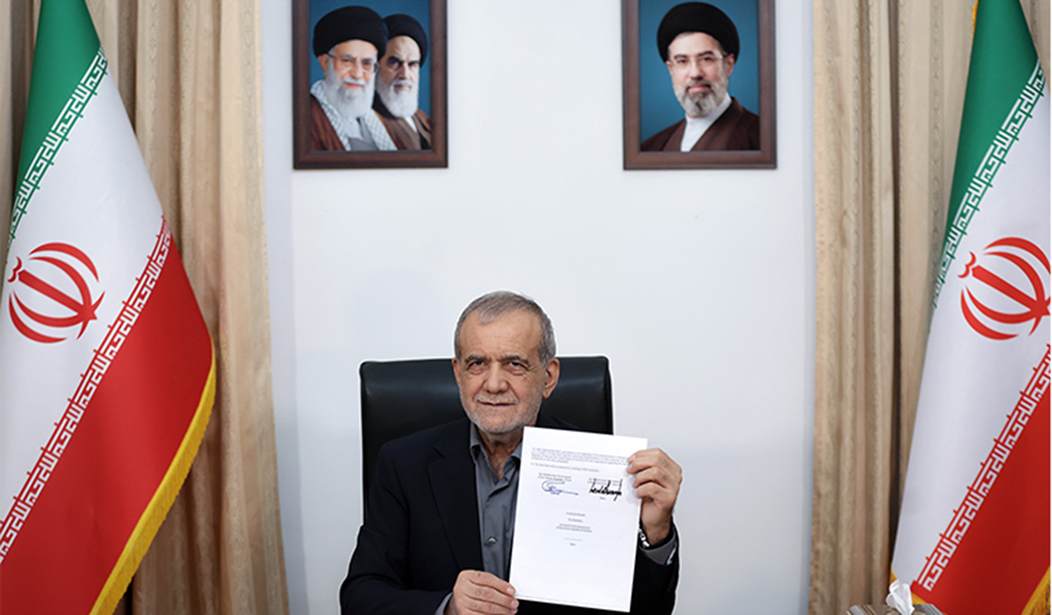
Straight from the horse's mouth. Pezeshkian admits the regime is completely broke and out of answers:
— Siaxares 🇮🇷 🇺🇸 (@siaxares) August 28, 2026
"The reality is we have no money. Our revenues are clear, they’ve decreased, not increased. Our problems have multiplied, and on top of that, we have to answer for it."
I just… pic.twitter.com/SzS2WlJ2K4
Some in the government are finally admitting the situation has become desperate, although the most senior surviving members of the government insist they are actually winning the war.
At this point, the real issue is not Iran so much as opposition in the West. Some sources insist that the war was lost in the second week, and others question whether Iran will ever actually collapse. In other words, the issue now is the second aspect of siege — duration.
Siege warfare has historically been very effective. The question now is whether the U.S. will continue the siege to its conclusion in an age of expected instant gratification.
Editor's Note: The mainstream media continues to gaslight, spin, and lie about President Trump, his administration, and conservatives.
Help us continue to expose their left-wing bias by reading news you can trust. Join PJ Media VIP and use promo code FIGHT to receive 60% off your membership.


Join the Conversation
VIP members get the ability to comment on articles.