







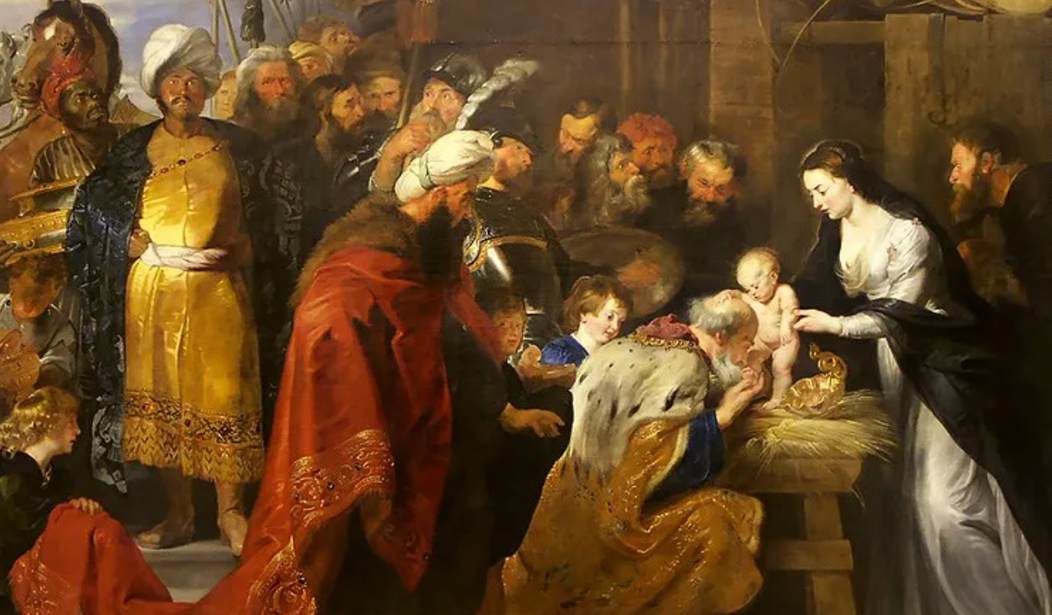
January 6 is the ancient feast of Epiphany, commemorating when the Magi, the learned pagan kings, discovered the Child Jesus and became the first Gentiles to worship the Messiah born to the Jews.
The second chapter of the gospel of Matthew relates how kings came from afar following a star and, not seeing the star when they reached Jerusalem, asked the jealous King Herod about the coming of a new king of the Jews. When at last the kings found Christ, they gave Him gifts of gold, frankincense, and myrrh, and acknowledged His divinity.
Many a great theologian, saint, and scholar has written about the Magis’ story. There are countless reflections for Epiphany — or, as some Byzantine Catholics and Orthodox say, the Theophany (honoring Jesus’s baptism also). I want to highlight just a few scriptural reflections from the church fathers, men who took on the monumental task of Christianizing the pagan world and championing the Gospel in the most hostile environments.
Like Herod, those who reject Christ see him only in material terms, and either fear or despise him. Like the Magi, those who accept Christ recognize His spiritual kingship and divinity. “As the Magi seek a Redeemer, so Herod fears a successor,” St. Augustine put it.
St. Leo poetically addressed Herod, “Thou art troubled, Herod, without cause. Thy nature cannot contain Christ, nor is the Lord of the world content with the narrow bounds of thy dominion. He, whom thou wouldest not should reign in Judæa, reigns every where.”
St. Ambrose reflected on how, while a star led the kings to Christ, for us, Jesus is the star leading us to eternal life. “The star is the way, and the way is Christ; and according to the mystery of the incarnation, Christ is a star. He is a blazing and a morning-star. Thus, where Herod is, the star is not seen; where Christ is, there it is again seen, and points out the way,” Ambrose wrote.
For Our VIPs: Tolkien's Truth: There Is Good in the World, and It's Worth Fighting For
The three gifts of the Magi are ordinarily interpreted as gold for a king, frankincense for a priest, and myrrh for a sacrifice. All of these descriptions applied to Jesus Christ as the savior. But St. Gregory provided a complementary interpretation as well:
Something further may yet be meant here. Wisdom is typified by gold; as Solomon saith in the Proverbs, A treasure to be desired is in the mouth of the wise. (Prov. 21:20.) By frankincense, which is burnt before God, the power of prayer is intended, as in the Psalms, Let my speech come before thee as incense. (Ps. 141:2.) In myrrh is figured mortification of the flesh. To a king at his birth we offer gold, if we shine in his sight with the light of wisdom; we offer frankincense, if we have power before God by the sweet savour of our prayers; we offer myrrh, when we mortify by abstinence the lusts of the flesh.
This interpretation helps us understand how we can imitate Jesus, which, of course, we are supposed to do. We should develop wisdom, pray often, and practice penance.
As Epiphany closes the twelve days of Christmas, have a blessed feast day and a marvelous new year.
Editor’s Note: Support and follow PJ Media’s coverage of holiday traditions and other key news in this new year. Join PJ Media VIP and use promo code FIGHT to get 60% off your membership.



Join the Conversation
VIP members get the ability to comment on articles.