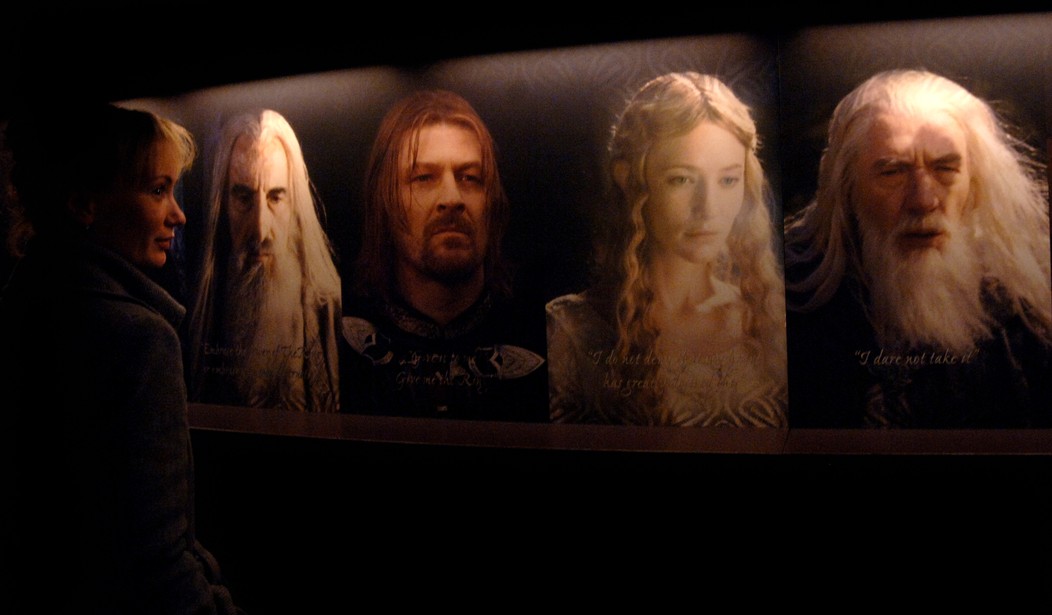

On this date in 1892, one of the most famous authors of the modern era was born in British South Africa. J.R.R. Tolkien was a philologist and scholar best known as the author of the fantasy epic The Lord of the Rings and its connected works. And Tolkien intended Middle-Earth to be not only an exciting, inspiring, and entertaining fantasy world, complete with dozens of invented languages, histories, races, and nations, but also a mirror in which we see the greatest dangers facing our own world and how to fight them.
A devout Catholic who suffered much in childhood for his faith and lost most of his youthful friends in World War I, Tolkien was well acquainted with many of the ideological diseases and technological horrors of the modern age from personal experience. New equipment and weapons enabled rulers to industrialize death on a mass scale. Tyrants dreamed of control over millions in a way never before enforceable. Western civilization crumbled and families fractured as religion became increasingly despised and pleasure increasingly worshipped. Watching the rise of Nazism, Communism, fascism, modern jihad, indifferentism, leftism, and the many other pernicious ideologies that shaped the 20th century, even as Judeo-Christian morals were attacked from East to West, Tolkien often took pen in hand to critique our world’s underlying evils within the fictional setting of Middle-Earth.
While Tolkien disliked obvious allegory, he himself referred to The Lord of the Rings as allegorical. Many of his characters represent Biblical figures or religious leaders (e.g., Gandalf as the Resurrected Christ, Eowyn as Mary who crushed the devil, Treebeard and the Ents as the Church). Tolkien dated important events in his epic based on Christian tradition (e.g., Sauron's ring is destroyed on March 25, the traditional date of both the Incarnation and the Crucifixion of Jesus). But Tolkien worked in political and societal critiques as well, knowing that people are often more receptive to moral preaching when it is mixed with entertaining adventure narratives.
As the heroes of The Lord of the Rings worried about the decline of the men of the West, the corruption of the leaders of men, and the far-reaching influence of Sauron and his minions, so Tolkien worried about the decline of Western civilization, the corruption of its leaders, and the far-reaching influence of Satanic ideologies. Tolkien wanted Christians to rise up and fight for what they loved, for the heritage of their past and the promise of their future, even when such a fight seemed most likely to fail.
Read Also: 250 Years Ago, an Irish Immigrant Named the ‘United States of America’
But since, as I mentioned, moral truths are often best expressed and most clearly remembered when wrapped in the eloquent language and moving narrative of fiction, I will allow the purest and greatest hero of Tolkien's epic — Sam Gamgee — to express the vital truth which was the core of Tolkien's message throughout the quest to destroy the One Ring:
We shouldn’t be here at all, if we’d known more about it before we started. But I suppose it’s often that way. The brave things in the old tales and songs, Mr. Frodo: adventures, as I used to call them. I used to think that they were things the wonderful folk of the stories went out and looked for, because they wanted them, because they were exciting and life was a bit dull, a kind of a sport, as you might say. But that’s not the way of it with the tales that really mattered, or the ones that stay in the mind. Folk seem to have been just landed in them, usually – their paths were laid that way, as you put it. But I expect they had lots of chances, like us, of turning back, only they didn’t. And if they had, we shouldn’t know, because they’d have been forgotten. We hear about those as just went on…
above all shadows rides the Sun
and Stars for ever dwell:
I will not say the Day is done,
nor bid the Stars farewell.
Or, as the movie adaption of Tolkien's trilogy puts it, there's good in this world, and it is worth fighting for.