







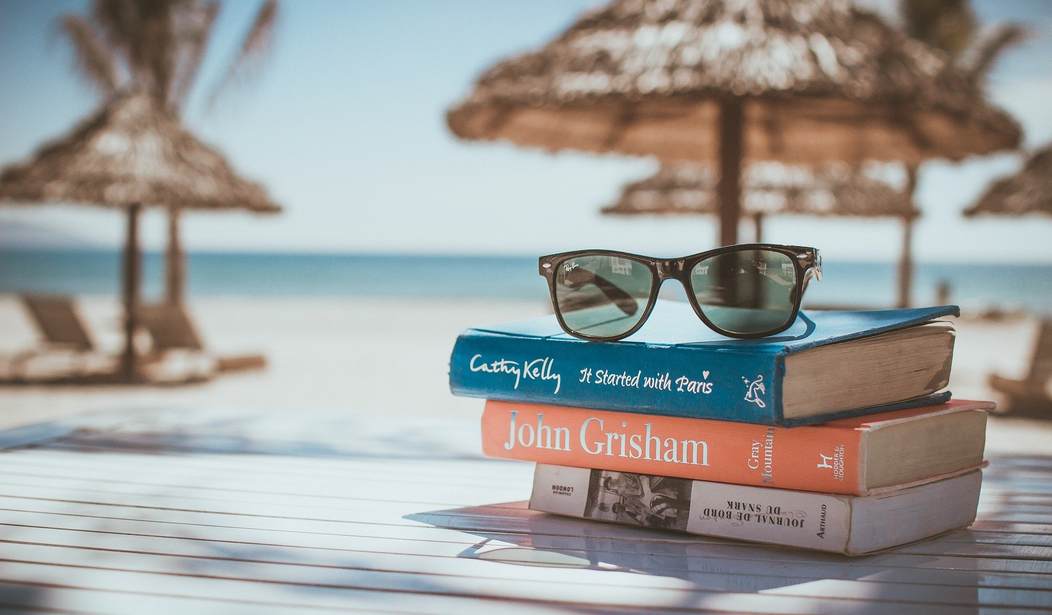
Reading is often done out of necessity. Whether it's school or work, the need to consume written information is driven by speed and clarity. Is it any wonder we have lost the joy of reading? This art has been crowded – suffocated in many minds — by the science of reading. In fact, a prominent curriculum used in America to teach children to read is called "The Science of Reading." Filled with rules, formulas, and metrics, educators have distilled teaching literacy into something so futuristic that Ray Bradbury would be inspired.
The thing that makes me happy is that I know that on Mars, two hundred years from now, my books are going to be read. They’ll be up on dead Mars with no atmosphere. And late at night, with a flashlight, some little boy is going to peek under the covers and read The Martian Chronicles on Mars. — Ray Bradbury, author
I don't care how a person learns to read and will never pretend to be an expert, but I will do whatever it takes to help them because reading is pure magic. A pattern of black strokes on a white page generates an all-consuming world that is built and grown exclusively in one's brain. Two individuals can read the same text and have a different idea of what people and places look like. Magic!
The ability to read is something no one can ever take away from you. Money, possessions, time — so many things can be removed from your life, but reading can give so much more than anything that can be lost. In a world full of flat screens and push notifications, how can reading for pleasure possibly compete with virtual reality headsets and interactive video games for a child's attention?
It starts with an adult, usually a parent or teacher. For me, it was my mother. Her collection of colorful spines and dust covers filled shelves in almost every room in our house. She always had a book, so if she were early for an appointment or waiting on a child (there were five of us, after all, so she was constantly waiting), she would read.
Her library was not off-limits to me, either. If I opened something inappropriate for my age (A Time to Kill by John Grisham probably isn't what most fourth graders should read), she would either lead me to something else (the Anne of Green Gables series), talk me out of it (still haven't gone back to anything by Danielle Steel), or help me through it (Gone with the Wind in sixth grade).
How'd you get your name?
— Ashley McCully (@AshleyLMcCully) December 30, 2025
I'll go first: my mom's favorite book as of 1982. pic.twitter.com/mYiaeh0RB8
I learned from her example and now I usually have three books going at the same time:
- a paperback, because it's my favorite medium
- an audiobook, for my workouts, drives, and tedious chores
- a digital book on my phone, in the frequent event I only have one hand available
People are usually concerned when they learn this about me because they are certain I can't keep it all straight. Let me just say it helps to have very different stories — genres, if possible — for each endeavor.
I read 12,138 pages this year; I do not count the pages read in books I don't finish. I've read thousands more but only completed 33 books. While professionals teach people how to read, we don't have many people able to teach us how to love reading. There is little doubt I will fall short, but I'd like to offer some suggestions for anyone who "doesn't see the point" or "gets bored" or "insert your excuse here" when it comes to restoring the art of reading.
Life is too short for bad books.
I give a book a limited time to hook my attention. If I'm not invested in a character or plot line in the first 100 pages, I stop reading. If we are reading for fun, why endure some kind of torture? Anyone who tells me they "hate reading" is met with my reply, "You just haven't found the right book yet."
The Wright Brothers by David McCullough was a slog before page 20, so I returned it to the library the same day I checked it out. Jane Austen is an author I feel like I should enjoy, but I detest every chapter of hers I've ever read. The last book I forced myself to read was the Russian classic Anna Karenina, and I was so put off by the ending—after all the hours I toiled to reach it—that I threw the book across the room and let it sit there, crumpled, for a week.
Don't put pressure on yourself to "finish what you started" because you are an adult and this is not for a grade. You have the agency to say no to something that bores you. Put that book down and try another. Here are three recommendations to get you started if you are truly at square one:
- Paperback: The Last Sip of Wine by Stacey Reynolds
- Audiobook: Remarkably Bright Creatures by Shelby Van Pelt
- Digital: Longhorns East by Johnny D. Boggs
Life is too short for bad books. 📚 🤓 https://t.co/yLBxP15SRp
— Ashley McCully (@AshleyLMcCully) March 26, 2024
Don't be Judgey McJudgerson
You are allowed to like things other people don't like. Similarly, you are allowed to dislike things others think are the bee's knees. Remember me and ol' Jane Austen? I would rather sever a toe by paper cuts than endure her catalogue. his doesn’t mean something is wrong with me, just as having Pride and Prejudice as your favorite book of all time doesn’t mean there’s a glitch in your wiring.
The other side of that coin is enjoying something other people turn their noses up to, like nonfiction medical research or —yes, I'm going to go there — smut. Whether you want to learn about why the scientific body of literature is lacking in women's health or explore the Greek mythology gods who find love with mortal women, do it. The lovely advantage of reading a book on your phone is no one has to know how nerdy or depraved you are! Consider these titles:
- Juvenile Fiction: A Single Shard by Linda Sue Park
- Nonfiction: The New Menopause by Mary Claire Haver, MD*
- Romantasy: The North Wind by Alexandria Warwick
*Helpful to anyone affected by menopause, whether it's you, your wife, your best friend, etc.
Accept That Fiction Can Teach You Something
I prefer fiction to nonfiction. There are times when reading something that is true is helpful, but most of the time I want to escape into a story and get far away from reality. Just because something is made-up doesn't mean it's a frivolity, though. Fiction can teach us quite a lot about ourselves and the world at large.
One of the reasons a story can stand the test of time and become a "classic" is because the author can harness a human truth so clearly that readers see themselves in a character or plot many generations or cultures later. How else can you explain a novel written 207 years ago by a white English female teenager about a manmade monster shaking the core of a black American guy in 350 pages?
is this what you call post book grief? 😭😭 pic.twitter.com/RZGmp4k60j
— Chris Fizer (@ChrisKindaReads) November 20, 2025
Mary Shelley captured the depths of loneliness, forced us to question which character is truly the antagonist, and forced us to recognize our innate optimism for another’s fate.. Here are three fiction books that taught me something:
- Pandemic hysteria: The Masque of the Red Death by Edgar Allan Poe
- It's all about perspective: The Book Thief by Markus Zusak
- The Vietnam War: The Women by Kristin Hannah
Set goals.
For whatever reasons, I am drawn to big books. The thicker the book, the more likely I am to pick it up; please don't ask me why because I don't know. It is for this inexplicable reason I set page goals instead of book goals. If you're looking to set "big book goals" in 2026, here are three I'd enthusiastically recommend:
- Americana: East of Eden by John Steinbeck
- Multigenerational drama: The Covenant of Water by Abraham Verghese
- Literary masterpiece: The Pillars of the Earth by Ken Follett
If you're like me and need some kind of incentive to get into nonfiction, start with something you really like. Once you have that topic, search around for books related to it but be careful of spoilers. There are few things worse than an unexpected spoiler. This is how I choose true stories:
- Faith: He Leadeth Me by Walter J. Ciszek
- Poetry: I Know Why the Caged Bird Sings by Maya Angelou
- Food: Grocery: The Buying and Selling of Food in America by Michael Ruhlman
Audiobooks have come a long way in a short time, so if you think they're going to put you to sleep, give some new releases a try. I started listening to The Girl With Seven Names while I was training for a half marathon and found I would extend my runs by entire chapters because I was so invested in this North Korean defector's plight! That suggestion was a freebie, so here are three books with incredible voice actors that make the story come alive:
- Historical fiction: The Sunflower Sisters by Martha Hall Kelly
- Author narrated: What I Ate in a Year by Stanley Tucci
- Suspense: The Frozen River by Ariel Lawhon
The last bit of advice I can give to help someone spark or rekindle a love for reading is to find a friend with whom you can talk about books. Book clubs, neighbors, siblings, friends, coworkers, or anyone who can share in your elation, misery, or satisfaction are relationships worth forging. You don't have to read the same titles or keep a schedule, just find someone comfortable with reading. The good news is you will always have something to talk about because, presumably, you will always be about to, in the middle of, or just finished reading something.
A great way to break the ice is to choose books that have movies. Remember the first rule of Book Nerds: the book is always better than the movie. Okay, not always, but most of the time. Here are some books that are definitely better than their cinematic counterparts:
- Crazy Rich Asians by Kevin Kwan (made better because it's the first in a trilogy)
- Jurassic Park by Michael Crichton (not like the movie in the best way)
- Water for Elephants by Sara Gruen
Whichever literary path you choose to explore first, I truly hope you can make 2026 your year of reading. Not only will you find personal satisfaction and growth, but you may also inspire a future reader.

Join the Conversation
VIP members get the ability to comment on articles.