





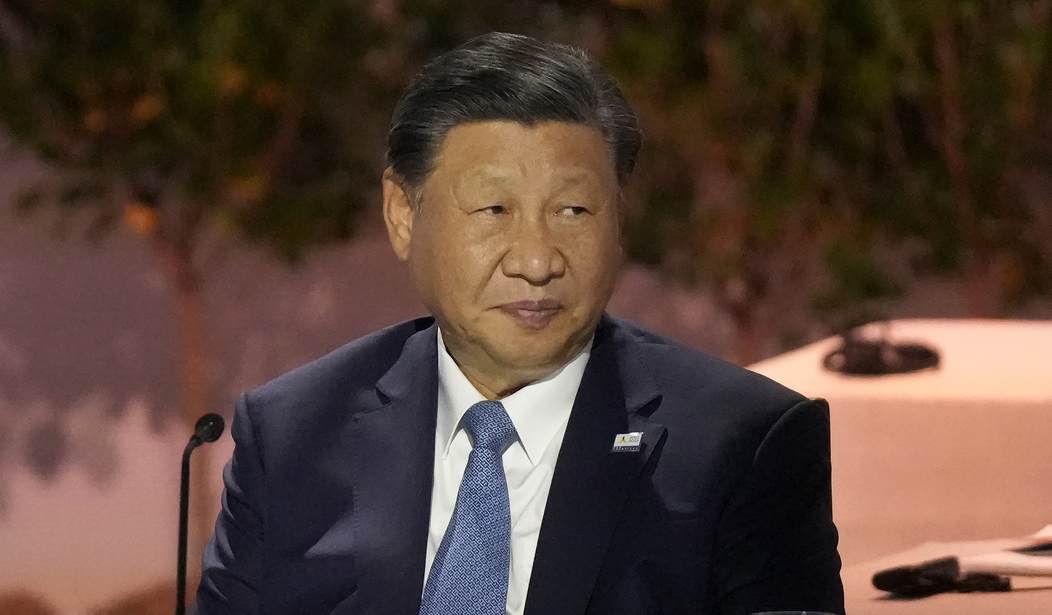
Last year, Chinese Communist Party boss Xi Jinping played the rare earths card, forcing President Donald Trump to slow his roll on decoupling from the Middle Kingdom. This year, Trump played the oil card against China — first in Venezuela, then in Iran — and he just slapped it on the table again in Indonesia.
Their summit in Beijing next month already promised to be interesting, with the U.S. enjoying significant leverage over Venezuela, Iran in tatters, and the U.S. Navy taking charge of the Strait of Hormuz. Until very recently, both countries served as Beijing's reliable sources of discounted oil.
Today, Xi might ask, "Et tu, Indonesia?" If he spoke Latin, that is.
It might have seemed like one of those dry, bureaucratic, almost meaningless announcements on Monday, when War Secretary Pete Hegseth posted on X that the U.S. and Indonesia "are elevating our relationship to a Major Defense Cooperation Partnership."
According to a joint statement, the partnership covers "military modernization and capacity building," "training and professional military education," "exercises and operational cooperation," and I can hear you snoring already.
But a Major Defense Cooperation Partnership is kind of a big deal — and it's aimed directly at China's oil imports. China's difficulties begin in the Strait of Hormuz, but they peak at Malacca.
Nearly two-thirds of China’s imports — largely the raw materials that keep its export machine humming — and a whopping 80% of its energy imports pass through Indonesia’s Strait of Malacca. But that hardly means Beijing minds its manners around its southern neighbor.
While the two countries maintain a close strategic partnership, there are also persistent strains, particularly around Beijing's claims in the South China Sea, Chinese fishing boat fleets intruding on Indonesian waters, resulting in naval tensions, and ongoing trade disputes.
And here comes Washington — with no territorial ambitions and no invading fishing fleets — with an MDCP.
And Another Thing: Honestly, China is now so powerful and aggressive that its neighbors ought to be attracted to Washington like iron filings to a magnet. It took significant displays of American weakness and dithering — thanks, Obama and Biden! — for countries like Indonesia to have fallen even partly into China's orbit in the first place.
An MDCP usually means regular joint military exercises, interoperability training, and streamlined access to U.S. weapons systems. In other words, even though an MDCP is less than a formal military alliance, it allows the U.S. and its partners to effectively act as allies, should the need arise.
The MDCP with Indonesia, just announced by Hegseth, even includes military overflight access.
Unlike NATO, there's no Article Five-type guarantee requiring us to come to Indonesia's defense, but should the need arise to act against China, our two militaries ought to have enough familiarity with one another to make it work.
In response to Trump's tariffs last year, Beijing used its control over the majority of rare earth processing to get a better deal. But rare earths aren't actually all that rare, and the U.S. sits on major deposits. Our problem is that we outsourced the processing to China. We're working to correct that mistake.
When Trump and Xi meet in May, the balance between our two countries will have shifted significantly in our favor since 2025. Seen that way, our new defense partnership with Indonesia is just another brick in Trump's Great Wall Around China.
Recommended: Another Red State, Fully Californicated
Want more like this?
Get exclusive content and support independent journalism with 60% off a PJ Media VIP membership. Use promo code FIGHT and join today.

Join the Conversation
VIP members get the ability to comment on articles.