Note: Most Thursdays, I take readers on a deep dive into a topic I hope you'll find interesting, important, or at least amusing. These essays are made possible by — and are exclusive to — our VIP supporters. If you'd like to join us, take advantage of our 60% off promotion.
This is one weird ceasefire.
I'm not saying it's bad. Or good. It's just a little weird.
On second thought, a lot weird.
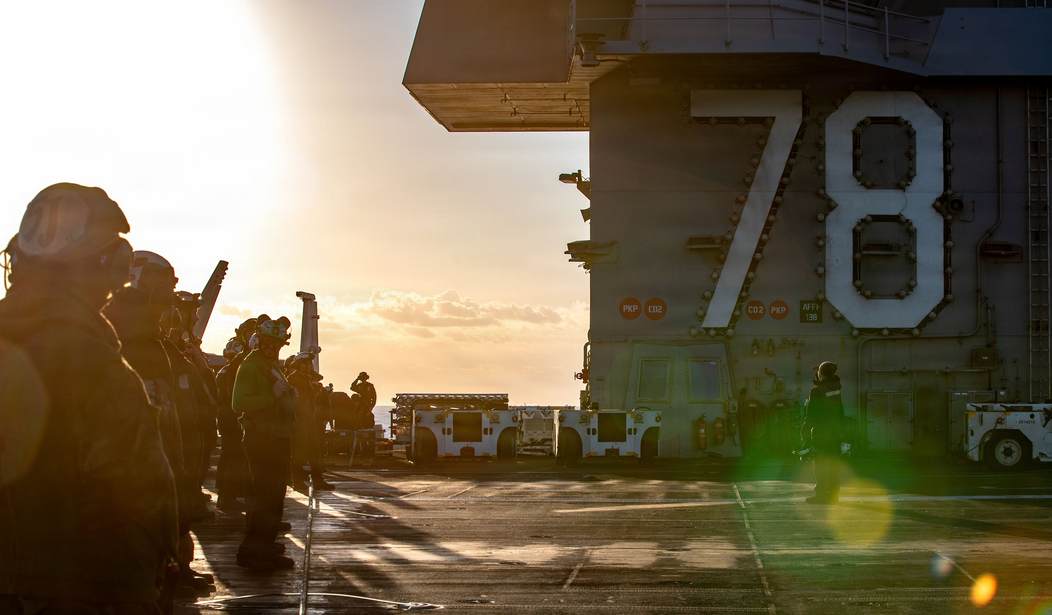
After five-plus weeks of bombing during Operation Epic Fury/Roaring Lion, U.S. and Israeli forces had nearly run out of military targets — that's hyperbole, but not by much. Joint Chiefs chair Gen. Dan Caine said Wednesday that U.S. forces alone hit more than 13,000 targets since President Donald Trump gave the GO! order on Feb. 28. Caine said combined air power has destroyed “approximately 80% of Iran’s air defense systems, more than 1,500 air defense targets, more than 450 ballistic missile storage facilities, 800 one-way attack drones.”
Impressive. Incomplete, but impressive.
But you can imagine President Donald Trump's frustration that we'd accomplished so much, yet the Islamic regime remained completely intransigent. That's likely why, earlier this week, he threatened a Tuesday night (D.C. time) deadline for Iran to agree to a ceasefire, or he'd order the destruction of Iran's bridges and power plants — or what Trump called the destruction of Iran's “whole civilization.”
That's the kind of big talk they understand in Tehran, and they agreed. Sort of. Maybe.
And Another Thing: There was a report on Tuesday of a B-52 strike package on its way to Iran from the U.S., expected to arrive right around the time of Trump's deadline. The bombers apparently turned back for home without having reached their targets, almost as soon as Tehran agreed. I wonder whether the crews were elated, disappointed, or a little of both.
The terms of the ceasefire depend entirely on who you ask. Since the U.S. and IDF control Iran’s skies, we remain the final arbiters. But stick a pin in that thought because I'll return to it momentarily.
It's who the ceasefire includes where things get weird.
While the ceasefire covers the U.S. and Israel on one side and Iran on the other, it apparently doesn't include the Arab Gulf States — and Iran reportedly continues to hit them with missiles and drones.
Then there's Israel's neck of the woods.
Israeli Prime Minister Bibi Netanyahu's office posted, "Israel supports President Trump's decision to suspend strikes against Iran for two weeks subject to Iran immediately opening the straits and stopping all attacks on the US, Israel and countries in the region" but added that the ceasefire does not include his country's ongoing strikes to eliminate Hezbollah in Lebanon.
Trump agrees. Tehran doesn't.
Within hours, Tehran and Israel were at it again. Or still at it.
Iran is preparing “operations” against Israeli targets in response to the ceasefire violations in Lebanon -Iranian state outlet Fars pic.twitter.com/1iyoCwZ1st
— OSINTtechnical (@Osinttechnical) April 8, 2026
Iran's Fars news agency soon after claimed that oil tanker traffic through Hormuz was halted due to Israeli ceasefire violations in Lebanon, even though they seem to be the only ones who think the ceasefire applies there.
Tehran's command-and-control is a shambles, so it was no surprise that missiles and drones continued flying in the hours after Tehran accepted. Their war plan accommodated the loss of command-and-control, with small, semi-independent units firing autonomously on pre-determined targets.
The advantage is that local units had targets and kept firing at them. The disadvantage is that there was no way for all of those units, effectively isolated from one another and whatever command authority still existed, to coordinate an effective response. They just kept lobbing things at stuff. The other disadvantage is that it takes time for the command authority's ceasefire command to reach down the chain.
But then more than a few hours passed, and there's still an awful lot of action.
Or as Defence24 concluded early Wednesday, "The truce is already under pressure and may be far more fragile than it appeared."
Well, yeah:
BREAKING:
— Visegrád 24 (@visegrad24) April 8, 2026
Looks like Iran is still attacking Saudi oil infrastructure despite the ceasefire agreement.
A suicide drone just struck a pumping station on the East-West Oil Pipeline. It was used for sending oil to a Red Sea port, bypassing the blocked Hormuz Strait in recent weeks pic.twitter.com/7hSmycGi5Z
For a ceasefire, things remain awfully fiery. Or as Varad Mehta quipped, "This ceasefire isn't going to see the weekend."
Then there's Tehran's propaganda campaign. Who it's aimed at, I'll get to in a moment. First, you really need to see what The Powers That Be (Whomever They May Be) claim the White House agreed to:
The regime in Iran is now insisting that Trump has accepted the following:
— 𝐍𝐢𝐨𝐡 𝐁𝐞𝐫𝐠 🇮🇷 ✡︎ (@NiohBerg) April 7, 2026
•Regime control of Hormuz
•Full compensation for war damages
•Withdrawal of American forces from the region
•Lifting of all sanctions
•Continued enrichment
Come on lol.
"Come on lol" doesn't even begin to describe the absurdity of Tehran's claims, but you and I aren't the intended audience.
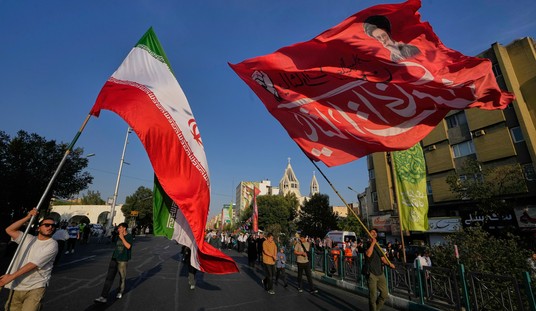
Tehran's messaging is likely meant to sow dissent in the West, particularly among lefties and the deranged Tucker Carlson/Candace Owens/Megyn Kelly set. But since Tehran broadcast the same claims on Iranian state television — most people's only source of "news," with the internet shut down — the mullahs' main goal is to demoralize anyone who still hopes regime change is in the cards.
The implicit message is: "Trump totally caved because the regime is so mighty, so don't even bother protesting again." Will any patriotic Iranians actually fall for it? Hard to say, but I imagine that after 47 years of misrule, they must have finely tuned B.S. detectors.
On the other hand, Tehran has more going for it than just outrageous propaganda.
There are also purely economic issues — some with frightening implications — that were likely on Trump's mind while he escalated against the regime in the days before the ceasefire:
My deadline to prevent the global system rupture is end of April or May 1. Afterwards, we will be in completely uncharted waters given the multiplicative simultanously happening cascading effects across energy-fertilizers-food-water-metals-petrochemicals-nuclear-defence-fiscal.. https://t.co/i23py9lJc2
— Velina Tchakarova (@vtchakarova) April 7, 2026
If it hadn't been for Tuesday's ceasefire, Tchakarova's post and related items were going to be the topic of today's essay. More than just energy, the Gulf provides vital exports of urea, ammonia, nitrogen-based fertilizers, and more. After just the first few days of Epic Fury, there were already kinks in the supply chains that determine global food prices and even availability.
There were — are? — more kinks coming.
Yet there's still more, and it's where my faith in Epic Fury could go a little wobbly if it pans out.
This is from a report in Wednesday's Wall Street Journal headlined, "Iran Tightens Its Grip on Hormuz Despite Cease-Fire."
Iran told mediators it would limit the number of ships crossing the Strait of Hormuz to around a dozen a day and charge tolls under the cease-fire struck by President Trump, showing Tehran plans to keep control over the world’s most important energy-shipping lane.
Ships that pass will have to coordinate with the Islamic Revolutionary Guard Corps, the powerful paramilitary group that has been labeled a terrorist organization by the U.S. and the European Union, Arab mediators said.
Four ships were allowed to pass Wednesday, the fewest so far in April, according S&P Global Market Intelligence. Iran is requiring ships to work out toll arrangements ahead of time and then pay the fees in cryptocurrency or Chinese yuan, mediators and shipbrokers said.
I don't want to jump to any conclusions, particularly when Trump's negotiation skills are involved. But you should also know that the WSJ report concluded that "Iran’s demands show how it has used the war to create a new source of leverage and potentially revenue," and that the new "arrangement is now being entrenched during the two-week cease-fire."
(The link above is paywalled, but if you have Apple News+, this link ought to work if you want to read the whole Journal report.)
If left unchecked, the WSJ says that Iran's new arrangements "are altering the balance of power in the Persian Gulf and expanding Iran’s global influence despite the battering it suffered in the five-week war."
If the Journal's report is accurate — and only time will tell — it would be a helluva thing to have fought a nearly six-week air campaign of epic destruction and with near-impunity, only to leave Tehran in greater control of the Strait of Hormuz than ever. And charging tolls for the privilege, too.
If the lesson Tehran takes away from Epic Fury is that it enjoys a stranglehold on global energy and food — and that not even Donald Trump has the stones to end it — then Epic Fury becomes Epic Failure.
But those are big ifs, and a two-week ceasefire is a far cry from an armistice or a peace deal leaving the Islamic Republic more powerful than ever.
And anyway, as my old boss Roger L. Simon argued this week, if anybody charges tolls in the Persian Gulf, it ought to be us. "Mr. President, take the oil," Roger wrote in all seriousness. "Most of us will be with you in the end. Just explain the process. Give as much as possible, in an organized and fair manner, back to the Iranian people, but keep a little off the top for the USA 'for service rendered.'"
"You’ve already done it in Venezuela," Roger added.
Indeed.
I hope you enjoyed the chance to laugh at Iran's "peace" proposal earlier in this essay, amounting as it did to "The status quo antebellum except no sanctions, all the nukes we want, and you pay for all our stuff." But Trump says he has a 15-point plan and that many of the points "have already been agreed to."
What those 15 points actually are, Trump has never explicitly said. So I asked my paid research assistant — OK, it's Grok — to synthesize a list based on public news reports and Trump's previous statements. Here they are:
- Permanent Iranian commitment to never pursue or develop nuclear weapons.
- Complete dismantlement of Iran's main nuclear facilities (Natanz, Fordow, Arak).
- Permanent end to all uranium enrichment on Iranian soil.
- Removal or surrender of Iran's entire enriched uranium stockpile under IAEA monitoring.
- Robust, long-term IAEA verification with unrestricted access.
- Major limits and caps on Iran's ballistic missile program (production, range, inventory).
- Full cessation of support, funding, and arming for regional proxy groups (Hezbollah, Houthis, etc.).
- Guarantees for safe, unrestricted international shipping through the Strait of Hormuz.
- Formal acknowledgment of Israel's right to exist and end to threats against it.
- Broader curbs on Iran's offensive military capabilities and defense industry.
- Initial ceasefire period (e.g., 30 days) for phased implementation and talks.
- Mechanisms to prevent resumption of hostilities and ensure compliance.
- Phased lifting of U.S./international sanctions tied to verified compliance.
- U.S. support for a strictly civilian nuclear program (e.g., Bushehr power generation).
- Additional regional security commitments and economic incentives for full adherence.
Looking at that list, I don't see a single item the current regime would agree to, unless it agreed with fingers crossed hard enough to snap bones. I also don't know what Trump means (linked above) when he says that Tehran has gone through "a very productive Regime Change!" The new regime, if there is one, acts exactly like the old one.
If our forces just went through nearly six weeks of combat just for "Meet the new boss, same as the old boss — but charging tolls on oil tankers," then what a waste this has been. But since we don't yet know that's what happened, let's not draw any hasty conclusions.
It's unrealistic to expect to know much at all at this early stage, and Trump's finger still rests on the trigger. There's a less-than-zero chance that the ceasefire is nothing more than Trump giving our forces in the region a chance to reload. Sometimes, diplomacy is the art of saying "Nice doggie" while you find another stick. And a two-week pause might be enough to unkink some of those kinks in the food supply chain.
Maybe the most important message to take away from the confused and confusing last two days is the message War Secretary Pete Hegseth sent to Tehran during his Wednesday press briefing: “We’ll be hanging around. We’re not going anywhere."
"Our troops are prepared to defend, prepared to go on offense, prepared to restart at a moment’s notice with whatever target package would be needed."
Stay tuned.
Last Thursday: What in the Actual Hell Is Going on in China?