







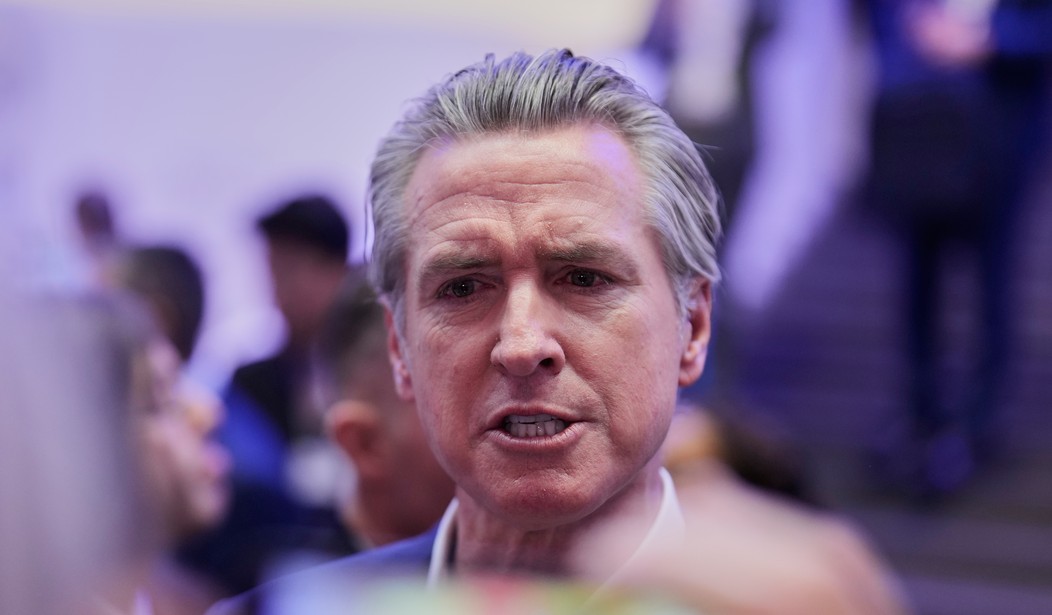
FCC chair Brendan Carr has a pointed question for California Gov. Gavin Newsom, politely paraphrased as, "Where in the actual hell did the $450 million go, and where's that new 911 system it was supposed to buy?"
The same week he was first sworn in as governor, Newsom said, "The idea that it's 2019, and we are using analog systems designed decades ago is astounding, and we need to make investments to make sure the technology aligns with the devices people are using in their daily lives." He added that "California's antiquated, analog microwave network must be upgraded to a digital network to maintain safety operations."
That was seven years ago. Since then, Newsom spent $450 million to build a new system, "but when it came time to turn it on, it did not work," Carr wrote on Tuesday. This makes it even more astounding that California still relies on analog systems designed decades ago.
Particularly when there are lives on the line.
The new big thing is Next Generation 911 (NG911) that is based on internet protocols (IP) and works much more like your smartphone does. It can handle texts to 911, photos or videos of emergencies, precise location data, streaming video, and even data-sharing between dispatchers and first responders in real time.
That's the fancy way of saying that the next-generation system gets more information to first responders even faster, while allowing them to deploy more quickly and intelligently. Put it all together, and more lives are saved, more property is protected.
Networking is a capability multiplier, and NG brings networking to an emergency services system originally designed at roughly the same time as the Summer of Love.
It's a big upgrade, sure, but given that anybody with a smartphone anywhere in the world — and there are over seven billion of them in active service — can share similar information with any other smartphone anywhere else in the world without even thinking about it, NG911 is hardly some radically new technology, even on the backend.
But it is a government program, so cost overruns and delays are expected.
Progress is uneven, and not quite 20 states have fully implemented the NG911standard or been rated as "high-deployment." Some, like Indiana, have had NG911 in place since before COVID; others just have pilot programs in place.
But none except California has spent so much money only to report zero progress. California can't point to partial implementation, has no pilot programs in place — literally nothing to show for 450 million tax dollars. Newsom might as well have spent it on hair product, and for all I know, he probably did. Worse, California's antiquated system is literally failing, according to both the FCC and Sacramento.
New FCC rules are meant to speed along compliance among the laggards, which is why Carr on Tuesday reminded Newsom that "when first responders tried to activate your system, emergency 911calls were lost and misrouted, and a 12-hour outage followed when residents were unable to call 911. You are now scrapping the plan and going back to the drawing board."
So it isn't quite right to say that Newsom spent all that money and failed to install a better system. It would be more accurate to say that he spent all that money and created a worse system that, thankfully, never came fully online.
It's the Federal Communications Commission's job to make sure the states implement NG911, and Newsom somehow managed to spend nearly HALF A BILLION DOLLARS without making a single upgrade. The Tarnished State is stuck completely with a failing, antiquated system for the foreseeable future.
It's the kind of emergency people might call 911 to report, but the odds get worse every day that there will be anybody able to pick up.
Recommended: Hollywood Is Sick — but It's L.A. That's Dying
Join the Conversation
VIP members get the ability to comment on articles.