


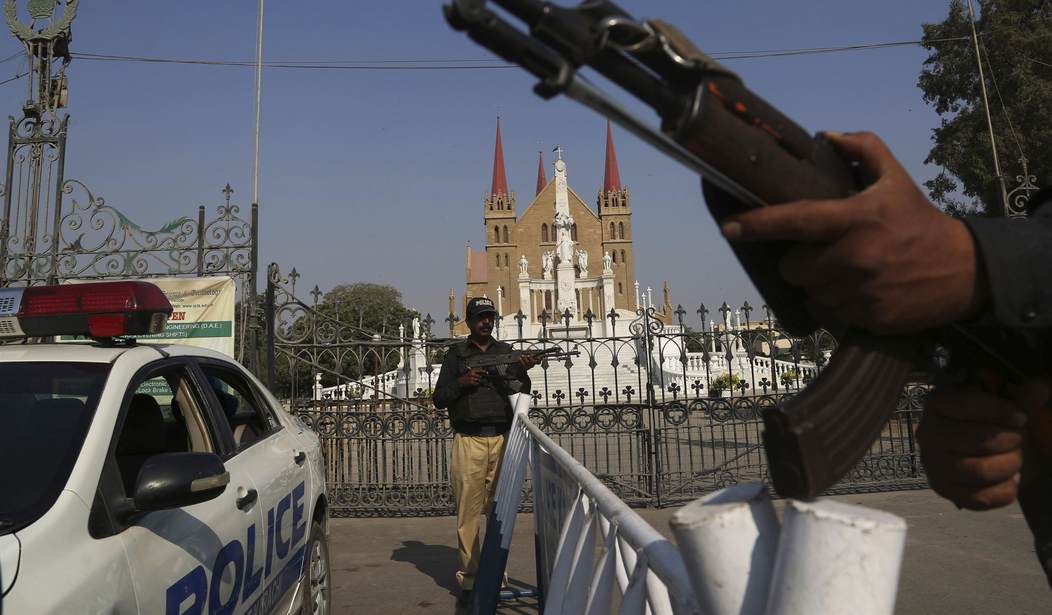
Pakistani journalist Shan Dahar was shot and killed on the night of Jan. 1, 2014, in his hometown of Badah while filming and taking photographs in front of a local health clinic. His murder remains unsolved.
Dahar's case has been kept dormant for more than seven years and emphasizes the problem of impunity for crimes committed against journalists in Pakistan.
A recent international investigation reveals new evidence in Dahar’s murder. It exposes the systemic police misconduct, political negligence, and impunity that have persisted for more than a decade.
The investigation Truth Denied: How Pakistani Authorities Built an Unsolvable Case is a publication under the international initiative A Safer World for the Truth, a collaboration between Free Press Unlimited (FPU), Reporters Without Borders (RSF), and the Committee to Protect Journalists (CPJ).
The coalition’s 18-month investigation uncovered new pieces of evidence that shed light on the murder’s motive and the subsequent official investigation. This includes video and photographic evidence that allowed them to retrace in detail Dahar’s movements on the night of his murder. With it, the coalition makes it clear that the authorities’ version of the murder is highly improbable.
"Their conclusion is clear," said the coalition in a press release: "a flawed investigation and a lack of political means that the murder of Dahar remains unsolved."
Given the extensive evidence unearthed and that the suspected culprits are still at large, Free Press Unlimited, the Committee to Protect Journalists, and Reporters Without Borders called on Pakistani authorities to arrest the absconders and bring them to justice.
Regarding Dahar's murder, Beh Lih Yi, Asia-Pacific director at the Committee to Protect Journalists, stated:
Killing a journalist has become one of the safest crimes in Pakistan. The murder of Shan Dahar is emblematic of the pervasive impunity in journalist killings in Pakistan and the lack of political will to end this vicious crime. After more than 12 years, there has been no justice for Shan Dahar’s family, while Pakistan remains one of the world’s most dangerous places for journalists.
Célia Mercier, head of the South Asia desk at Reporters Without Borders, added:
Nearly 12 years after the murder of journalist Shan Dahar, his killers are still walking free, a clear example of the endemic impunity in Pakistan. A report by Freedom Network Pakistan, RSF’s partner in Pakistan, shows that in the 53 cases of journalists killed between 2012 and 2022, convictions have only been made in two instances. This is a catastrophic rate of impunity of around 96%. The joint investigation into the death of Shan Dahar lays bare these profound shortcomings.
Dahar's murder is not an isolated incident. From 2000 to 2022, over 150 journalists and media workers, including Wall Street Journal reporter Daniel Pearl, were murdered across Pakistan, according to a 2022 Freedom Network report.
Yet justice for Pakistan's slain journalists remains out of reach, as the killers of only two have been convicted by courts. The Freedom Network notes:
This high level of impunity of crimes against journalists – 96 per cent – in Pakistan is even worse than the global average of 86 per cent according to a 2022 UNESCO report on impunity. The high levels of impunity of crimes against journalists in Pakistan are essentially a failure of the criminal justice system that failed to improve even ten years after the UN Plan of Action on Safety of Journalists and Issue of Impunity was launched in 2012 with Pakistan as one of the five pilot countries for its implementation.
Findings by other free press organizations also confirm Freedom Network's report. Since 1992, not a single journalist murder case in Pakistan has received full justice, according to CPJ (Committee to Protect Journalists).
The murders of journalists are ongoing in the country. The Pakistan Press Foundation (PPF) recorded a total of 8 murders of journalists last year and over 130 incidents of violence or harassment during 2025.
On the 2025 RSF Press Freedom Index, Pakistan ranks 158 out of 180 countries, falling further from its already alarming 2024 position.
Foreign journalists in the country are also not safe from violence. Daniel Pearl, for instance, was an American journalist who worked at The Wall Street Journal. On January 23, 2002, he was kidnapped by jihadist terrorists and beheaded on videotape. The incident occurred while he was traveling to what he had thought would be a meeting with Sheikh Mubarik ali Gilani, the head of the Islamic group Jamaat ul-Fuqra, in Karachi, Pakistan.
At the time of his abduction, Pearl was investigating Islamic militants in Pakistan post-9/11.
A few days after his disappearance, Pearl's captors released a video in which his throat was slit and his head severed from his body. A videotape showing the aftermath of Pearl's beheading was sent to the U.S. Consulate in Karachi and posted on the Internet. On May 16, Pearl's severed head and decomposed body were found cut into several pieces and buried in a shallow grave in the town of Gadap in Karachi.
In 2021, Pakistan's Supreme Court released from prison the four men convicted of Pearl's murder.
There are also reports of Pakistani intelligence agencies extending their reach to intimidate and even murder dissidents and journalists living in exile abroad, including in the UK and Kenya. The 2022 murder of Pakistani journalist Arshad Sharif in Kenya, for instance, remains a high-profile case with no accountability. Sharif had previously fled Pakistan to avoid arrest on charges of "maligning Pakistan’s national institutions" and because of threats to his life.
These cases and more in which dissident journalists are murdered, and their killers roam free, demonstrate a systematic cooperation between Pakistan's government, judiciary, and security establishment to whitewash and protect actual terrorists, silence dissent, and even intimidate foreign governments into submission to Pakistan's demands.
In August 2025, for instance, Pakistan’s Chief of Army Staff, Field Marshal Asim Munir, openly warned of a "nuclear war" from American soil. He made provocative nuclear threats during a speech delivered at a private dinner with the Pakistani-American community in Tampa, Fla.
Pakistan's de facto military ruler threatened to take down "half the world" if his country faced an existential threat in a future war with India.
"We are a nuclear nation. If we think we are going down, we'll take half the world down with us," he said, according to reports.
The speech, hosted by a Pakistani-American businessman, came during Munir’s second U.S. visit in two months, following a high-profile private luncheon with President Donald Trump on June 18. This was the first time a Pakistani army chief was hosted at the White House without civilian leaders present. Yet Washington’s muted response to a nuclear-armed government's escalating rhetoric was followed by Washington's praise of the same government.
President Trump called Pakistan’s Prime Minister Sharif and the head of the country’s army, Munir, "great guys" ahead of a White House meeting to strengthen ties this past September.
Appeasement of Pakistan-like regimes only leads to disastrous, long-term consequences. An Islamic regime that violently targets journalists, refuses to punish the murderers, and threatens the world with nuclear destruction should not be considered an ally of the West.
Enjoying PJ Media?
Get exclusive content and support independent journalism with 60% off a PJ Media VIP membership. Use promo code FIGHT and join today.



Join the conversation as a VIP Member