





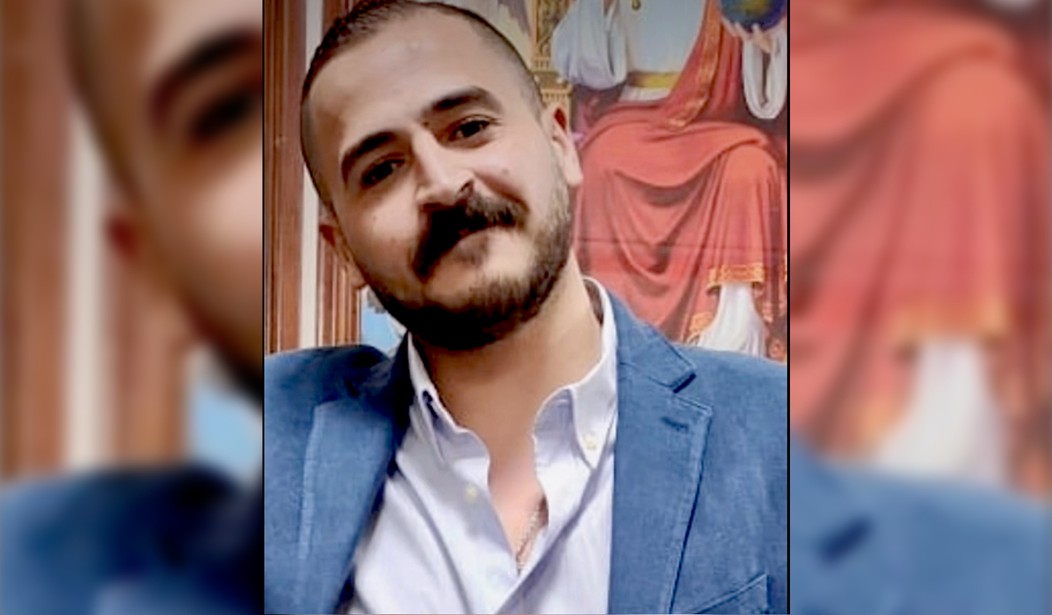
In Egypt, Muslim converts to Christianity are stripped of their most basic human rights as they are both silenced and persecuted.
Said Mansour Rezk Abdelrazek, a 30-year-old Egyptian citizen born to Muslim parents, serves as an example. Said embraced Christianity in 2016 and has been arbitrarily detained in Cairo (Egypt's capital) since July 15, 2025. His charges accuse him of criticizing Islam and converting to Christianity.
The organization Coptic Solidarity (CS) is campaigning for Said's release.
Since his 2016 conversion, Said has endured severe persecution. This includes arbitrary arrests, torture, abuse, forced divorce, separation from his young son, prolonged surveillance, denial of legal access, repeated attempts to coerce him into renouncing his faith, and ongoing punishment for peacefully exercising his freedom of belief.
In Egypt, a female Muslim “believer” cannot remain with an "apostate" husband. Children born in Muslim wedlock are classified as Muslims for life. According to sharia (Islamic law), Said's wife was required to divorce him, and he subsequently lost custody of his child.
In 2018, Said attempted to leave Egypt and sought asylum in Russia. Egyptian authorities blocked his first attempt, summoning him to the National Security Office, where he later said he was insulted and humiliated. He eventually reached Russia with a tourist visa, applied for asylum, and formally converted into the Russian Orthodox Church. While there, his outspoken criticisms of Islam induced backlash.
He was imprisoned for 11 months in Russia and was later deported to Egypt in 2024. This occurred although he held a UNHCR (United Nations High Commissioner for Refugees) attestation, which confirmed his refugee status. The Russian government revoked this after receiving threats from Muslim groups, stating that Said’s online criticism of Islam might trigger mass social unrest.
Upon his forced return to Egypt, Said was detained and then released with warnings from national security officers. Additionally, he was forced to undergo a painful procedure to remove a Christian tattoo he had received in Russia. Said later confided to close friends that during his detention, he had been suspended with his hands tied to a wall in a “crucified position” for several hours each day over the course of a week.
Following his release from prison, Said lived under constant surveillance and unrelenting psychological pressure. In July 2025, plain-clothed National Security agents again arrested Said in his apartment.
Said then appeared before the State Security Prosecution Office, where he was told that he would be charged with "joining a terrorist organization, disturbing public order, spreading false information and receiving illegal funding." His lawyer has been denied access to Said's case file and has not been permitted to meet with him. His detention has since been repeatedly renewed without due process. To this day, Said remains imprisoned.
To help free Said from prison, Coptic Solidarity (CS) is petitioning the Australian government. The campaign’s goal is to reunite Said with his fiancée, Sophie, in Australia. CS said they will directly approach the current Australian Minister for Home Affairs, Tony Burke, and Australia’s U.S. Ambassador, Kevin Rudd.
CS’s Freedom4Said petition can be signed here. The appeal is an urgent request asking for the Australian government to petition Egypt for both Rezk’s release and his protection.
The advocacy group also asked Australians to rally on Said's behalf by supporting the campaign.
Specifically, CS urges the Australian government to publicly demand Said's immediate and unconditional release from detention in Egypt; raise his case directly with Egyptian authorities at the highest diplomatic levels, emphasizing Egypt’s obligations under international human rights law; and grant Said a humanitarian or protection visa, allowing him to reunite with his Australian fiancée and live safely, free from persecution.
Said’s fiancée is an Australian citizen who continues to wait anxiously for his release and reunification. "Australia therefore has both a clear humanitarian interest and a moral opportunity to intervene on behalf of a man whose only 'crime' is choosing his faith," CS's statement said.
In a separate campaign, Coptic Solidarity also calls on Egypt to immediately release Said, end the persecution of religious converts, and respect its own constitution and international human rights commitments. You can sign the petition here.
In September 2025, the IRF (International Religious Freedom) Community, Africa Working Group, Jubilee Campaign, and Coptic Solidarity together circulated a letter calling for Said’s immediate release. The letter highlights the stark contradiction between Egypt’s constitutional guarantee of freedom of belief and the persecution faced by citizens who leave Islam. It documents Said's years of harassment, torture, and wrongful imprisonment. It further urges Egypt to honor its constitutional and international commitments by ensuring his release, granting him access to basic rights while detained, and protecting the freedom of belief for all Egyptians.
Rezk’s case is not an anomaly. Christian journalist Ramy Kamel suffered similar injustices between 2020 and 2022. (Read more about his story here.) Other recent serious incidents include the continued imprisonment of scholar Dr Augustine Samaan, and the persecution of Christian women, which CS described in a 2020 report as a “jihad of the womb.”
Lindsay Rodriguez, the Director of Development and Advocacy of Coptic Solidarity, told PJ Media:
Said Abdelrazek’s imprisonment underscores the inherent contradictions in Egypt’s constitution. While Article 2 establishes the principles of Sharia as the primary source of legislation, other articles guarantee 'freedom of belief.' This discrepancy creates the harsh reality faced by religious minorities.
His case also illustrates how converts are treated as security threats rather than as citizens entitled to equal rights. By refusing to recognize religious conversion (except to Islam) and relying on arbitrary detention, torture, and prosecution on fabricated charges, the state effectively criminalizes freedom of belief and expression—sending a clear warning to others who might consider leaving Islam.
Enjoying PJ Media?
Get exclusive content and support independent journalism with 60% off a PJ Media VIP membership. Use promo code FIGHT and join today.


Join the Conversation
VIP members get the ability to comment on articles.