







Women and girls across Pakistan regularly experience murder, child marriages, domestic violence, as well as other forms of gender-based abuse. In many cases, survivors obtain no legal recourse or social support.
In a recent incident, a woman in Pakistan was shot dead on January 2 at her father’s home in an honor killing orchestrated by her husband and uncle. The newspaper Express Tribune reported:
Samira Aziz, who had been residing in Qatar with her husband, was brought to Pakistan a week earlier by two uncles under what her sister later alleged was a pretext. On the night of the incident, relatives arrived at the family home in the Lalazar area of Wah Cantt and, acting on instructions delivered via video call from Qatar, allegedly shot her multiple times.
The term "honor killing" refers to a murder committed within a family for the purpose of maintaining its perceived "honor." Most murders currently classified as honor killings by law enforcement involve cases in which women were murdered by family members who perceived them to have failed to live in accordance with the norms and values of the victim's family or community.
Honor killings continue to claim hundreds of lives across Pakistan each year. According to the Human Rights Commission of Pakistan (HRCP)'s "State of Human Rights in 2024" report:
In the World Economic Forum’s Global Gender Gap Report for 2024, Pakistan was ranked at 145 out of 146 countries.
Data from the National Police Bureau indicates that at least 405 women fell victim to honor crimes during the year. Domestic violence accounted for at least 1,641 cases of murder and 3,385 cases of beating.
Cases of sexual assault continued unabated, with police data pointing to 4,175 cases of rape, 733 of gang rape, 24 of custodial sexual assault and 117 cases of incest-based sexual assault.
"These numbers underline that, despite public awareness campaigns and media coverage, honor-based violence remains a deadly reality for many," writes Syed Aidah in an article published on December 14 on the news website "Global Kashmir:"
Families often feel compelled to punish women who are perceived to have dishonored them through relationships, social behavior, or even independent decision-making.
Child marriages also remain a pervasive abuse in Pakistan. UN women reported in 2024 that Pakistan was home to an estimated 19 million child brides. Aidah notes:
The consequences of child marriage are devastating and long-lasting. Early pregnancy exposes girls to higher risks of maternal and infant mortality, pregnancy complications, and long-term health problems.
Education is frequently discontinued, limiting economic independence and perpetuating cycles of poverty. Many child brides experience domestic violence and emotional abuse, trapped in relationships they are too young to navigate safely. Beyond individual harm, the widespread prevalence of child marriage undermines societal progress, as a significant proportion of young women are denied the opportunity to contribute fully to social, economic, and political life…
Girls who are married early are frequently denied education, employment opportunities, and legal protection, reinforcing cycles of dependence and abuse.
In addition, domestic violence in Pakistan remains widespread and severely underreported. It represents another dimension of gender-based oppression within the country. For example, in 2024, the province of Punjab recorded more than 60,000 cases of violence against women and children, yet fewer than 1,000 suspects were convicted.
Across Pakistan, NGOs reported thousands of incidents of rape, murder, abduction, and assault, highlighting a grim reality that affects countless households. According to Aidah:
Surveys indicate that over half of women who experience physical or sexual violence never disclose it or seek help, largely due to fear of social stigma, retaliation, and ostracization.
The problem is particularly acute for child brides, whose vulnerability is compounded by age, lack of education, and economic dependency. Young women in these situations often have no legal recourse or social support, and cultural norms frame domestic violence as a private matter.
Even when legal mechanisms exist, police negligence, corruption, and lack of resources hinder enforcement. Shelters, counselling services, and emergency support remain scarce, especially in rural regions where child marriage is most prevalent.
Domestic violence reflects a wider societal tolerance of gender inequality. In many households, patriarchal values dictate strict obedience from women, reinforcing a power imbalance that perpetuates abuse. Social pressure to maintain family reputation further discourages reporting, creating a culture of silence around these crimes.
Pakistan still needs much improvement regarding gender equality, concludes Aidah.
The persistence of honor killings, child marriage, and domestic violence highlights that cultural transformation is as necessary as legal reform. Only by combining education, enforcement, awareness, and empowerment can Pakistan ensure safety, autonomy, and dignity for all women and girls.
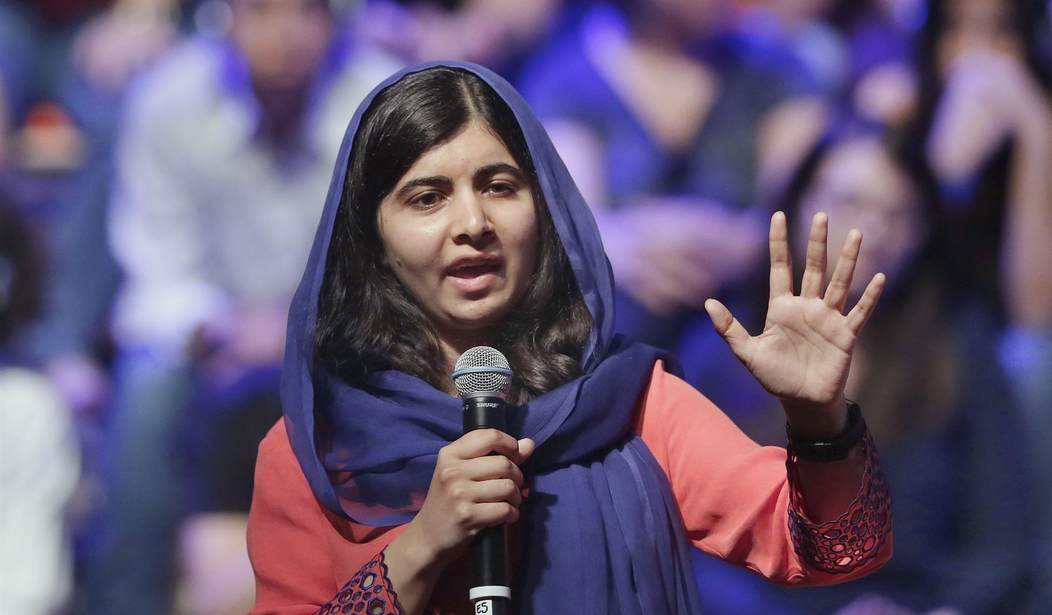
An internationally well-known victim of Islamic violence is Malala Yousafzai, a Pakistani education activist, as well as a producer of film and television.
In 2012, while on a bus in Swat District following an exam, Yousafzai and two other girls were shot by a Taliban gunman in an assassination attempt that targeted her because of her activism. The gunman fled the scene. She was struck in the head by a bullet and remained unconscious and in critical condition at the Rawalpindi Institute of Cardiology, but her condition later improved enough for her to be transferred to the Queen Elizabeth Hospital in Birmingham, UK.
This assassination attempt sparked an international outpouring of support. In response, the Taliban further denounced Yousafzai, indicating plans for a possible second assassination attempt because the Taliban said that it was a religious obligation.
In a 2023 interview regarding severe rights violations against women in countries such as Afghanistan and Pakistan, Malala's father, Ziauddin Yousafzai, said:
Women are systematically deprived of their basic human rights and they are dehumanized. This mass dehumanization of women is gender apartheid, nothing else. … Women are deprived of any educational access, freedom of movement, or participation in society without a male guardian. They’re restricted from even visiting public spaces or historical sites. This form of gender isolation is tantamount to annihilation, reducing women to nothingness. The silence of the international Islamic community is deafening. They observe this appalling situation without taking any meaningful action, and it’s unacceptable.
Yousafzai is correct in his observation. The international Islamic community is silent in the face of the gender apartheid that exists in many Islamic societies, such as Pakistan. The dehumanization of women is accepted by Islamic teachings and by the life of Islam's prophet, Mohammed.
According to Muslims, Mohammad is the perfect and ideal man. He serves as the ultimate role model for humanity and embodies the highest moral excellence. His exemplary character as described in the Quran and Islamic traditions. However, what is described about Mohammed demonstrates rather questionable behavior towards girls and women.
According to the Hadith and Sira (Mohammed's biography), Mohammed stoned women for adultery (Muslim 4206), owned and traded slaves (Sahih Muslim 3901), and married thirteen wives and kept sex slaves (Bukhari 5:268, Quran 33:50). He married a six-year-old child named Aisha and consummated his marriage when she was nine years old (Sahih Muslim 3309, Bukhari 58:236).
Moreover, Mohammed ordered the murder of women (Ibn Ishaq 819, 995), encouraged his men to rape enslaved women (Abu Dawood 2150, Quran 4:24), and demanded captured slaves and a fifth of all other loot taken in war (Quran 8:41).
In addition, the Qur'an explicitly instructs men to beat disobedient wives as a last resort. (Quran 4:34, Sahih Muslim 2127) It also allows Muslim men to rape their female slaves, even those already married. (Quran 4:24, 70:29-30, 23:5-6...).
There is gender-based violence and abuse in almost all societies to varying degrees. However, there is only one religion that normalizes and condones the physical and sexual abuse of girls and women. That is a significant reason why, in many cases, girls and women in Muslim societies cannot find the societal or legal support they need in the face of abuse. After all, if Muhammad, "humanity's most perfect role model," violated and enslaved women and girls, then why shouldn't the average Muslim do so as well? For the women's rights records of Muslim communities to improve, Muslims should face, criticize, and relinquish the abusive teachings of their religion that dehumanize and brutalize women.
Enjoying PJ Media?
Get exclusive content and support independent journalism with 60% off a PJ Media VIP membership. Use promo code FIGHT and join today.


Join the Conversation
VIP members get the ability to comment on articles.