





Staff Sgt. Jared Monti woke up the morning of June 21, 2006, in the Nuristan Province of Afghanistan. He was part of the U.S. Army’s 3rd Squadron, 71st Cavalry Regiment, 10th Mountain Division. It was getting close to the fifth anniversary of the radical Islamic terrorist attacks on America, and Monti had his own role in America’s response ever since.
The man behind those 9/11 attacks, Osama bin Laden, was still at large, assumed to be somewhere in Afghanistan or Pakistan, and always on the move. It was also assumed that he was still behind much of the anti-American military attacks and resentment throughout the region.
Monti was a member of a 16-man reconnaissance patrol that supported a mission dubbed Operation Gowardesh Thrust. His role was to occupy a position in the mountains, gather intel, and direct fire on the enemy as necessary to support other units.
“The 16-soldier patrol from the 3rd Squadron, 71st Cavalry Regiment of the 3rd Brigade Combat Team set out June 18, 2006, on a hellish three-day climb up a steep, unnavigated mountainside into enemy territory near Gowardesh,” reported Stars and Stripes. “They were members of Charlie Troop led by Sgt. Patrick Lybert and two groups from Headquarters and Headquarters Troop: the snipers led by Staff Sgt. Chris Cunningham and the artillery team, known as forward observers, led by Monti."
The troops were supposed to be setting up over-watch for a larger operation in the valley 2,600 feet below. But the main effort got delayed and the soldiers soon exhausted their food and water. A helicopter with fresh supplies that would have come under the distraction of helicopters arriving with the larger operation, instead came in alone, even though it ‘increased the risk that re-supply would compromise the patrol,’ an Army report said.
They divvied up the items and settled in for the night, aware the enemy might have them marked. The men divided into two positions along the ridgeline, most of them in a line of trees and bushes at the northern end of the ridge, others, including Monti and Cunningham behind some large rock and tree cover at the southern end. Suddenly, just before dusk, the place lit up with rocket-propelled grenades (RPG) and gunfire from the trees just above the ridge to the north, Stars and Stripes reported.
A group of roughly 50 radical Islamist Taliban militants had taken higher ground and attacked Monti’s patrol unit with machine guns and RPGs. The Americans had nowhere to go. That’s when Monti ordered his men into defensive positions, mostly behind rocks and trees and a stone wall. He called for both air support and artillery, joining his men with return fire as the insurgents tried repeatedly to overrun their position.
The Taliban had gotten as close as 50 yards away – half a football field. That was when one of Monti’s guys, Pvt. First Class Brian Bradbury was hit and lay in critical condition out in the open. When one of his men told Monti he was about to go out and rescue Bradbury, Monti said, “That’s my guy. I am going to get him.”
Monti knew the risks. He also knew why he was there that night. He had had the chance over the years to receive other, less risky assignments, and even an honorable discharge, and he had kept coming back to his men because of his men. They were like family to him in every sense of the word.
The first time he tried to get to Bradbury, enemy fire forced him back. The second time he tried, the same thing. Monti had every reason not to risk a third attempt, but he made that attempt. He rushed out into the open in the face of nonstop fire from the Taliban. The worst thing that possibly could have happened did happen. A grenade killed Monti as he tried in vain to come to the aid of one of his men.
Still, when Monti did what he did, he bought his unit the time it needed to regroup and keep fighting until American jets rained fire down on the Taliban, breaking the attack and preventing the complete annihilation of Monti’s 16-member patrol unit.
In a helicopter rescue attempt, Bradbury and Medic Staff Sgt. Heathe Craig also died in an accident. Stars and Stripes described the scene this way: “A medevac helicopter appeared like an angel of mercy come after a long nightmare. It lowered a stretcher. A medic grabbed hold of Bradbury and the two rose high into the night air. He was going to make it. Then the hoist broke, and the two plummeted to their deaths."
When the dust had cleared, four American troops were dead. Sgt. Jared Monti was 30 years old.
The Army posthumously promoted him to Sgt. First Class. In 2009, President Barack Obama presented the Medal of Honor to Jared’s parents, Paul and Janet Monti. This was the first time Obama had presented anyone with the Medal of Honor. Sometime after that, Obama committed the appalling gaffe of forgetting that Monti had died in battle when he awarded him the medal.
In a speech to the 10th Mountain Division, he had mistakenly “recollected" that “When I went back to visit Afghanistan, you guys were the first ones there. I had the great honor of seeing some of you because a comrade of yours, Jared Monti, was the first person who I was able to award the Medal of Honor to who actually came back and wasn’t receiving it posthumously.”
Before that tragic firefight, Monti had already earned a Bronze Star, a Purple Heart, five Army Commendation Medals, four Army Achievement Medals, and three National Defense Service Medals.
The Medal of Honor is the highest award for military valor. Few of its recipients live to receive it in person. In the history of the United States, only 3,533 have ever received the award. Monti was the 3,448th American soldier to earn the honor.
Who was Jared Monti?
Monti was born on Sept. 20, 1975, in Abington, Mass., to Paul and Janet Monti. He had a sister, Nicole, and a brother, Timothy.
The Monti family had moved to Raynham, where it’s been reported that he participated in a number of sports, from triathlons and wrestling to becoming an under-17 New England weightlifting champion. On top of all that, Monti volunteered his time with kids through an after-school program at a YMCA branch where his mother taught preschool.
Intent on serving his country well before graduation, Monti enlisted in the Army’s delayed entry program while still in high school. This enabled him to go to basic training between his junior and senior years at Bridgewater-Raynham Regional High School.
In 1994, Monti got his diploma and immediately went on active duty, where he became a fire support specialist. This involved providing support to intelligence operations and targeting field artillery units.
In numerous reports about Monti after his death, his friends and family had described him as having a rare combination of compassion, fearlessness, and tenacity.
In 1999, he was deployed to Kosovo, and he served in other Afghanistan operations prior to 2006. While he had suffered other injuries over the course of his military career, he had the option to leave the military with an honorable discharge, and he consistently decided to stay with his military family.
Men who served with him and under him said he was highly effective with local residents during deployments. They said he was good at defusing tense situations. They said a big part of his effectiveness was that he was able to quickly win someone’s trust. His men said he never asked them to do anything he wouldn’t do. He proved this with his final act on this earth.
‘I Drive Your Truck’
Paul Monti became a Gold Star father with his son’s death. He became an activist, working to make sure no one forgets those who died for America by placing flags on their graves around Memorial Day and Veterans Day at the Bourne National Cemetery, where Jared is buried. In 2011, Monti did an interview with an NPR radio station.
In that interview, Jared’s father talked about his son, his loss, how it affected him and his family, about the need to never forget the sacrifice some had made for this country, and he answered a question about something he did to honor his own son’s sacrifice. The interviewer asked Paul, “I think I have this right. Do you still drive Jared’s truck?”
Monti said, “Yes I do. That’s him, it’s got his DNA all over it. I love driving it because it reminds me of him, though I don't need the truck to remind me of him. I think about him every hour of every day.”
Nashville songwriter Connie Harrington happened to be listening to that interview while driving in her car and was overcome with emotion upon hearing Monti talk about his son and his truck that way. She took that inspiration into her writing studio, and with her partner Jessi Alexander, the two dug into Jared and Paul Monti’s story as they began to write a song. They were then joined by Jimmy Yeary as they crafted one of the more emotional and raw country songs you’ll ever hear – one that was then recorded by Lee Brice and became a hit – "I Drive Your Truck."
This thing burns gas like crazy
But that's all right
People got their ways of copin'
Oh, and I've got mine
The song instantly resonated with listeners, telling the story of a man who continues to drive the truck of his brother, who died in war. The song was released in December 2012. It went on to win Song of the Year at the 47th annual Country Music Association Awards, and it won Song of the Year at the 49th annual Academy of Country Music Awards.
And mamma asked me this mornin'
If I'd been by your grave
But that flag of stone
Ain't where I feel you anyway
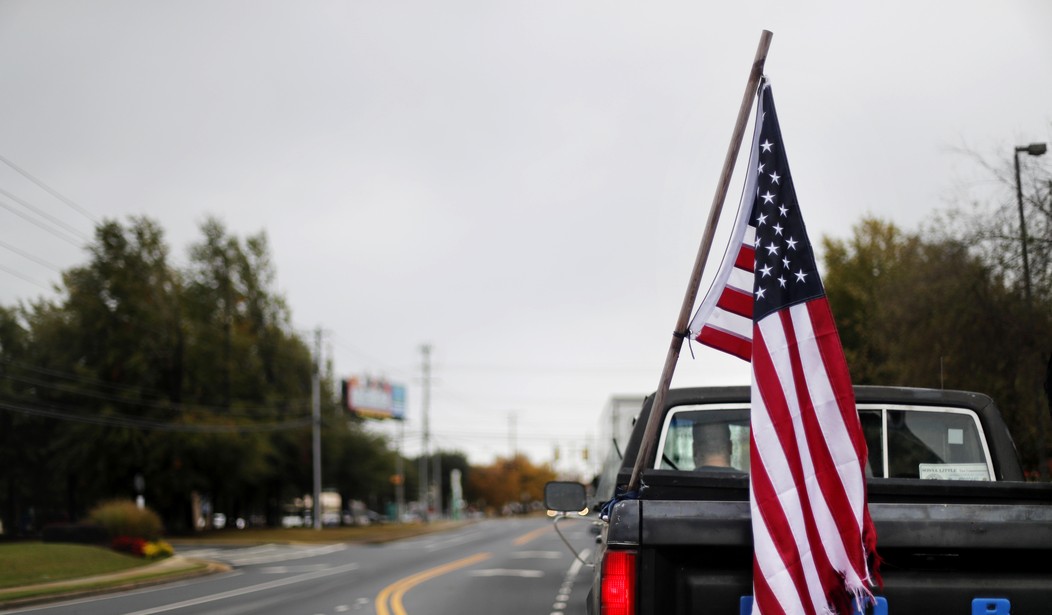
In the music video for Lee Brice’s recording, the truck is a 1973 Ford F-100. The producers and writers changed the story and the truck to make the story and the song more relatable to a broader audience, they said. The truck Jared Monti actually drove was a Dodge Ram 1500. It had decals on it, one of which represented the Army’s 10th Mountain Division. Another was for the storied 82nd Airborne Division. Another was a “Go Army” sticker. And another was the American flag. When Paul Monti started driving it, he left everything as it was.
To Paul’s surprise, that Lee Brice song also brought a tremendous amount of attention to him. He decided to use that attention to continue to honor the memory of his son and all of those who have made the ultimate sacrifice for the United States of America.
On Aug. 26, 2022, Paul Monti himself took his final breath at the age of 76. At his funeral, two of Jared Monti’s Army “brothers” drove that Dodge Ram in Paul’s funeral procession. I'd like to leave this Memorial Day tribute on a positive note, imagining that father and son had one more chance to take a spin together in their beloved truck.
I drive your truck
I hope you don't mind
I hope you don't mind
I drive your truck
Find out what you’re missing behind the members-only wall. It’s time for you to take advantage of the full catalogue of common-sense thinking that comes with a PJ Media VIP membership. You’ll get access to content you didn’t even know you wanted, and you’ll be hooked. The good news is, PJ Media VIP memberships are on sale! Get 60% off of an annual VIP, VIP Gold, or VIP Platinum membership! Use promo code FIGHT to get 60% off a VIP membership!

Join the Conversation
VIP members get the ability to comment on articles.