





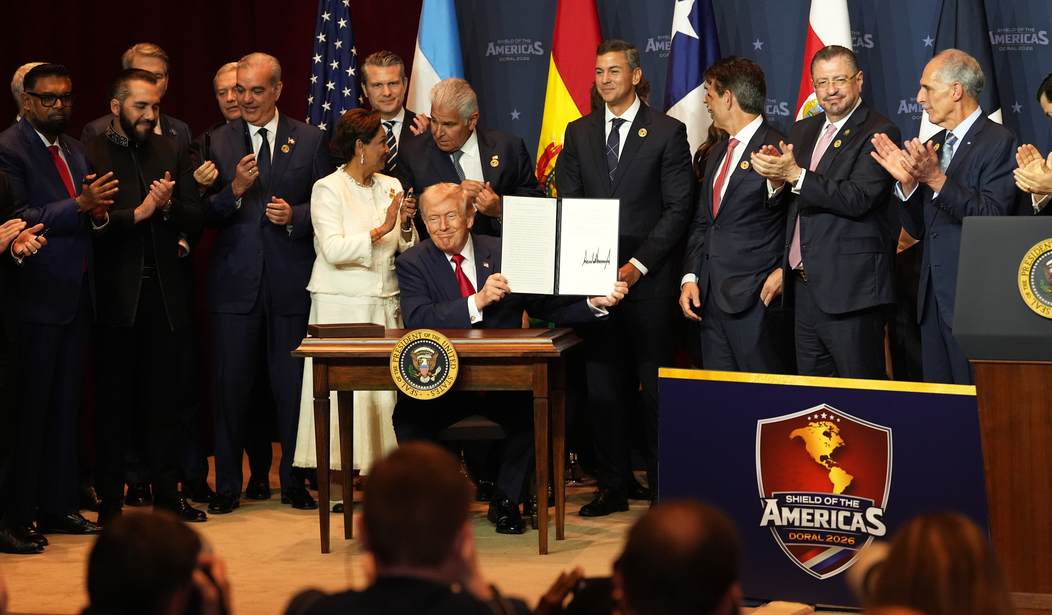
Here's your Shield of the Americas in action.
On Sunday morning in the small village of La Guácima, Costa Rica, authorities from the United States and Costa Rica dealt what many have called a strong or significant blow to the Jalisco New Generation Cartel (CJNG).
In early August, the U.S. Drug Enforcement Administration (DEA) identified what it believed was a drug trafficking group in the region, responsible for cocaine trafficking. Costa Rican agents from the Directorate of Intelligence and Criminal Analysis (DIIC), the Special Support Unit (UEA), and the Drug Control Police (PCD) confirmed the intelligence, and on Sunday morning, they stopped a vehicle with two individuals believed to be connected to the trafficking group. One was a Venezuelan citizen and the other was Nicaraguan.
The officers searched the car and found 66 kilograms of cocaine in a hidden compartment. At the same time, agents raided the home they believed was connected to the operation and found approximately 925 kilograms of cocaine.
It's believed that all of this has ties to CJNG, one of Mexico's most violent and prevalent cartels. This major move highlights two important situations.
First, what's a Mexican cartel doing in Costa Rica? Well, first of all, as I've reported numerous times, CJNG has a presence in about 50-ish countries, as well as all 50 states in the U.S., according to the Department of Justice.
But why Costa Rica specifically? Why the most peaceful little country in Central America? Sadly, crime and cartel activity have been on the rise in Costa Rica in recent years, and it has become a crucial transit corridor for South American cocaine moving toward North America and Europe. These cartels rely on domestic criminals inside the country for logistics, safe houses, and transshipment operations.
According to the 2025 Global Organized Crime Index, the number of criminal groups operating in Costa Rica has surged from 35 to 340 over the past decade. That's a pretty startling number.
Interestingly, CJNG's connections to Costa Rica have become more visible over the past two years. In December 2024, the Colombian prosecutor's office "reported the dismantling of an organization dedicated to legitimizing capital from international drug trafficking, whose operations extended to Costa Rica." That group had connections to CJNG.
In March 2025, graffiti appeared along the General Cañas highway between San José and Alajuela that read "El señor Mencho y sus gallos" or "Mr. Mencho and his roosters." El Mencho is, of course, Nemesio Rubén Oseguera Cervantes, the late leader of CJNG, but if you'll remember, we took him out in February, which led to days of chaos across parts of Mexico. Anyway, another similar bit of graffiti appeared later, and Costa Rica's Judicial Investigation Department (OIJ) began investigating.
In November 2025, an investigation made public by the Spanish National Police confirmed that CJNG was operating out of Costa Rican ports to ship meth and cocaine to European countries. By December, we learned that Colombia's Clan del Golfo was also operating out of Costa Rica.
Earlier this year, the U.S. Department of the Treasury confirmed that "Costa Rica has become an increasingly significant waypoint for criminal organizations trafficking cocaine to the United States," calling the Moín seaport in Limón, which opened in 2019, "a key regional transshipment hub for cocaine." Here's more:
Criminal groups have continually fought to control the port and its surrounding territory to ship cocaine inside containers leaving the port. Costa Rican security and police officials attribute the increase in violence to drug trafficking organizations fighting over control of territory and drug trafficking routes in the country.
But that's the bad news. The good news is my second point. Costa Rica's new president, Laura Fernández, isn't playing around with any of this.
Fernández took office in May, and while Costa Rica was already a great U.S. partner in the fight against organized crime in our region, she is extremely pro-U.S. and has an almost Nayib Bukele-like attitude toward cracking down on crime and violence — that's a big reason why she was elected. We're seeing some of her promises come to fruition in the first few months of her presidency. To be fair, some of what she's doing is a continuation of plans her predecessor, Rodrigo Chaves, put into place, but I predict we will see much more of this sort of thing in the weeks and months to come.
In the last six months or so alone, I've reported on countless operations along Costa Rica's coast that involved both that country's and U.S. authorities stopping drug boats and arresting traffickers.
Last year, Costa Rica amended its own constitution so that it could extradite Costa Rican criminal nationals to the United States and beyond, and we're seeing that in action. Just last week, it sent Gilbert Hernán Bell Fernández, aka "Macho Coca," a major cocaine trafficker wanted in New York, to the U.S. Not only does this ensure these criminals face justice, but it makes it much harder for them to continue to operate from jail cells in their home country.
Costa Rica is also building a mega-prison — the Center for High Containment of Organized Crime (CACCO) — largely inspired by Bukele's CECOT in El Salvador. Bukele actually served as a consultant to Chaves' government when plans began.
And now we're seeing more action on land, like this operation that took place on Sunday. Not sanctions. Not strongly worded public statements. Not politicians sitting on their hands and complaining. These are actual actions against the cartels that flood the Americas with drugs, crime, and violence.
This is what happens when we elect leaders here and beyond who actually take this stuff seriously. Unlike previous administrations, Team Donald Trump is treating our partners in Latin America as exactly that — offering support only the U.S. can give but allowing those countries to maintain their sovereignty.
On Friday, Fernández and Marco Rubio actually spoke on the phone to "reaffirm the strong U.S.-Costa Rica partnership." According to the State Department, they "discussed opportunities to deepen security cooperation and continue our strong bilateral trade and investment relationship."
Best of all, this type of partnership is not just happening in Costa Rica — it's happening in Colombia, Ecuador, Paraguay, etc.
I can't wait to see what else the Shield of the Americas can do to make us all safer going forward.
Editor’s Note: Thanks to President Trump and his administration’s bold leadership, we are respected on the world stage, and our enemies are being put on notice.
Help us continue to report on the administration’s peace through strength foreign policy and its successes. Join PJ Media VIP and use promo code FIGHT to receive 60% off your membership.
Join the Conversation
VIP members get the ability to comment on articles.