





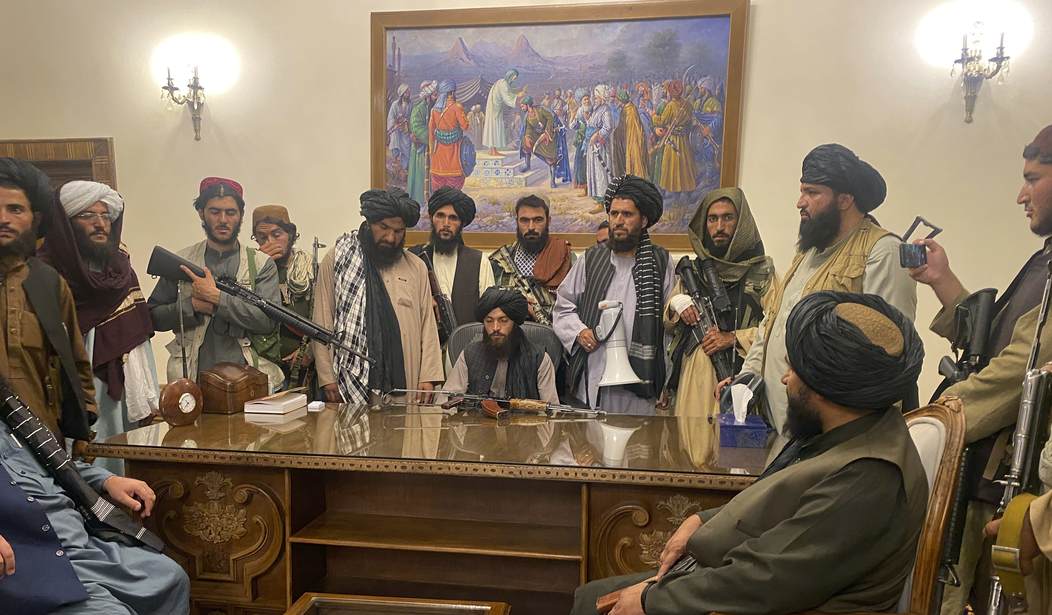
With a GDP per capita of around $445, Afghanistan can make a strong case for being the poorest country in the world. After decades of war, that isn’t surprising, but now the nation’s supreme leader, Hibatullah Akhundzada, has sketched out a path to prosperity. Can Afghanistan recover economically and take its place among the nations of the world that enable their citizens to enjoy a decent standard of living? Akhundzada thinks so. He has, he believes, found the key to prosperity.
You might think the supreme leader of the Islamic Republic of Iran, Mojtaba Khamenei, is elusive, as he has never been seen at all since he attained the Islamic Republic’s coveted top spot. Hibatullah Akhundzada, however, makes Mojtaba Khamenei seem about as demure and spotlight-shy as Megyn Kelly.
Only two photographs exist of Akhundzada, and the second one is extremely hard to find. The man has led the Taliban since 2021, but has never been seen in public, communicating through written messages and a few audio tapes. Mojtaba Khamenei was quite visible before he became supreme leader, although now there are whisperings that he may actually be dead; Hibatullah Akhundzada may never even have existed at all.
Nevertheless, someone is running the Taliban regime in Kabul, and it may well be Akhundzada. Whether he really exists or not, Amu.tv reported Sunday that he issued a message for Eid al-Adha in which he called on the Afghan people, who have already suffered many hardships, to suffer more: “Akhundzada called on the people to make sacrifices to sustain the Taliban administration and to be grateful for the ‘peaceful’ life they have attained under the ‘Islamic system.’”
Sharia rule in Afghanistan is so wonderful that Akhundzada expects the Afghan people to give of themselves to make sure the infidels don’t snatch their precious jewel — Islamic law — away from them: “Let us all endure more hardships and make sacrifices to protect it,” that is, the Taliban’s rule. Akhundzada said that the maintaining of the Taliban’s Islamic system was a “shared responsibility” and exhorted Afghans to foil the “malicious intentions of enemies.” He claimed that Taliban rule had brought justice to the country, for now, “the Islamic rights of all citizens are protected and that injustice is prevented…. In this system, the Sharia rights of all citizens are protected and preserved.”
Amu notes that all of this talk of justice and rights is not exactly congruent with what Afghan women have been experiencing: “The remarks come despite continuing international criticism of Taliban policies toward women and girls. Since returning to power in 2021, Taliban leader has issued dozens of decrees restricting women’s freedoms, including banning girls from secondary schools and universities and preventing women from attending most medical training programs.”
Akhundzada, however, would argue that this oppression of women, and all of Afghanistan’s adherence to Sharia, will bring a reward from Allah, and not just in paradise: “As in previous Eid messages, Akhundzada urged the people to follow religious rulings without hesitation, describing adherence to Sharia as the path to prosperity and success.”
There it is: “Adherence to Sharia” is “the path to prosperity and success.” In declaring this, Akhundzada is strictly in accord with the Qur’an: “Allah has promised those of you who believe and do good works that he will surely make them succeed on the earth even as he caused those who were before them to succeed, and that he will surely establish for them their religion which he has approved for them, and will give them in exchange safety after their fear.” (24:55)
Now, you might think that Afghanistan has adhered to Sharia for many years, and has not succeeded on the earth as the Qur’an promises, and you’d be right. The Qur’an’s promise has not been kept, and Akhundzada’s repetition of it to his people only ensures that they will endure more poverty and misery. As The Tragedy of Islam: Failure and Excuses shows, adherence to Islam does not bring success on this earth, and the failure of Islamic societies such as Afghanistan is not disconnected from their religion.
Related: An Afghan Migrant Finds a New Way to Celebrate Diversity in the UK
The lowly status of women and non-Muslims, the lack of a work ethic, the low value placed on secular learning — all this and more condemns Islamic societies to poverty everywhere, even while Muslim leaders such as Hibatullah Akhundzada blandly affirm that what their faltering countries need is more Islam.
Hibatullah Akhundzada should know better, but Islam’s death penalty for apostasy may prevent him from doing so. Western leftists, however, who insist that Sharia is wonderful and that those who oppose it are “Islamophobes,” do not have that excuse.
Editor's Note: Do you enjoy PJ Media's patriotic reporting that takes on the radical left and woke media? Support our work so that we can continue to bring you the truth.
Join PJ Media VIP and use promo code FIGHT to receive 60% off your membership.



Join the Conversation
VIP members get the ability to comment on articles.