



Democrats and progressive commentators argue that Trump's three appointments (Neil Gorsuch, Brett Kavanaugh, and Amy Coney Barrett) created a 6-3 conservative supermajority that does not reflect the broader electorate.
Since when do matters of law need to "reflect" the opinions of "the broader electorate?" When liberals say it does.
Progressive legal groups point to major rulings by the conservative majority as evidence of an activist court rolling back long-established rights. Key examples include overturning Roe v. Wade (Dobbs v. Jackson Women's Health Organization), restricting voting-rights enforcement, weakening administrative agency authority (such as overturning Chevron deference), and limiting regulatory powers on climate and labor.
In the 1960s and '70s, the Warren Court and the Burger Court both overturned many precedents. The main distinction between these eras lies in the courts' ideological direction rather than sheer volume: The Warren Court primarily discarded conservative Gilded Age/Jim Crow precedents to expand civil rights, while the current Roberts Court has systematically dismantled landmark liberal decisions handed down by the Warren and Burger Courts.
The left attacked conservative precedents to make room for civil-rights progress. The Roberts Court has overturned precedents that were either outmoded (Voting Rights Act) or overreach (Chevron deference).
Both liberal and conservative courts reflected their time. The left doesn't like that. They think they're the only ones allowed to smash precedents, and when a Supreme Court ruling comes down that they like, it may as well be holy writ. No changes. Not Ever.
So, the crocodile tears that wet the faces of liberals over Trump-era Supreme Court decisions they saw as "partisan" or "ideologically driven" were actually a political excuse to pack the court with radical leftists (expanding the court to 14 justices with term limits) or to alter its traditional authority to rule on some legislative matters.
It's all such poppycock. The left's Sturm und Drang amounts to little more than political theater over a court doing exactly what previous benches have done for decades.
The "lapdog" Roberts Court turns out not to be such a lapdog after all. In major, high-profile constitutional cases involving executive authority (cases making major headlines or textbook cases), the Trump administration's win rate dropped to 35% from 43% in the first term. The average presidential win rate previously has been over 65%.
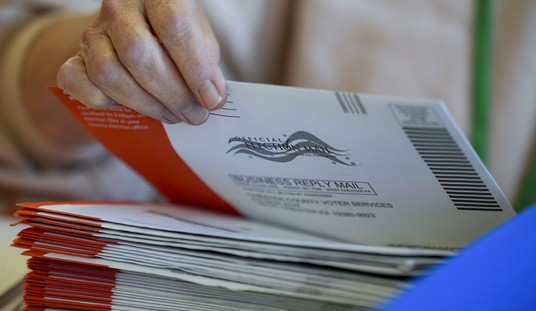
That trend continued when the Roberts Court dealt Donald Trump a massive blow on Monday by rejecting the administration's new rules on mail-in ballots for the midterm elections. The Trump administration had asked the court to clear the way for the restrictions to take effect despite cases still being adjudicated in lower courts.
In its emergency decision, the court wrote that the administration was likely to lose in the lower courts, although the majority gave no legal reasoning for that position.
The Trump administration had asked the justices, once again at the center of a roiling political controversy, to clear the way for restrictions before the pivotal November contests for control of Congress.
Alito wrote in his dissent that the Postal Service “has broad authority to regulate the mail” and likely does have the power to enforce Trump’s restrictions.
Justice Brett Kavanaugh, meanwhile, agreed that the restrictions should not go into effect for the midterms but indicated he might rule in favor of the Trump administration if the issue comes back before the court at a later time.
Election officials have said there was simply no way to carry out a complete overhaul in the weeks before the midterms. Indeed, Alabama, North Carolina and Wisconsin began sending mail ballots to voters over the past week while the new system was still not active.
The administration's new rules on mail-in ballots challenged the authority of the Postal Service to regulate mail-in ballots. Court observers, even conservative ones, agreed that this point was likely to lose in appeals court. The authority of the USPS is broad and encompasses election ballots already.
"The Trump administration plan would require states to adopt a uniform envelope style and submit lists of eligible voters to an online portal. The Postal Service could refuse to deliver ballots to states that didn’t comply," according to AP. Court observers believe it's too close to the election to force some states to drastically change their mail ballot procedures.
The League of Women Voters, a plaintiff in the case, called the proposed restrictions “an extraordinary attempt to interfere with voting” and said it would have thrown elections into chaos. “Voters should never be caught in the middle of a political power warfare,” said CEO Celina Stewart.
That's a misnomer, and the LWV chief knows it. A measure designed to secure the vote has little to do with politics for everyone except those on the left who choose to make it political.
Recommended: At 9:11 PM on Friday, 9/11, a Man Ran Onto the Field at Yankee Stadium Waving a Palestinian Flag
Editor’s Note: Every single day, here at PJ Media, we stand up and FIGHT, FIGHT, FIGHT against the radical Left and deliver the conservative reporting our readers deserve.
Help us continue to tell the truth about the Trump administration and its successes. Join PJ Media VIP and use promo code FIGHT to receive 60% off your membership.




Join the conversation as a VIP Member