





In his 1948 novel Intruder in the Dust, one of America's greatest novelists, William Faulkner, wrote a famously evocative sentence about Pickett's charge at the Battle of Gettysburg. The full, heart-rending passage captures the psychological weight of the "Lost Cause" myth for young Southern men, visualizing the frozen moment right before the disastrous assault up Cemetery Ridge.
For every Southern boy fourteen years old, not once but whenever he wants it, there is the instant when it's still not yet two oclock on that July afternoon in 1863, the brigades are in position behind the rail fence, the guns are laid and ready in the woods and the furled flags are already loosened to break out and Pickett himself with his long oiled ringlets and his hat in one hand probably and his sword in the other looking up the hill waiting for Longstreet to give the word and it's all in the balance, it hasn't happened yet, it hasn't even begun yet, it not only hasn't begun yet but there is stll time for it not to begin against that position and those circumstances which made more men than Garnett and Kemper and Armstead and Wilcox look grave yet it's going to begin, we all know that, we have come too far with too much at stake and that moment doesn't need even a fourteen-year-old boy to think This time. Maybe this time with all this much to lose and all this much to gain: Pennsylvania, Maryland, the world, the golden dome of Washington itself to crown with desperate and unbelievable victory the desperate gamble, the cast made two years ago....
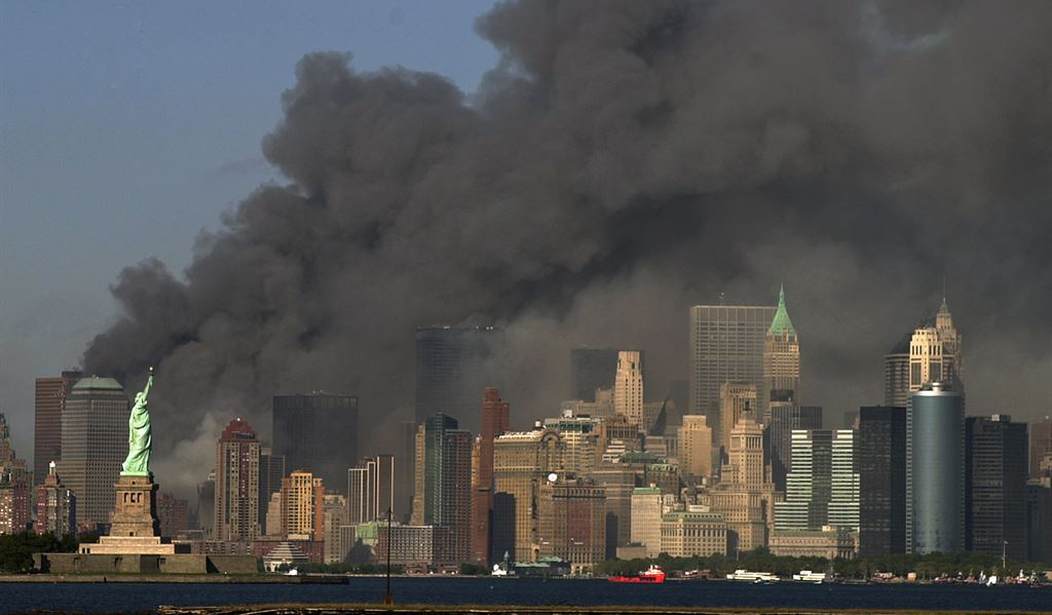
Faulkner's searing words came to mind when I realized that on Sept. 11, 2026, it will be 25 years since that impossibly beautiful late summer day when the world fell in around us.
On this 25th anniversary of the attacks on America, I'm thinking of Sept. 10, 2001, and what kind of country we were then compared to the kind of country we are now. Faulkner imagined that Southern boys might want to find a way to halt Pickett's charge before it started, perhaps even getting someone to call it off. The futility of that wish is what makes the "Lost Cause" so tragic and unnecessary. It was a forlorn hope to believe that Pickett or any other Southern army could have made a difference and changed the outcome of the war. The Union was going to win, and all Gettysburg really accomplished in retrospect was to add to the massive butcher's bill of the war.
The changes since Sept. 10, 2001, are immense, consequential, troubling, and potentially catastrophic. Meanwhile, the terror networks that initiated 9/11 and were responsible for attacks that killed tens of thousands of innocent people around the world have been systematically dismantled, root and stem, although the remnants of those networks can still carry out deadly attacks. Their avenues of financial support have been ruined, their communications totally disrupted, and their primary sponsors in Saudi Arabia have deserted them and joined the Israelis and other Arab states in the Israeli-Arab Gulf state alliance, courtesy of Donald Trump. Just recently, the other major sponsor of terrorism, Iran, has had its proxies Hamas and Hezbollah severely weakened. The world owes a huge debt of gratitude to the U.S. and Israeli militaries. We are safer today thanks to them.
But at what cost was this achieved?
By one (admittedly biased) estimate, calculated 20 years after the attacks, the war on terror had cost $8 trillion, including hundreds of billions spent to bring about regime change in Iraq and Afghanistan, where over 7,000 American military personnel lost their lives and 52,143 were maimed and injured.
The war on terror also led to a radical restructuring of government under the Patriot Act, which enabled unprecedented cooperation among federal intelligence agencies and expanded federal powers of electronic surveillance to uncover terrorist networks and their supporters. It gave the Treasury Department a new global reach to find and shut down the financial networks that paid for terror.
Here we are, 25 years later, though, and some would argue that, far from having eliminated support for Islamist terrorism, we see its sympathizers embedded in our politics.
Indeed, "In the end, we must conclude that the success of America’s jihadi enemies domestically has less to do with their intrinsic strength and more to do with us—specifically, with a lack of confidence in our own values and civilization, especially the Judeo-Christian values on which our civilization is built," writes Arthur Herman, CEO of Freedom’s Forge Solutions and author of Founder’s Fire: From 1776 to the Age of Trump.
Radical jihadists have allied themselves with America's intelligentsia, creating a new class of "victims" who are "oppressed" by capitalism, American imperialism, and American racism. The radical Muslims probably couldn't believe their good fortune. Even American feminists have soft-pedaled radical Islam, despite the most extraordinary anti-female ideology in the modern world.
They make misogynists look like women's libbers. But a lot of sins can be forgiven if you hate America enough.
This is particularly true among our college-educated elite today, but its roots go back to the days and months after 9/11 itself. We saw it first in the Left’s swift change of heart when it came to standing up to terrorism following the massacre of Americans on that day. After some initial enthusiasm for taking the fight to the enemy by stamping out al-Qaeda in Afghanistan and then seizing weapons of mass destruction in Iraq, it didn’t take much—a few photos from the rogue prison at Abu Ghraib—to convince the Left that a robust response to Islamist terrorism “wasn’t who we were.” The Left soon decided that U.S. efforts were only creating more terrorists than we captured or killed—or fueling Islamophobia. The best way to defeat terrorism, the argument seemed to go, was to admit that we were in the wrong, as we had been since at least 1948.
That’s why it’s no good blaming the Bush administration alone for serial policy failures in Iraq, or Afghanistan, or anywhere else. The Left was primed for defeat from the start, as epitomized by the Obama administration’s decision to cultivate closer relations with the Islamic Republic of Iran while distancing ourselves from Israel.
"Two decades later, some of us asked: 'Who won the Cold War?' writes Herman. "We wondered because we saw leftist academics enthralled by Communism and socialism more firmly entrenched in our colleges and universities than ever before. Now their students are out in the world, with their deeply distorted views of the U.S. and the West." And politicians like El Sayed and Mamdani are winking at terrorism and dancing around their support of it as the media and voters refuse to hold them to account for their toxic, radical views.
The question of whether we "won" the War on Terror is complicated. There have been many positive developments as networks have been smashed and the world is more united in battling radical Islam. But Europe is so besotted with Islamism that it's afraid of its own shadow, refusing to stand up for Western values and principles. America still has some strength to resist, but it's ephemeral and probably won't survive the next Democratic administration.
Imagining it is 9/10 is just as useless for us today as it was for Southern boys, frozen in time on July 3, 1863, imagining that Pickett's attack would never step off. Better to look to the future and fight today's fights rather than wallowing in a time that can't be altered, no matter how badly one wishes it wasn't so.
Editor's Note: President Trump is leading America into the "Golden Age" as Democrats desperately try to stop it.
Help us continue to report on President Trump's successes and combat Democrats' lies. Join PJ Media VIP and use promo code FIGHT to receive 60% off your membership.

Join the Conversation
VIP members get the ability to comment on articles.