In the 19th century, before Marxism and dialectical materialism, there was the "great man" theory of history. According to this view, historical events are not driven by broad social currents, economic forces, or technological changes, but are instead the direct result of the decisions and actions of "heroes" or "great men" (such as Julius Caesar, Napoleon Bonaparte, or Abraham Lincoln).
In the 1840s, Scottish historian and philosopher Thomas Carlyle, in his book On Heroes, Hero-Worship, and the Heroic in History, famously wrote, "The history of the world is but the biography of great men." Major historical turning points (revolutions, wars, scientific leaps, or religious movements) happened because a specific, extraordinary individual arrived at the right moment to guide the masses.
"Great men" are born with unique leadership qualities, vision, and charisma. They do not merely adapt to their environment; they actively bend the environment to their will. Carlyle believed that it didn't matter if the "great man" began life as a pauper or prince. They would rise to prominence regardless of their initial circumstances because their internal genius would naturally propel them to the top.
It's a seductive argument with many holes. For example, Napoleon could not have conquered Europe without the specific military innovations, geopolitical instability, and social unrest generated by the French Revolution — factors that existed entirely independent of his birth. Sociologist Herbert Spencer argued that "great men" are merely products of their societies and the generations that came before them. Before a great man can remake his society, Spencer argued, his society must remake him.
Marxists, on the other hand, rejected the theory by arguing that material and economic conditions drive history, not individual willpower. The class struggles, trade routes, technological advancements, and the distribution of resources determine humanity's direction; individuals are simply actors stepping into roles created by these broader economic realities.
Today, most historians are biased toward studying long-term geographic, demographic, and cultural trends rather than focusing purely on political and military elites. Their argument partly rests on the notion that history is driven not just by great men but also by ordinary people and the millions of individual decisions they make that move it in a specific direction.
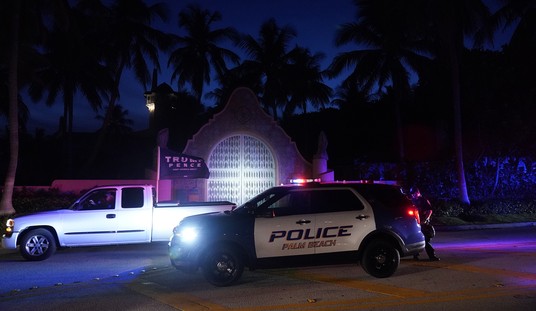
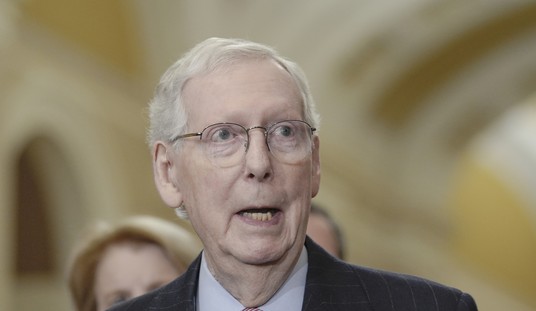
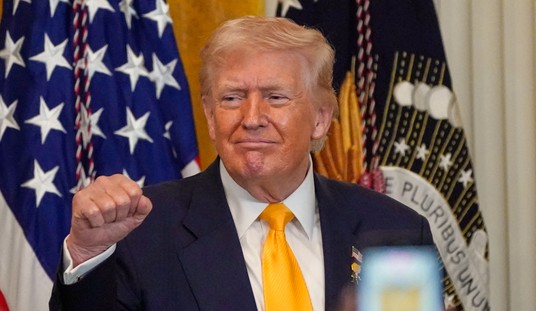
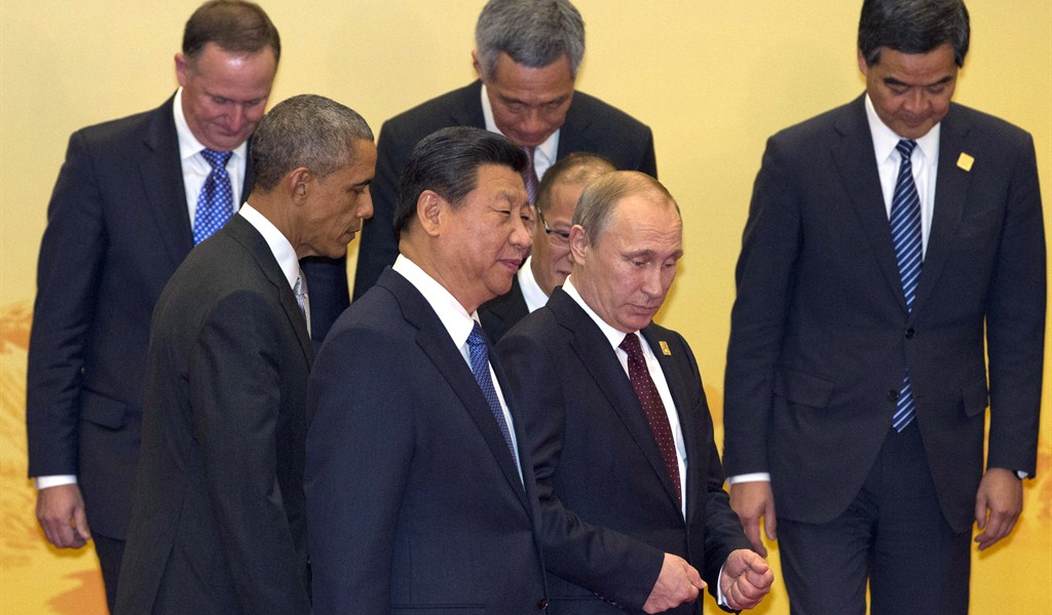
The "great men" of today — Donald Trump just turned 80, Xi Jinping is 73, Benjamin Netanyahu is 76, Vladimir Putin is 75 — are in the twilight of their lives. Generational change will be coming to every one of the nations they lead. Only Israel and the U.S. have established succession procedures. Russia and China are facing potential instability.
What sort of "great men" will replace Trump, Putin, Xi, and Netanyahu? It may be that these men—with their larger-than-life personalities and the turbulent times in which they lived—are the last of their kind.
Israel after Netanyahu will have the same security priorities it has today, but the question will be whether the fragmented party system in the Knesset can deliver a functioning majority to any new leader from the right. Entropy, rather than a deliberate change of direction, is the likelier outcome. In China, the opposite is true: the Chinese Communist party won’t let its grip on power slip, but after Xi it could take steps to make sure that future leaders cannot overawe the party hierarchy. Yet there will be temptations to be more assertive, too – to show the party can still wield power with remorseless vigor even without a figure like Xi.
Certainly, no one in Israel or China has the stature of Netanyahu and Xi. While MAGA will survive Trump, a personality as large won't emerge automatically. There will be several politicians, as there will be in China and Israel, who will seek to claim the mantle of leadership.
As for Putin's replacement, this is where the risk of global instability is greatest.
Russia, however, is the greatest question of all. The European expert to whom I directed my question had earlier cautioned his American audience against simply reducing Russian politics to Putin. But if Putin isn’t everything in the Russian system today, he’s the axle around which everything else revolves. His absence will put every institution into play. There’s little room for optimism here: the entropy Russia experienced in the Boris Yeltsin years gave way to Putin, and the KGB/FSB apparatus has survived every vicissitude.
There is some reason for hope in Moscow.
"The rising generation of Russians have now had a long experience of war, and they’re sick of it," writes Daniel McCarthy in The Spectator. "Generations have also come of age with no memory of the Soviet Union and, in the case of younger cohorts, no memory of how the transition to a market system was botched under Yeltsin."
The problem is that Russia has never had a market economy. Yeltsin put Communist managers in charge of entire industries (the "oligarchs"), creating the worst of socialism and capitalism: crony capitalism. It's unclear if any of the current crop of technocrats in Russia could engineer a miracle and bring about a market economy. It's unlikely that anyone will be allowed to try.
Thus, the "great man" theory is finally being killed, largely because there simply are no more "great men" after this current crop of leaders dies. Will another clutch of leaders emerge to challenge history and shape events in their direction? I certainly hope so; reading history would be boring.