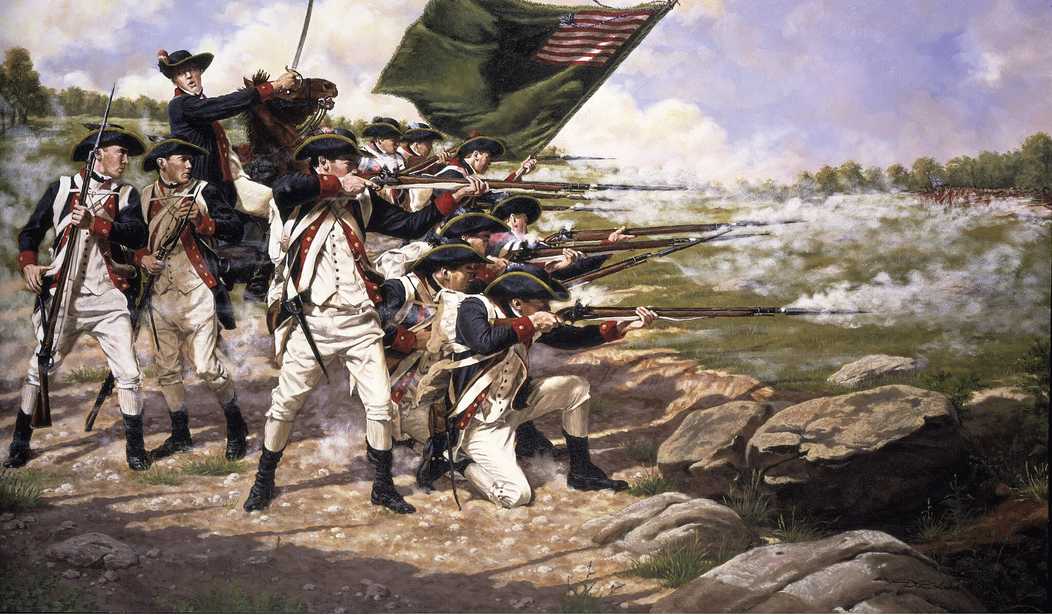
Two hundred and fifty years ago today, a widower and father of six named Isaac Ketcham saved the Continental Army before the U.S. was even a nation. Ketchum had been part of a counterfeiting ring that copied the ridiculously simple continental currency. He was nabbed when a fellow conspirator gave up his name.
While he was languishing in jail, Ketchum heard jailhouse scuttlebutt about a plot involving elite soldiers, George Washington's personal bodyguards, to kill the general. Seeing his ticket out of jail, Ketchum wrote to the Continental Congress about the plan.
Unfortunately, most of Ketchum's letter to Congress is lost to history. However, two main points survived.
There was a fifth-column plot against the patriots, with an unknown number of Continentals set to desert to the British when the British arrived. The second point Ketchum raised with Congress could have been a massive game-changer for the British.
After telling Congress what he knew of the plot, he was sent back to prison to act as an informant. While in prison, he made friends with one of Washington's elite bodyguards, Irish-born Thomas Hickey, who was also in jail for counterfeiting.
(Now you know the origin of the term "Not Worth A Continental." Everyone was doing it, debasing the currency until it was worthless.)
Ketchum got in Hickey's good graces by pretending to be a loyalist and heard the traitor boast of his plans, including something far more serious than getting some of Washington's bodyguards to defect to the British. Ketchum heard Hickey boast of a plot to kill George Washington.
“In different conversations, he informed me that the Army was becoming damnably corrupted,” Ketcham told the court-martial that tried Hickey. “That the fleet was soon expected; and that he and a number of others were in a band to turn against the American Army when the King’s troops should arrive.”
Was Hickey planning to murder Washington with "poison peas"? Probably not. But there were prominent loyalists, including the colonial Governor William Tryon, safely ensconced on a British ship in New York harbor, and the Mayor of New York City, David Matthews, who were aware of the plots. There were definitely messages passed by Tryon to other loyalists in the city.
How serious was the plot? John Jay, the future Supreme Court Chief Justice, was chairing a committee looking into the plot.
The alleged plotters, it seemed, had only the vaguest notions of their own plot. There was talk of paying Continental soldiers to defect, incapacitating their generals, and destroying the bridge between Manhattan and the Bronx so what was left of the patriot army would be cut off when the British army invaded. Only many years later, when applying for compensation from the British government, did the New York mayor admit that he had, as he put it, “formed a plan for the taking Mr. Washington and his guard prisoners”—that is, kidnapping them.
How seriously to take the conspiracy was difficult to determine back then and has become no easier as the years have layered the story in legend. According to one account, a member of the life guard planned to poison Washington by serving him, of all things, peas. Ultimately, only Hickey was hanged. In orders announcing the sentence for “mutiny, sedition, and treachery,” Washington urged his soldiers to learn from Hickey’s mistakes and “avoid lewd women.” As to how the daughters of Eve led a member of Washington’s life guard astray, historians combing through the archives have yet to find satisfactory answers. The search will go on.
"The sheer quantity of highly indiscreet men blabbing about it in taverns and jails and the like makes the whole thing seem crazy in retrospect, but if it had succeeded in, say, destroying Kingsbridge, it might have trapped the Continental Army on Manhattan, where they would have been easy pickings for the vastly superior British," says Executed Today.
That much is true. New York City was a hotbed of Tory plots and anti-patriot sentiment. While the plot to kill or kidnap George Washington may have been more mirage than reality, the Continental Army was in great peril from not only the British army but from Americans as well.