







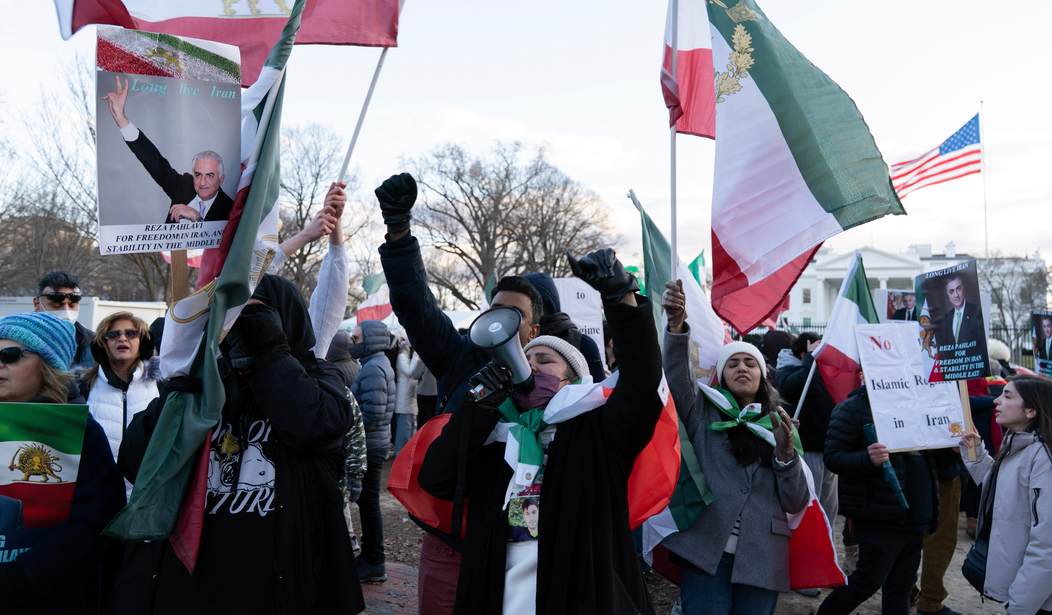
Something important has changed in Iran. From the Supreme Leader, Ayatollah Ali Khamenei, to the lowest street vendor, a symbolic Rubicon has been crossed, and everyone knows it.
The bloody massacres of January 9-10 may have killed up to 36,000 people, according to the anti-regime site Iranian International. The UN claims more than 20,000 dead.
Meanwhile, the Iranian regime is sticking with its original number of 3,117 dead, many of them regime security personnel.
The important thing is not an exact body count, although for potential war crimes trials and for the benefit of history, an exact accounting of the dead will be necessary. What's important is the change the massacres have wrought among the Iranian population, especially the Middle Class.
"People are extremely angry," he said, adding a U.S. attack could lead Iranians to rise up again. "The wall of fear has collapsed. There is no fear left."
In previous protests where dozens were murdered in the streets, authorities took great pains to limit lethal force against protesters. Some of the deaths were from ill-trained auxiliaries like the Basij. The bulk of deaths during these protests were executions carried out by intelligence operatives targeting protest leaders. The killings had the express purpose of intimidating protesters and sending them home.
The massive bloodletting on January 9-10 was different.
In high-level meetings, officials told Supreme Leader Ayatollah Ali Khamenei that public anger over last month's crackdown -- the bloodiest since the 1979 Islamic Revolution-- has reached a point where fear is no longer a deterrent, four current officials briefed on the discussions said.
The officials said Khamenei was told that many Iranians were prepared to confront security forces again and that external pressure such as a limited U.S. strike could embolden them and inflict irreparable damage to the political establishment.
One of the officials told Reuters that Iran's enemies were seeking more protests so as to bring the Islamic Republic to an end, and "unfortunately" there would be more violence if an uprising took place.
"An attack combined with demonstrations by angry people could lead to a collapse (of the ruling system). That is the main concern among the top officials, and that is what our enemies want," said an official, who, like the other officials contacted by Reuters for the story, spoke on condition of anonymity.
(This is another sign that the regime is fracturing. The flood of "anonymous sources" talking to Reuters and the international press is without precedent.)
"The reported remarks are significant because they suggest private misgivings inside the leadership at odds with Tehran’s defiant public stance towards the protesters and the U.S," said the official.
A former senior official, seen as a moderate in Iran, said the situation had changed since the crackdown last month.
Several opposition figures, who were part of the establishment before falling out with it, have warned the leadership that "boiling public anger" could result in a collapse of the Islamic system.
"The river of warm blood that was spilled on the cold month of January will not stop boiling until it changes the course of history," former prime minister Mirhossein Mousavi, who has been under house arrest without trial since 2011, said in a statement published by the pro-reform Kalameh website.
"In what language should people say they do not want this system and do not believe your lies? Enough is enough. The game is over'," Mousavi added in the statement.
During the early January protests, witnesses and rights groups said, security forces crushed demonstrations with lethal force, leaving thousands killed and many wounded. Tehran blamed the violence on "armed terrorists" linked to Israel and the U.S.
The people have lost their fear of dying in the streets. "If protests resume during mounting foreign pressure and security forces respond with force, the six current and former officials said they fear demonstrators would be bolder than in previous unrest, emboldened by experience and driven by a sense that they have little left to lose," reports Reuters.
People with little left to lose can perform miracles. Donald Trump has yet to indicate whether he wants to attack the Iranian leadership, but if he does, it's not likely there will be much support for the regime's survival among the population at large.
The new year promises to be one of the most pivotal in recent history. Midterm elections will determine if we continue to move forward or slide back into lawfare, impeachments, and the toleration of fraud.
PJ Media will give you all the information you need to understand the decisions that will be made this year. Insightful commentary and straight-on, no-BS news reporting have been our hallmarks since 2005.
Get 60% off your new VIP membership by using the code FIGHT. You won't regret it.
Join the Conversation
VIP members get the ability to comment on articles.