


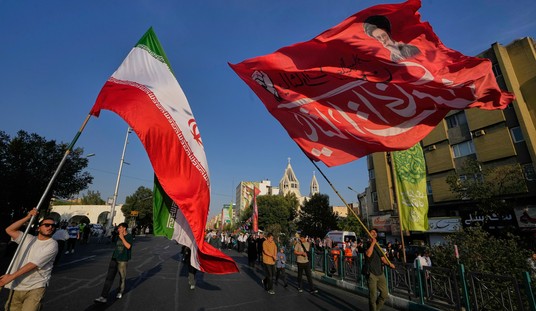
The sheer brutality of Iran's crackdown on revolutionary protests appears to be making an impact. The Institute for the Study of War (ISW) recorded just one protest in Tehran on January 13.
However, the ISW admits that "with low-to-medium confidence," protests are occurring beyond those they have been able to record. The regime has successfully limited the amount of information leaving Iran.
The Iranian regime is not very picky about where it accepts help. Politico reported on Tuesday that Russia recently supplied Iran with Russian-made Spartak armored vehicles and attack helicopters. These systems can be easily used for crowd control and intimidation. Russia — otherwise known as the "Lesser Satan" by Iran's mullahs — is doing its best to be a nuisance to make life harder for the U.S.
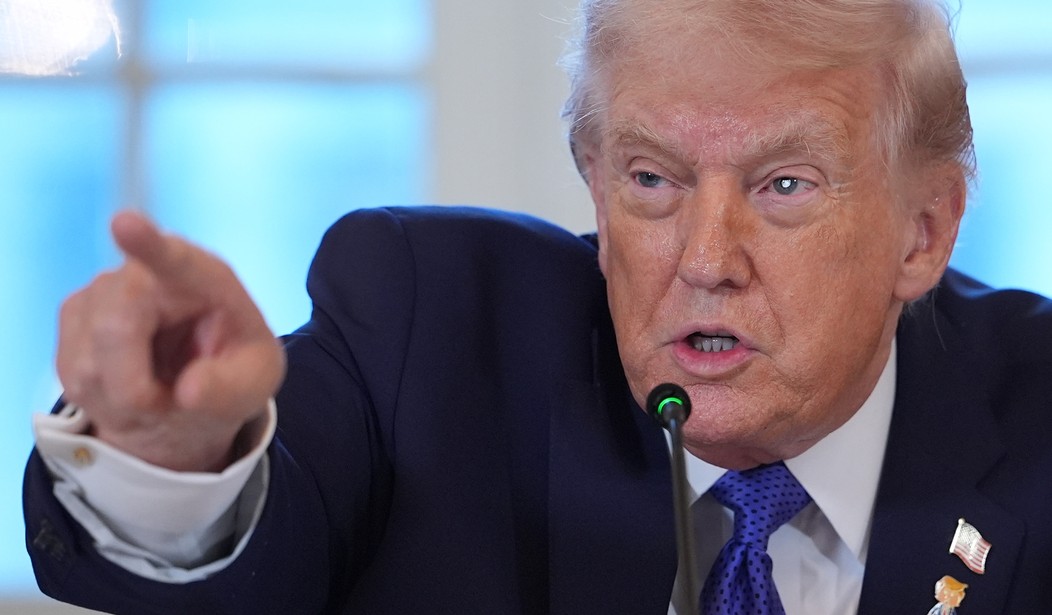
Despite the drop in the number of protests, Donald Trump is likely to intervene in a direct way to help the protesters.
Reza Pahlavi, the son of Iran's last shah who lives in exile in the U.S., has urged Trump to "intervene sooner" to save the lives of protesters.
Pahlavi described Trump as "a man that means what he says and says what he means" and who "knows what's at stake." During a stop in Detroit, Trump reiterated his promise to the protesters that "help is on the way."
“The President has made his position clear, and he has demonstrated with Operation Midnight Hammer and Operation Absolute Resolve that he means what he says,” White House spokeswoman Anna Kelly said, referring to the code names for the bombing of Iran's nuclear sites and the operation to capture Venezuelan President Nicolás Maduro.
Trump was briefed last week on military options and a range of other scenarios, according to a former U.S. official familiar with the matter. They include cyberattacks on the Iranian government’s infrastructure, measures to counter Iran’s blocking of protesters’ communications, and strikes on targets associated with Iran’s repressive security services.
Two European officials, speaking on the condition of anonymity to describe sensitive information, said their countries were asked by the Trump administration Monday to share intelligence on possible targets within Iran.
“We don’t have any indications that President Trump will target nuclear facilities. It is more likely that he will go after the leadership of organizations and forces that are responsible and involved in the killings of protesters,” one of the officials said.
Not "shock and awe," but then, it doesn't have to be. Encourage the protesters, give them heart by killing some high-ranking Revolutionary Guard and Basij leaders, and perhaps target Khamenei's bunker. The goal is to assure the protesters that the U.S. will not try for regime change, only assist the revolutionaries in their goal of overthrowing the regime. Restoring the internet will be a huge morale boost, as will the deaths of regime persecutors.
However, as powerful as the U.S. military is, some of its best "strike" assets are scattered all over the globe. Operations against the cartels and Maduro sent a carrier battle group to the Caribbean. Two other carrier groups are in Japan and the South China Sea, deployed against China.
That doesn't mean a strike can't be mounted.
The administration right now “just doesn’t have the assets in the region to do a full kinetic strike without risking retaliation,” said the person familiar with the administration’s thinking. “We had to pull a lot of our assets out of Centcom to support Venezuela.”
But it does have options. There are multiple destroyers nearby capable of firing long-range missiles, and presumably ballistic missile submarines. Joint Chiefs Chairman Gen. Dan Caine has shown he is willing to use unexpected strike platforms, such as the deployment of U.S.-based B-2 stealth bombers that flew 36 hours straight to strike Iran during Operation Midnight Hammer.
Our allies in the Gulf are rightly concerned that if the Iranian regime collapses, the refugee crisis from a nation of 90 million Shi'ite Muslims will overwhelm the smaller Sunni muslim nations in the Gulf. Those same nations worry that a collapse could "spark a civil war or create a large, heavily armed failed state similar to Libya or Syria," reports the Post.
Trump has much to consider before finalizing plans to intervene in Iran.
The new year promises to be one of the most pivotal in recent history. Midterm elections will determine if we continue to move forward or slide back into lawfare, impeachments, and the toleration of fraud.
PJ Media will give you all the information you need to understand the decisions that will be made this year. Insightful commentary and straight-on, no-BS news reporting have been our hallmarks since 2005.
Get 60% off your new VIP membership by using the code FIGHT. You won't regret it.



Join the conversation as a VIP Member