





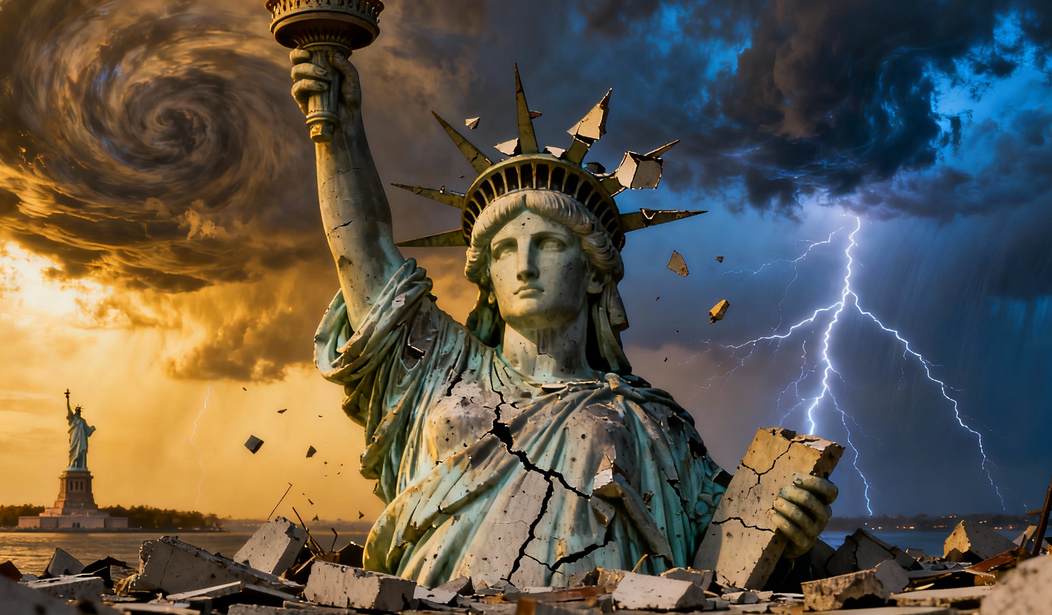
In the days before CGI and $100 million special effects budgets, there was the "Disaster Movie" genre and a world of miniatures, models, and cheesy animation.
Of course, we didn't know any better in the early 1970s. Watching Towering Inferno as Steve McQueen, William Holden, and Paul Newman tried to survive a fire in a 138-story skyscraper was a fantastic movie-going experience. Just to see the three legends together on the same screen was worth the price of admission.
But the "fire" was a disappointment. Imagine a Spielberg remake. The fire would leap off the screen and end up in your lap. That's Hollywood for ya.
In the 1970s, it was easy to imagine New York City allowing a corrupt builder to use cheap materials and unsafe construction methods that led to the fire. Other disaster movies usually featured some variation of errors and corruption that led to tragedy. The ship in The Poseidon Adventure was top-heavy because it was running low on fuel and had not taken on seawater as ballast. The owners of the cruise line overruled the captain’s safety concerns, ordering him to maintain full speed to reach Athens on schedule, which left the ship dangerously unstable.
Those and other disasters on film were dramatic and possibly preventable. Later iterations of the "Disaster Movie" that destroyed New York City, like Independence Day or The Day After Tomorrow, "offered sweeping apocalyptic visuals," as UnHerd's Poppy Sowerby describes it, with "crumbling landmarks, waves dwarfing Midtown skyscrapers, cows mooing in the carousel of a hurricane." These were fantasies of "Western annihilation," which included glimpses into the inner workings of the government.
Sowerby writes, "At a time of relative prosperity and security — and before 9/11 — the focus was on the spectacle of destruction, how far directors could push newly available special effects."
It wasn't very realistic in the sense that the formulaic scripts were missing the point. In the real, non-apocalyptic world, "disaster" unfolds gradually, painfully slowly. And it's hardly noticeable.
"The 2020s, so far the decade of disease, decline, and demographic transformation, have taught us that the most psychically terrible threat is no longer immediate apocalypse — it’s the insidious, years-long erosion of protections and values taken for granted, whose loss is written on the sidewalks of London, and written on the wall for a New York City preparing to welcome an untested Millennial mayor," Sowerby writes.
Zohran Mamdani's New York City will not collapse in a heap of riot and arson. It's an open question whether we'll even notice the loss of civilization.
Did we notice it in San Francisco when it was happening?
In the real world, social contracts are not blown up but forgotten in the back of some dusty drawer. Personal safety is not, for the most part, violated by a lone attacker — it disappears when we acclimatise to the petty transgressions of normal people, those who press their bodies against us to shuffle in on our subway fares, who strut out of Tesco with bottles clinking in their pockets, who hock spit at minor officials when their toddler antics are reprimanded. Disaster happens, yes, when planes crash; but it also happens when they don’t — when dismal passengers rub their bare feet, puff clouds of sickly vape smoke into the cabin, rage at the stewardesses for no reason at all.
Will and Ariel Durant's timeless classic, Why Rome Fell, offers some sage advice.
"A great civilization is not conquered from without until it has destroyed itself from within." New York City is being hollowed out by a legion of Mamdanis who began their work before Islamists took down the towers.
Politeness, consideration, conformity: these are the casualties of a real-life disaster movie, a world forever changed by a lost expectation of a sensible and cohesive public. Citywide breakdowns recall riots, looting, mass catastrophe — but social orders can buckle under the weight of less spectacular tragedies, and barrier-bumpers, gum-spitters and participants in the pavement pissoir are all doing their bit to lower trust and heighten quotidian horror.
It's one thing when an alien death ray blasts the Empire State Building and takes out the city. That kind of disaster is easily understood. But in the real world, the disaster is nearly invisible but just as destructive.
Related: Why Is the Government So Dysfunctional and Can Anything Be Done to Address the Problem?
As New York prepares to inaugurate a 34-year-old, untested and catastrophically naive mayor on New Year’s Day, its merrymaking residents, much like the Champagne-popping revellers of the fictional Poseidon, don’t know what’s coming their way. Melodramatic, you might say — but consider how fragile is the order of the day-to-day. Even without a total naif in Gracie Mansion, life here rests on a knife edge: street-corner encounters turn violent without provocation, sly parcel-swipers continually invade hallways, and looking askance at the wrong commuter can earn you a slashed cheek or lit match.
Mamdani has threatened to make the city’s buses, already mobile circus wagons full of antisocial sideshows, free — they could well go the way of the Central Park pool this summer, which became de facto baths for the “unhoused” and handy toilets for the disturbed.
Mamdani doesn't have to try very hard to complete the work of the radicals who came before him. The frayed edges of the social contract that all humans need to abide by to live in proximity to one another may continue to unravel. What's the point of no return? Mamdani will try and find it before he's through.
The holiday season is almost through, but the gift that keeps on giving lasts all year.
Right now, you can get 74% off PJ Media VIP with the code MERRY74 — and yes, that same deal works if you want to give VIP as a gift to someone who appreciates sharp commentary, fearless reporting, and a little common sense in a world that’s running low on it.
This special Christmas offer runs through New Year’s Day, so don’t wait. Use code MERRY74 and save 74% today — for yourself or someone else.



Join the Conversation
VIP members get the ability to comment on articles.