







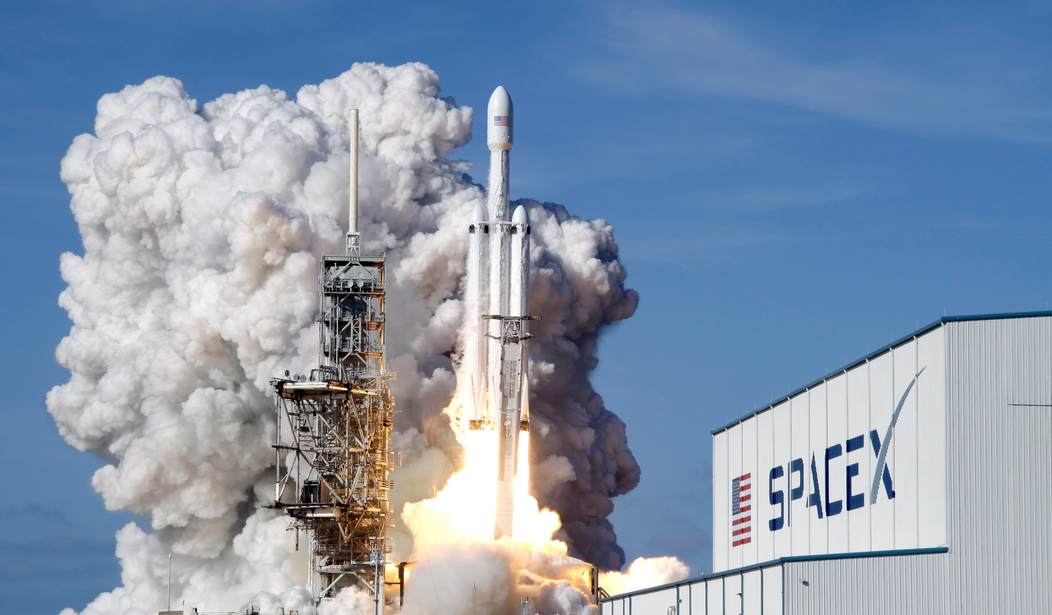
In the current prospectus for the IPO, Musk reiterates that the goal of SpaceX is to make humanity a multi-planetary species and to colonize Mars. The company’s mission is described as follows: “Our mission is to build the systems and technologies necessary to make life multiplanetary, to understand the true nature of the universe, and extend the light of consciousness to the stars.”
But so far, only probes and robots have been to Mars, not humans. Many critics consider plans for Mars to be science fiction. Not so the renowned NASA Ames researcher Harry W. Jones, who says: “It has seemed there must be overwhelming difficulties preventing our going to Mars. We have not reached Mars even though it has been NASA’s horizon goal since Apollo. We do not have a detailed feasible mission plan. There has not been sufficient funding to make tangible progress. Mars plans usually propose developing advanced technology, before we can begin the mission.”
Between the lines, you can sense his frustration – directed not only at politicians, but also at NASA itself. For over fifty years, there have been repeated excuses for indefinitely deferring a mission to Mars. And yet, there is no shortage of plans to reach Mars. Since the 1950s, over 1,000 plans have been devised. Even if you only count those that meet scientific standards, there are still 55 plans.
However, in a detailed analysis, Jones concludes that there are “no showstoppers” – that is, no insurmountable obstacles on the path to Mars. He identifies seven key challenges: hostile surface environment, human performance, life support, medical care, radiation exposure, reduced gravity, and telecommunication delays – and shows that there are viable solutions for each and every one of them based on the current state of technology. Solutions for all these problems exist today, he argues, in part thanks to the recent great reduction in launch costs.
The primary technical challenges for a Mars mission are long-term life support, radiation exposure, and reduced gravity. According to Jones, solutions for solar flares and cosmic microwave background radiation already exist, made possible by reduced launch costs. For instance, a small, shielded shelter within the spacecraft, measuring two meters in diameter with 7.5-centimeter-thick walls, could protect against solar storms during transit. Additionally, a shorter transit time and the use of Martian regolith to shield surface habitats could mitigate the effects of cosmic microwave background radiation.
Regarding the challenges of weightlessness during space travel and the more than 60 percent reduction in gravity on Mars: A rotating spacecraft, similar to those depicted in science fiction films, can generate artificial gravity during the journey. And there are also viable solutions for habitation on Mars itself: “One suggestion is a large rotating underground wheel. The floor must be tilted so that the 0.38 g Mars gravity pulling down combines with a 0.92 g horizontal spin force to provide 1 g. The rotating wheel would be underground to provide radiation shielding.”
All in all, yes, a flight to Mars, and even more so its colonization, presents substantial challenges – some we can anticipate, and many others will be unforeseen. But having developed countless plans for how it could be done, the time for action has come. If Roald Amundsen and his team, the first to reach the South Pole in 1911, had required the same level of safety and perfection as NASA demands for its mission to Mars, they certainly would never have launched their expedition.
If there are no “showstoppers,” as Harry W. Jones argues, why aren’t we already on our way to Mars? As so often, it is also a question of money and economic incentives. Elon Musk’s plans to bring one million settlers to Mars cannot possibly be financed through taxpayer money. But how could private financing become feasible?
The economic incentive is missing because, according to the 1967 Outer Space Treaty, nations are prohibited from owning celestial bodies or land on celestial bodies. Whether this also applies to private individuals and companies is disputed among legal scholars. In my book New Space Capitalism, I show how it could work: If the private appropriation of land on celestial bodies were possible, an enormous economic incentive would suddenly emerge — one that is currently absent. So, who should have the right to acquire property in space? My answer: Those who have the financial means to get there, develop, and use the land.
For instance, if SpaceX succeeds in reaching Mars and starts to build permanent settlements on the Red Planet, then the ownership of land should initially go to SpaceX. Not the entire planet, of course, but a practicable area, for example, the size of Singapore. The surface area of Mars is 200,000 times that of Singapore, so SpaceX would initially own only 0.0005 percent of Mars. That would be enough to develop multiple settlements, but not so much that others would no longer have a chance.
SpaceX could finance its flight and development costs by listing the land on Mars in a real estate investment trust (REIT). The price would then be determined by the market. Most people would buy shares not because they intend to live there themselves, but in the hope of future appreciation in value. It would be the greatest real estate story in history.
Editor's Note: Do you enjoy PJ Media's conservative reporting that takes on the radical left and woke media? Support our work so that we can continue to bring you the truth.
Join PJ Media VIP and use promo code FIGHT to receive 60% off your membership.


Join the Conversation
VIP members get the ability to comment on articles.