





Shavuah tov. May this new week and new month bring a renewed sense of balance and harmony, and joy and peace to us, Israel, the U.S., and the world.
You may have noticed that I did not write any updates for the couple of days before Shabbat. This was not laziness, but a reflection of the reality that the same thing keeps happening repeatedly: aggressive rhetoric, small conflicts, and it feels as if it is the calm before the storm.
Israel continues to slowly and carefully clear out Hamas tunnels and weapons caches, while the "Peace Council" continues to push that Israel should remove itself from Gaza, leave Hamas in control, and that this would cause peace, despite the fact that the last two decades, especially October 7, have shown that to be a complete fallacy.
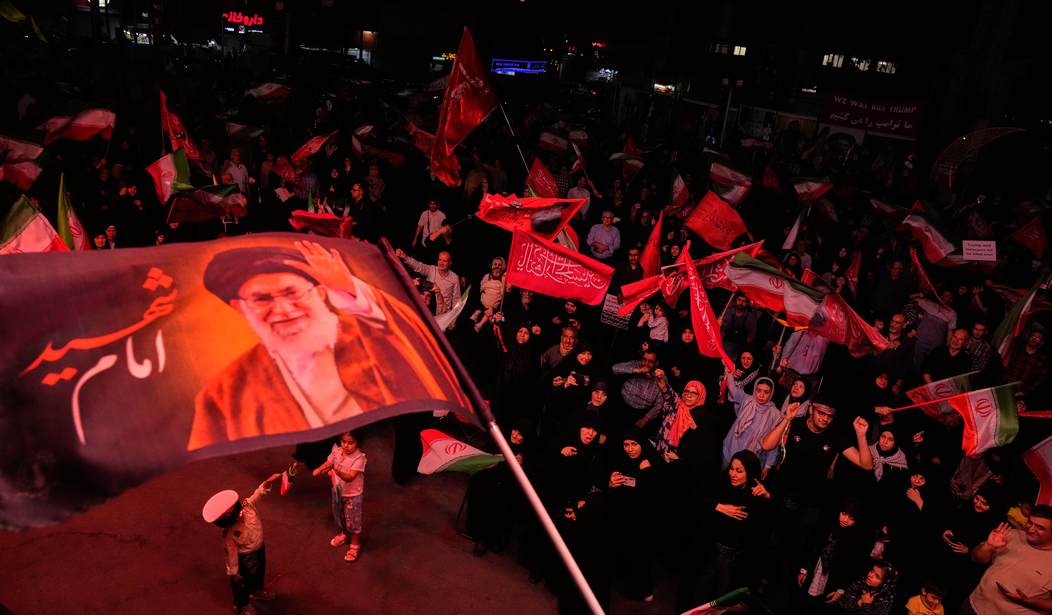
American rhetoric continues, with President Donald Trump saying today that he "will soon declare the Strait of Hormuz as American territory." Earlier, he said in an interview with Fox News that "we will strike Iran economically." The American rhetoric seems to now be consistently about Hormuz and economics, and the original mission of eliminating Iran's nuclear development and capability is noticeably not being talked about very often.
Reuters reported this afternoon that Iran's Deputy Foreign Minister Kazem Gharibabadi responded to U.S. President Donald Trump, who said he would declare the Strait of Hormuz as American territory, saying that "Tehran is not threatened." Gharibabadi said: "The Strait of Hormuz will open or close at Iran's command only. Iran is not threatened by the U.S."
And so the rhetoric continues, and Iran continues to develop its weapons,
But we have now entered the Hebrew month of Elul, the month preceding Rosh Hashanah. Our Sages teach that the name of this month is an acronym for the phrase, "I am my Beloved's and my Beloved is mine" (Ani L'Dodi V'Dodi Li). This phrase, from Song of Songs (6:3), is often recited at weddings. But its real meaning has to do with the love that God has for His people.
In this month of Elul, we believe that "The King is in the Field" (Likkutei Torah on Parsha Re'eh). But what does this really mean?
God is often compared anthropomorphically to a King. Normally, if someone wants to visit the king, they need to go through a series of bureaucrats, ministers, guards, and other gatekeepers before they are able to visit the king and his chamber in the palace. There are protocols and practices that make it difficult for the average person to be able to have an honest dialogue with the King.
And this is often true for the King of Kings as well. People think that they need to express confusing liturgy, pray at a certain time, go through clergy, and interact in a specific way in order to be able to speak and, more importantly, listen to what the King of Kings is telling his or her soul. (Even though they may think that it is not true, as God is always available to everyone in every moment, each person has their own direct relationship with God, but many people often forget that eternal truth.)
But during this month of Elul, the King has left His royal chamber and the palace, and is walking in the field among all of us. It is like that scene from Mark Twain's A Connecticut Yankee in King Arthur's Court, where King Arthur travels among his people to see how they really feel and act.
This is a time of intimacy between God and His people. This is the time to show God not just how we act during prayer services, but how we act in our daily lives. Okay, so we are nice to each other during our services in synagogues or churches, but how do we really treat each other in those other moments? How do we treat each other in our business dealings? Our family relationships? Our daily actions? Everyone can act in a holy way on a mountaintop, but are we doing holy work in the marketplace?
I have an old friend named Ira who owns multiple buildings and has always said that, as a landlord, he is "doing the Lord's work," and he does. When tenants have problems paying the rent because of unfortunate circumstances, he always errs on the side of compassion and tries to help them. He puts his faith in people and relationships over his finances, and truly helps people (and he has tenants in both very poor and very wealthy neighborhoods). In many ways, it is less important than his attendance at religious services, given that he makes every moment a moment of sanctifying the Holy One by the way he treats people.
That is what this month of Elul is all about. Not how we act in churches or synagogues, but about how we act with each other in our daily moments. Can we make each moment holy? And in the process of trying to achieve that, we are showing the King of Kings, who is walking amongst us intimately, that we deserve the blessings of this upcoming new year.
How can we do that? Simply by acting justly, loving mercy, and doing what is right in God's eyes (Micah 6:8). Especially during this month, we need to fix the unrighteous wrongs that we see committed. We need to be actively merciful in our actions with others. And we need to do what God has commanded us through the sacred texts.
So each day for this month as we prepare for Rosh Hashanah, let us each do at least one good deed for other people. If you see someone standing on a street corner asking for money, take two minutes out of your day and give them something. Moreover, ask them their name or begin a conversation with them; show them that you see them as a real person, not just a beggar. Give charity to an organization every day this month. It is our belief that it is better to give a dollar a day to charity than to give $30 once every month; for the daily giving puts us in the habit of being charitable. Light Sabbath candles, or invite a stranger to your home for a meal and make that stranger into a friend. Choose to keep kosher, or at least not to eat the forbidden foods. There are so many good mitzvahs that we can each do, and let us start to do more of them, especially during this month.
All the prayers and words and teachings that will be shared at the upcoming High Holiday services of Rosh Hashanah and Yom Kippur are absolutely meaningless unless they are taken and become actions. This is the month to act. To act righteously and with extra intention and focus.
May we all use this month of Elul to bring us closer together, make positive change through action in the world, and in so doing, develop ourselves so that we are closer to achieving our potential in our own lives, and in affecting the world.
Chazak u'Baruch
Rabbi Michael Barclay
August 15, 2026
3rd of Elul, 5786
This weekend showed some of the truer colors of nations around the world, both in the Middle East and around the globe.
The relationship between South Korea and the U.S. got strained as South Korea's President refused to be involved in denuclearizing Iran after President Trump specifically made the ask. Upon their refusal, Trump hinted that his relationship with Kim Jong Un of North Korea is strong, and that the U.S.-South Korea joint military exercises should be "significantly reduced.” South Korea expressed early Monday morning that they are now going to "review military cooperation with the U.S. in Hormuz.”
The pressure against Israel by its Muslim neighbors was exponentially increased over the weekend in two very significant ways. Eight Muslim nations issued a joint statement condemning Israel's decision not to accept this horrendous and one-sided deal. The countries of Egypt, Jordan, the United Arab Emirates, Qatar, Indonesia, Saudi Arabia, Turkey, and Pakistan said in their joint statement that, "Israel bears responsibility for disrupting peace efforts in Gaza and the Palestinian territories. Israel's rejection threatens to undermine Trump's efforts to end the war in Gaza."
Given that there are both Jewish and Christian prophecies that eventually there will be conflict between Israel and the rest of the world, one has to wonder if, God forbid, these are the times that we are starting to enter?
But Rabbi Shlomo Carlebach of blessed memory once gave a teaching on this very subject. His opinion was that the reason that Israel is so often alone (he said, "with only the half-support of the U.S.") is so that all Jews, and all people of faith, realize that the one true ally of Israel has, is, and will always be God. He was concerned that if Israel had multiple physical allies, they would lose sight of their most important spiritual ally, which is the foundation of their very existence.
As we go through these conflicts and challenges, let us all remember that teaching. Our most important Ally has been and will always continue to be the Holy One, blessed be He. And we fully embrace that relationship with God as individuals and as a culture, as people of faith and as citizens of the world desiring for there to be a long-lasting and ultimate world of peace.
Chazak u'Baruch
Rabbi Michael Barclay
August 17, 2026
4th of Elul, 5786
Editor's Note: Do you enjoy PJ Media's conservative reporting that takes on the radical left and woke media? Support our work so that we can continue to bring you the truth.
Join PJ Media VIP and use promo code FIGHT to receive 60% off your membership.
Join the Conversation
VIP members get the ability to comment on articles.