


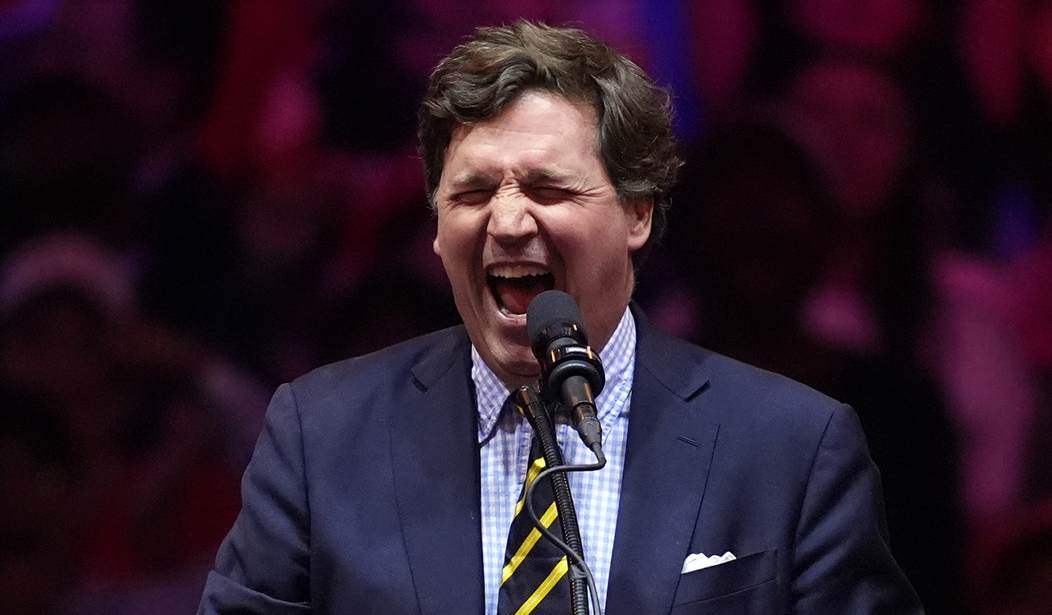
Watching the interview between Tucker Carlson and Mike Huckabee was painful on so many levels. Tucker Carlson, who admits that he normally doesn't introduce an interview, had a 25-minute monologue before actually showing the interview, attempting to justify his very strange and anti-semitic behavior. His agenda was so clear: to attack Israel and Benjamin Netanyahu in any way possible. Rather than asking intelligent questions, Tucker kept trying to pigeonhole Huckabee into addressing classic anti-semitic tropes and Jew-hating myths. He even accused Israel's president, Isaac Herzog, of being involved with Jeffrey Epstein, although he retracted that accusation the next day.
But Tucker’s anti-Semitism has been on display for a long time, and I even wrote about it two years ago when it was clear that he disliked Jews in general and Israel in particular. But this interview was troubling on a much deeper level and shows signs that should be very concerning to Carlson himself, as well as to anyone who follows him.
Carlson showed what appeared to be signs of either mental distress, a neurological issue, or possible addiction.
Throughout the interview with Huckabee, Tucker suddenly begins laughing nervously. It happens frequently, often at some of the most inappropriate moments. During exchanges about war, death, or even his own personality (he repeatedly calls himself a “jerk”), Tucker breaks into a strained, almost hysterical laugh that feels out of place—arguably even more so than the cackling often associated with Kamala Harris. It seems uncontrolled, inappropriate, and at times extreme. If you watch the entire interview, this happens repeatedly: he suddenly starts laughing and lowers his head, almost as if in embarrassment.
To act like this once or twice would suggest a level of nervousness that is not typically attributed to Tucker Carlson. To repeatedly behave this way could be a symptom of something much, much deeper and more troubling for his own well-being.
Sudden, inappropriate, and uncontrollable laughter is known as Pseudobulbar Affect (PBA). It affects approximately 2 million people in the United States and is found in 29% of patients with Alzheimer’s disease. “Patients who have neurological conditions such as Alzheimer’s disease, Parkinson’s disease, multiple sclerosis, traumatic brain injury, and strokes are all at risk of developing PBA. PBA is a distinct clinical condition,” and it is a symptom of over 50% of people with ALS. PBA is not a disease itself, but rather a clear symptom of these deeper, horrible diseases.
It can also be a sign of a significant brain injury. It is often a sign of a brain tumor, stroke, or other traumatic brain injury. PBA is commonly a result of any of these scenarios, even when the underlying injury has not yet been recognized. “PBA likely affects various brain regions along a cerebro-ponto-cerebellar pathway.” This pathway includes the cerebellum, which is responsible for monitoring and making sure that emotional responses are appropriate to the situation. When the cerebellum is disrupted, this can lead to a lack—or even a total loss—of control over emotional expressions, such as nervous laughter or lowering the head while being self-deprecating. Carlson repeatedly demonstrated such expressions in this interview.
“Laughter can also be a symptom of drug abuse or chemical addiction. In both of these illnesses, a malfunction occurs in the way the nervous system transmits signals -- even those that trigger laughter.” We have all been around people who are drunk or high, and who uncontrollably laugh inappropriately. Who can forget the many instances of Kamala Harris’ cackling at the wrong time, and how it was reminiscent of people who are drunk? Addiction professionals often view inappropriate and uncontrollable laughter as a sign of a possible substance addiction.
None of this is to suggest that Tucker Carlson—God forbid—is an addict, has suffered a stroke, or is definitely mentally ill. However, what we saw in that interview, including his sudden shifts from uncontrollable laughter to anger to self-deprecation, are all signs that he may be experiencing at least one of these three serious and debilitating challenges.
More than anything, aside from his obvious anti-Semitism, this interview is a warning sign for Tucker Carlson. I pray that he is evaluated by professionals in both mental health and neurological disorders, and that he also considers speaking with an addiction specialist. Carlson influences millions of people and has an obligation to himself and to society to be healthy in every way. Otherwise, his behavior—possibly affected by the demons of injury, mental health issues, or addiction—could, God forbid, influence millions of others to follow a path shaped by mental illness.
Editor’s Note: Support and follow PJ Media’s coverage of crime and other key news in this midterm election year. Join PJ Media VIP and use promo code FIGHT to get 60% off your membership.





Join the conversation as a VIP Member