



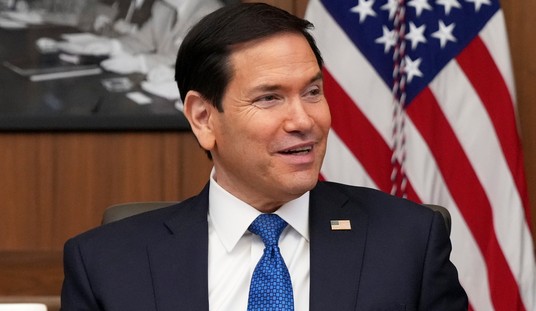
U.S. President Donald Trump and Israeli Prime Minister Benjamin Netanyahu met yesterday in Washington, D.C., for over two hours. Also at the meeting were Steve Witkoff, Jared Kushner, Secretary of State Marco Rubio, and Secretary of War Pete Hegseth. Witkoff and Kushner have demonstrated that they want negotiations to continue with Iran and believe they can structure a deal that will work for everyone. Hegseth has been busy preparing for whatever military action Trump decides upon. Rubio has been saying since October 7 that Hamas should be destroyed and that Iran should be kept from having missiles as well as nuclear capability.
I'm certain a passionate discussion took place.
There is no way of knowing the content, other than that afterwards Trump said he hopes negotiations with Iran will work out, or else there will be military action that dwarfs what happened last June. It has also been reported by many sources, including the Wall Street Journal, that the U.S.S. George H.W. Bush aircraft carrier is being deployed to the region, but this has not officially been reported by the Pentagon. Based on where the Bush currently is in the Atlantic Ocean, it will take about two weeks to get to the area. To understand what all this means, Nimitz-size aircraft carriers like the Bush (and the Abraham Lincoln, which is already there) are over 1,000 feet long, move faster than 30 knots, and carry over 6,000 sailors and Marines. Each aircraft carrier is accompanied by a fleet of over 90 helicopters and fixed-wing aircraft, guided missile cruisers, guided missile destroyers, and additional support and weapons ships.
But while we would all hope that this show of military might would make the Iranians pause their decision-making, the Iranian regime instead keeps doubling down on their aggressive rhetoric. Iranian Foreign Minister Abbas Araghchi wrote on Wednesday night in a post on X that, "Reaching an agreement on the nuclear program is possible, but only if it is fair and balanced. Tehran will defend its sovereignty at any cost. Our rights and dignity are not negotiable." Turkish Foreign Minister Hakan Fidan said the U.S. and Iran are showing flexibility in negotiations over the nuclear program, the British financial newspaper Financial Times reported. According to Fidan, "It is positive that the Americans seem willing to tolerate Iranian enrichment within clear boundaries." He added that expanding the talks to include the issue of Iranian ballistic missiles would lead to "nothing more than another war."
So President Trump is placed in the unenviable position of being a judge. He must judge between the advice of those who seek to negotiate with Iran, despite the fact that every day this extends allows Iran to build more weaponry, and those who desire to immediately go after the Iranian regime, which will undoubtedly cause many deaths and casualties on all sides.
Added into this equation for “Judge” Trump is the president’s own belief that “Iran never won a war but never lost a negotiation.” Perhaps that is why he chose Witkoff to be the chief negotiator with Iran in the first place: his belief that Witkoff may be a better negotiator than Iran. Except that Witkoff has, to all outside eyes, been extremely ineffective so far… although we should remember that none of us have any real idea whether Witkoff has been extremely successful and we just don’t realize it yet.
But we all do know one thing about Trump: He is an extremely good negotiator. With all sides.
So what happened yesterday? Netanyahu obviously came prepared for the meeting with proof about Iran’s lies and misdeeds, as well as information about how Gaza is still not safe and secure from Hamas, which has repeatedly been saying that they will neither disarm nor disband. Hamas is not, and has never been, interested in having peace with Israel; they are committed to the destruction of Israel, as exemplified not only in all of their statements but in their actual charter. Netanyahu came to Washington wanting U.S. support on two major fronts: the destruction of Iran's military infrastructure and creating a Gaza that is a safe neighbor to Israel.
President Trump recognizes the challenges and importance of both of these issues. But people forget that Trump is actually a peacemaker, committed to creating peace whenever possible. He recognizes that the immediate and greater threat to the United States is Iran, and also undoubtedly recognizes that there are problems with this entire Gaza Peace Council, but they are not as imminent nor as dangerous as the issues with Iran. So what probably happened at this meeting yesterday?
There was undoubtedly a lot of passionate dialogue between the parties present. President Trump probably listened a lot and was making internal judgments as to how he would want to proceed as he heard the conflicting voices of his advisors and allies. As a builder, he knows that one step should be taken at a time, with the most immediate challenges being taken care of first. And we know that he understands the art of a deal better than anyone and is extremely proficient at “horse trading” in order to get his desired result.
It would make a great deal of sense for Trump to make trades with Netanyahu—something to the effect that Israel would accept and go down the path of Trump's plan for Gaza, and in exchange, Trump would be more aggressive with Iran. Looking at what has happened since the meeting, it seems as if this is exactly what he is doing.
Besides the meeting, two notable things happened yesterday. The Bush aircraft carrier and accompanying fleet have started traveling, apparently, toward the Middle East. This implies that the president is going down the military pathway of conflict with Iran. But less reported in most media, and equally important to understand, is that Netanyahu suddenly did the exact opposite of what he has been committing to: he agreed to be part of the Gaza Peace Council. He chose to start going down the path that Trump desires of Israel being actively involved in the reshaping of Gaza, even though others on that council are anything but allies of Israel. Given that Israel has been so recalcitrant to support Trump's Peace Council vision of Gaza, it is probable that Netanyahu's capitulation about this Council was predicated upon getting other direct support from the U.S. against Iran.
Whether we agree or disagree with the process, it makes sense on a practical level. The immediate threat of Iran will be eliminated, and a hopeful peace process can be created with Gaza as a new “Riviera of the Middle East.” Doing this will satisfy the contradicting points of view of his advisors without committing to only one side.
Most importantly, it will hopefully lead to peace with Iran, a replacement of the Islamic regime, and still keep Trump's optimism about the potential in Gaza for peace and prosperity.
If this analysis is accurate, President Trump again demonstrated his negotiating skills and a judgment worthy of King Solomon.
Editor’s Note: Support and follow PJ Media’s coverage of historic anniversaries and other key news in this midterm election year. Join PJ Media VIP and use promo code FIGHT to get 60% off your membership.





Join the conversation as a VIP Member