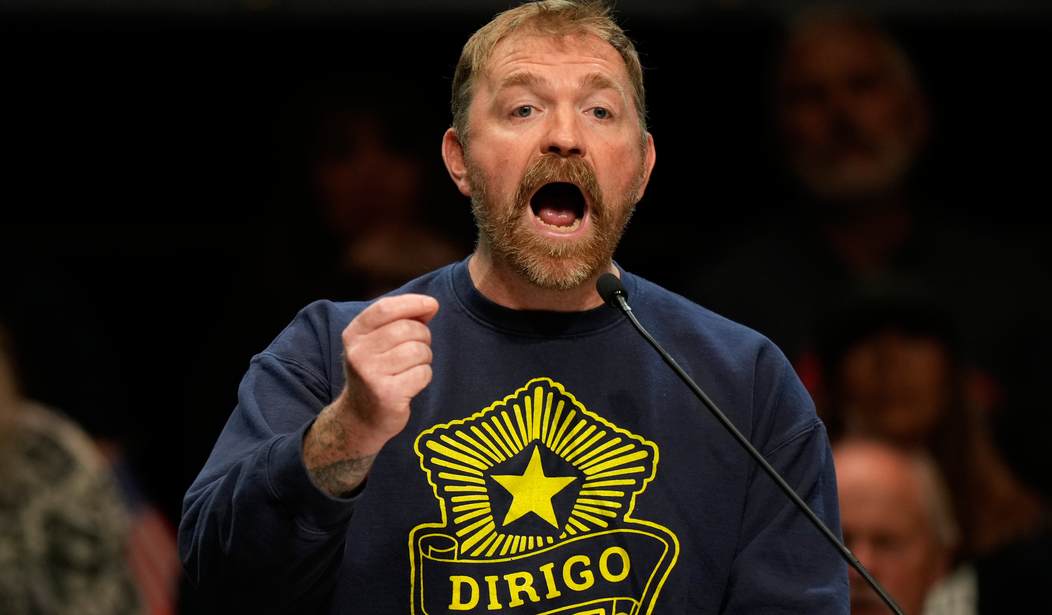

Graham Platner suspended his Senate campaign this week and is reportedly set to file paperwork to withdraw on Monday. Whether he follows through remains an open question. But if he does, Democrats who assume they're now in good shape against Sen. Susan Collins (R-Maine) are about to learn how complicated this really is. For one thing, replacing Platner on the ballot could get ugly. But the bigger problem is money.
And money means everything.
Federal law caps candidate-to-candidate transfers at $2,000, according to OpenSecrets, so Platner can hand off only pocket change from his war chest to whoever faces Collins in November.
Platner had raised $16.3 million through May 20 and held nearly $2.2 million in cash on hand, according to FEC filings submitted ahead of the June 9 primary. Collins had $10 million in cash on hand that same period, far more than any successor will start with, and it’s debatable whether any other candidate can raise the kind of money Platner did, especially in light of the way the establishment took him down.
Mark Brewer, a political scientist at the University of Maine, said the obsession with who replaces Platner is burying the real story. "Everybody's focusing on who the replacement's going to be, but … even beyond that, no one's paying attention to the money yet," Brewer said.
ICYMI: The Platner Campaign Is Telling Some Real Whoppers Now
Gov. Janet Mills (D-Maine) appears to have the best financial position among possible replacements despite not raising a dime in over two months. Mills suspended her own Senate bid on April 30 amid fundraising troubles, even after Senate Minority Leader Chuck Schumer (D-N.Y.) backed her. She has roughly $717,000 cash on hand, about a third of Platner's total and 13 times less than Collins' bankroll, and her 2022 gubernatorial campaign has nothing left to lend her.
Trust me, if she’s the candidate, Platner supporters won’t rally behind her.
It gets worse for Democrats.
Former state Senate President Troy Jackson (D-Maine), who is reportedly Bernie Sanders’ pick to replace Platner, can't touch the $140,000 from his failed bid to succeed Mills as governor because state campaign cash can't fund a federal race. Maine Secretary of State Shenna Bellows (D-Maine), the state's 2014 Democrat Senate nominee, can't tap her $419,000 gubernatorial account, either. Nirav Shah, Maine's former CDC director, can't use the $275,000 from his second-place gubernatorial bid.
Brewer doesn't see anyone closing the gap in time.
"Whoever it is going to be, they're going to be significantly behind Susan Collins, and almost certainly, they're going to be at a significant disadvantage to Collins throughout the entirety of the race," he said. "There's really no game plan for this, because it's kind of unprecedented to a certain degree."
Platner's leftover cash can't simply pass to his successor. His options: pay campaign bills, donate to charity, save it for a future run, or give to a state or local candidate. He raised about $6.4 million in itemized contributions, but only roughly $587,000 was earmarked for the general election, and most of his haul came from unitemized small-dollar donations under $200, which the FEC doesn't itemize by election.
There's one workaround, but I think it’s wishful thinking.
Joedy McCready of OpenSecrets argues that the Supreme Court ruling in National Republican Senatorial Committee v. FEC, which struck down limits on party coordination spending, means that candidates can transfer unlimited funds to party committees. Platner could therefore send his cash to a Democrat Party entity to fund his successor.
"If he can get the money to the DNC, then they can certainly spend it in coordination with whoever the candidate is. There's no doubt about that, right? The Supreme Court's made that part clear," Brewer said.
Now, here’s why I think that’s not a safe bet.
See, there's bad blood between Platner's camp and the Democrat party, and nothing guarantees he'll send the money their way. On top of that, even if he withdraws, nothing guarantees that his small-dollar donors will move on to whomever the party picks next. Democrats built a movement around Graham Platner. Now they may have to build one around someone else, starting deep in the hole against Susan Collins.
Honestly, all of this makes me think that Platner might still see himself as the best chance to defeat Susan Collins, and he may not actually withdraw.