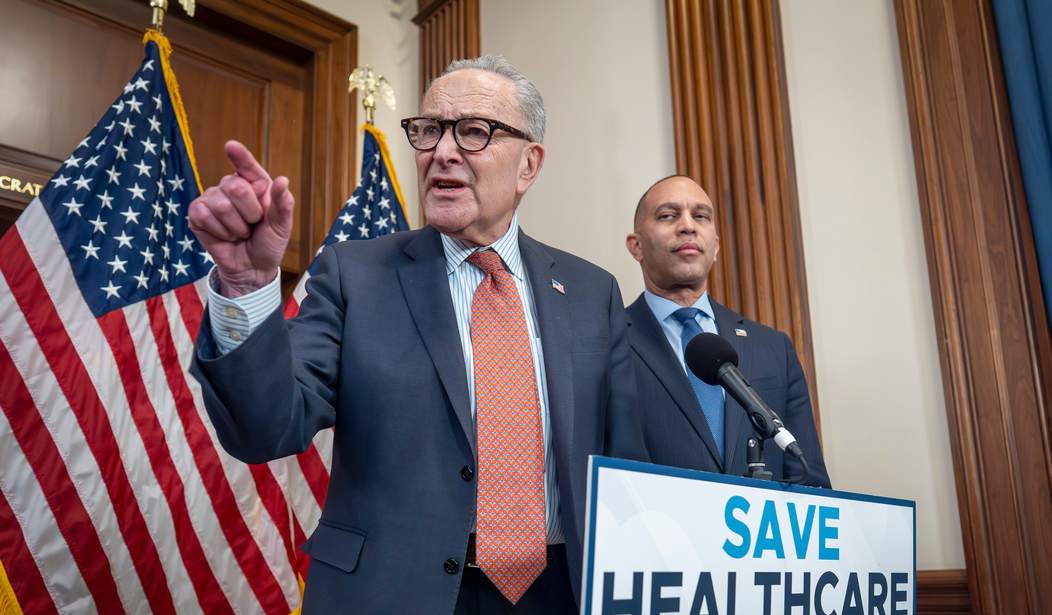

What’s going to happen in this year’s midterms? History and polling suggest that Democrats will have a good year. But not everything is as it seems. Believe it or not, Democrats are in a rougher spot right now than we might believe.
CNN chief data analyst Harry Enten walked through the numbers, and they're ugly. Nearly three in four Americans say congressional Democrats don't have the right priorities. Only 25% say they do. That’s bad enough. But here's where it gets really painful: even Democrats themselves aren't buying what their own party is selling. A majority (55%) of Democrats and Democrat-leaning independents say congressional Democrats don't have the right priorities.
"These numbers are just atrociously awful," Enten said. "A double A for the Democrats here."
That kind of intra-party dissatisfaction doesn't just show up in polls — it shows up on primary ballots. Enten was honest about what he thinks it means. "This, to me, just jumps out at the screen because it screams primary challenges all over the map," he said, "and it says that even if Democrats don't like Donald Trump, they don't like their own party either when it comes to Congress."
To understand just how unprecedented this collapse in Democratic confidence is, Enten put it in historical context. In 2006, when George W. Bush was in the White House and Democrats were riding a wave of anti-Republican sentiment, Democrats' net approval of their own congressional leaders was plus 28. In the last midterm cycle, it was still a healthy plus 19. Today, it’s minus four.
"The bottom has fallen out," Enten said. "Minus four points. That is Democrats, Democrats' own net approval of their own congressional leaders."
Host John Berman noted that this forces everyone to rethink how the upcoming midterms will play out. The standard model — opposition party surges when the president is unpopular — may simply not apply here. Enten agreed, pointing out that many analysts have been scratching their heads about why Democrats don’t have a bigger lead in the generic congressional ballot. This is your answer.
Recommended: This Might Be the DUMBEST Argument Justice Jackson Has Ever Made
In a practical sense, what does this mean? It means more primary challenges, and more radical Democrats likely make it to their respective general elections. One of the biggest faults of the Tea Party movement was ousting Republicans who were more likely to win races that Republicans could have won. Democrats likely risk making the same mistake by rejecting less radical candidates in their primaries.
There are other internal party divisions as well. Chuck Schumer’s grip on power is slipping fast, and he may not survive the next party leadership election.
"If I had a coin, I would toss it up in the air," Enten said. "A coin toss when it comes to Schumer actually winning the next Dem Senate leader election."
Congressional Dems' numbers with Dems are atrociously awful. (Even worse among all voters.)
— (((Harry Enten))) (@ForecasterEnten) April 2, 2026
Most Dems (55%) think their party has the wrong priorities!
Unlike 2006 or 2018, Dem leaders have a negative net approval with Dems!
Schumer is on thin ice to hold his job next year. pic.twitter.com/ZByeIidfNL
Multiple Senate Democrats have already publicly distanced themselves from Schumer, and it's not hard to see why. When your own base has turned on congressional leadership to the tune of a net negative approval rating, it means the activist left is restless, the base is frustrated, and the party's Washington establishment is catching all the heat. Democrats may be betting on Trump's unpopularity to carry them through — but their own numbers suggest that bet is far from a sure thing.