





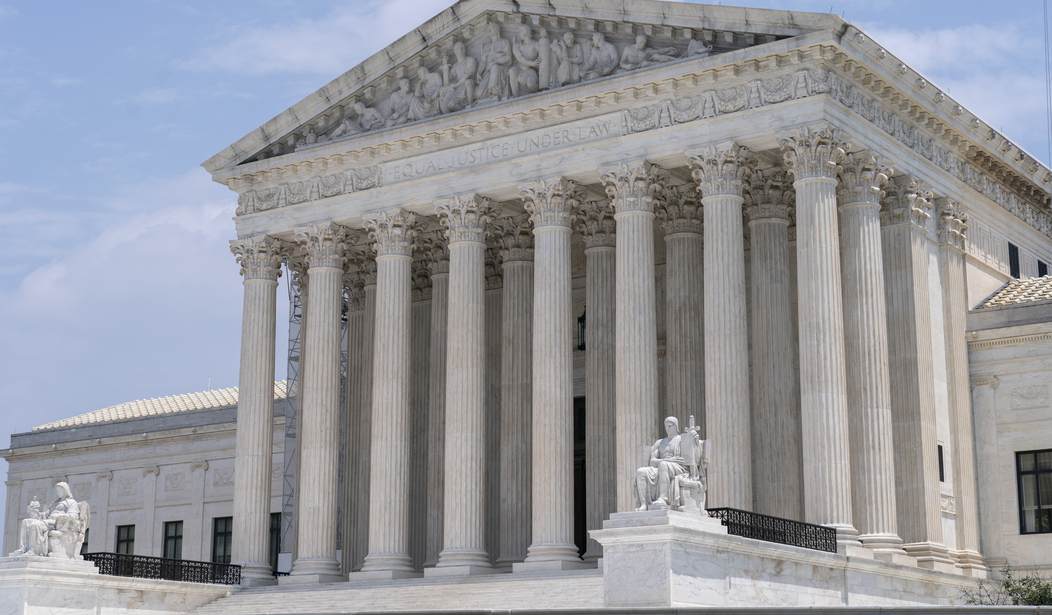
The Supreme Court handed down a massive First Amendment ruling today, and the left is going to have a very bad afternoon. In an 8-1 decision in Chiles v. Salazar, the court ruled Colorado's ban on so-called "conversion therapy" for minors likely violates the First Amendment by silencing certain viewpoints while protecting others.
Colorado passed its ban in 2019. The law prohibits licensed mental health counselors from engaging in "any practice or treatment" that "attempts or purports to change" a minor's sexual orientation or gender identity. Violations could result in a $5,000 fine, license suspension, and potentially the end of your career.
Kaley Chiles, a practicing Christian and licensed Colorado counselor, sued the state under the First Amendment, arguing that Colorado was using the law to control what she could say to patients and suppress viewpoints the state found ideologically inconvenient. She wanted to offer voluntary talk therapy to minors who felt uncomfortable with their bodies or wanted to reduce feelings of same-sex attraction — conversations the state had effectively made illegal.
"Colorado's law banning conversion therapy, as applied to Ms. Chiles's talk therapy, regulates speech based on viewpoint, and the lower courts erred by failing to apply sufficiently rigorous First Amendment scrutiny,” Justice Neil Gorsuch wrote the majority opinion. “Fortunately, that is not the world the First Amendment envisions for us."
The science behind these bans has always been shakier than advertised, too. Studies have shown that as much as 90% of young people with gender dysphoria will grow out of it after puberty. In 2022, a UK-based study from the nonprofit organization Sex Matters found that the alleged benefits of “gender-affirming care” are “no greater than a placebo effect.” An earlier Swedish study even found an increase in suicide and criminal behavior among gender-dysphoric people who transitioned over those who didn't. A U.S. Department of Health and Human Services report detailed the long-term harms of so-called "gender-affirming" treatments.
It should come as no surprise to anyone that Joe Biden’s DEI hire for the Supreme Court, Justice Ketanji Brown Jackson, was the lone dissenter. Whenever there’s a lone dissenter, it’s a safe bet that she’s the one.
"To do anything else opens a dangerous can of worms. It threatens to impair States' ability to regulate the provision of medical care in any respect,” she wrote in her dissent. “It extends the Constitution into uncharted territory in an utterly irrational fashion. And it ultimately risks grave harm to Americans' health and wellbeing."
ICYMI: 'No Kings’ Protesters Are Dumber Than You Think. Oy!
She’s also not a biologist and can’t say what a woman is, so it’s not surprising her interpretation of the case is, frankly, stupid. The court didn't say states can never regulate therapy. It said states cannot tell therapists they must favor one viewpoint over another. There's a meaningful difference there, and Jackson's dissent sidesteps it entirely. Or perhaps she’s just not bright enough to understand. Even two of the most liberal justices on the bench — Elena Kagan and Sonia Sotomayor — couldn't defend a law that was discriminatory against a particular viewpoint.
But, I digress.
Alliance Defending Freedom attorney Jim Campbell, who argued the case before the court, celebrated the ruling. "Kids deserve real help affirming that their bodies are not a mistake and that they are wonderfully made. The U.S. Supreme Court's decision today is a significant win for free speech, common sense, and families desperate to help their children," Campbell said in a statement. "States cannot silence voluntary conversations that help young people seeking to grow comfortable with their bodies."
However, this isn’t the huge victory many are making it out to be.
It should be noted that the court didn’t declare Colorado’s law unconstitutional outright. Instead, the justices made clear that the lower courts botched the legal standard when evaluating Kaley Chiles’ case. More importantly, the court sent a strong signal that the law could run afoul of the Constitution, especially as it applies to so-called “talk therapy,” and instructed the lower court to take a far more rigorous approach by applying strict scrutiny. In short, SCOTUS tossed the prior ruling, sent the case back down, and made it clear the outcome could look very different the second time around. In fact, Justice Kagan wrote separately to note that a more carefully crafted, viewpoint-neutral law might survive scrutiny, but on this law, she agreed it crossed the line.
So, it’s a victory, but a small victory for now.
Want to support fearless journalism that exposes the Left and tells the stories the media won’t? PJ Media delivers the truth and holds the powerful accountable. Become a VIP member today—your support fuels our mission and unlocks exclusive content, podcasts, an ad-free experience, and more.
Use code FIGHT for 60% off. It's a great time to join our movement. Join now and stand for America-first journalism!



Join the Conversation
VIP members get the ability to comment on articles.