





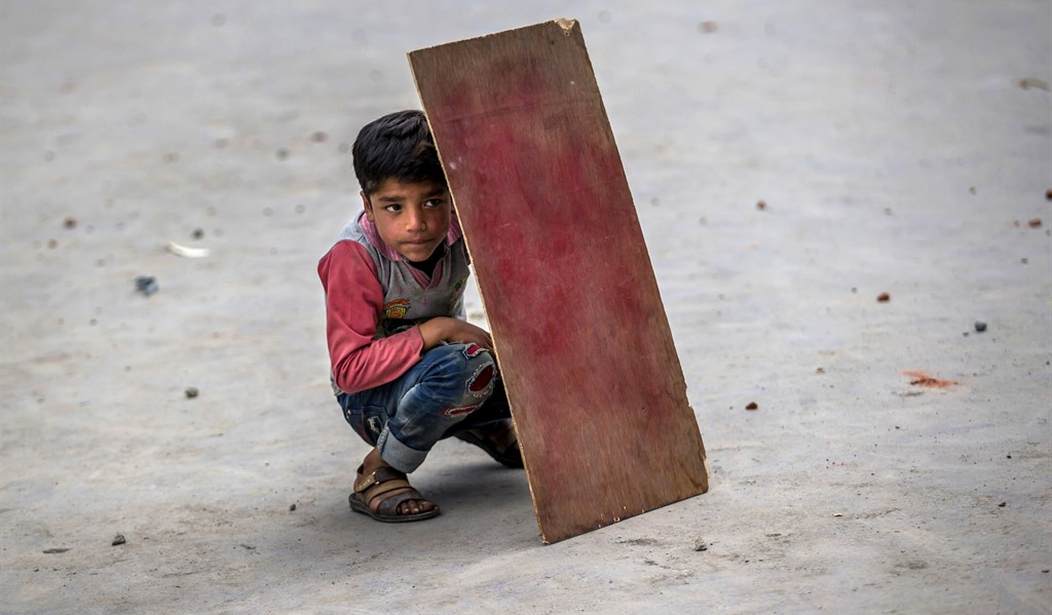
When I was younger, socially awkward, and far less wise, I thought I had something figured out: Lead with the trauma. I had been abused as a child, and early in any new relationship, I would tell people. It was oversharing, no question, but it almost always drew a sympathetic response. I believed it made things easier. Maybe it did — for me. (Probably not for my friends and acquaintances. It must have been an uncomfortable conversation.)
Then one day, a therapist friend at one of my many jobs asked a simple question: Why did I do this?
I had no answer.
He said it looked like a shield — a way of announcing “This is who I am” without ever exposing the softer underbelly. Sharing something that intense feels intimate, but it isn’t. It stops people from looking further, because what could be heavier than that?
That day I decided to set the shield down. I became a better person for it.
Public moral currency
Since that day in the ’90s, the shield of victimhood has stopped being merely personal. It has become public moral currency. Claim membership in a targeted group — black, female, gay, transsexual, immigrant, illegal alien, Muslim, and so on — and you can claim high status. Intersectionality even supplies a kind of mathematics, a ranking system among the victim classes. The whole arrangement has been institutionalized in DEI, and it delivers concrete rewards: preferences in jobs, scholarships, awards, publication, and more.
But I want to talk about this at the personal level.
When you take on a victim identity, it feels empowering at first. You are naming a painful thing, or something society insists should be painful. It brings moral clarity, community, and a simple explanation for the frustration or hurt you feel day to day. “They treated me this way because I’m a black woman.” It can even feel like strength — finally speaking the injury instead of carrying it in silence.
Over time, the same identity turns hollow. You are seen, yes, but only as the victim you have declared yourself to be. I was seen as a woman who had been profoundly harmed as a child — not as a complex thinker, a science-fiction reader, a storytelling fanatic, a Christian, a girl in love with a beautiful world. Just a victim.
That shield becomes an anchor. It burdens you. You begin to identify with the shield more than with the person underneath it. The weight slowly drains your energy and your strength. It stunts emotional development and personal growth. It keeps you from the full capacity that should have been yours.
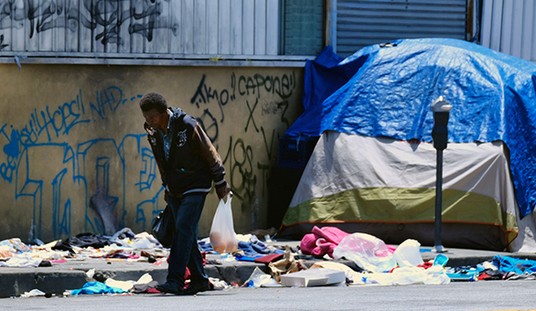
We have all seen the results. Girls who ruin their beauty with tattoos, strange hair, piercings, and body modifications, trying to look like the figure in the shield. People of color who darken their own souls by blaming every failure on white people. And the politicians who encourage it all, turning living people into social widgets instead of complete human beings with deep inner lives.
The spear
But it is not only the liberal world that does this. And it is not only liberal politicians who use the mechanism.
Stay with me here and think it through carefully. I love Donald Trump. I believe he is the man we needed, the one who arrived just in time for the crisis. Yet he, too, reaches for the victimhood shield, though perhaps with greater justification than most. “They’re not after me, they’re after you — I’m just in the way.” In that single sentence, he casts himself as the target and then extends the same status to everyone who stands with him.
I do not disagree with the substance. “They” are after him. And they are after us as well. But the move is the same: identification as the persecuted. It creates a powerful feedback loop with Trump Derangement Syndrome, a condition the DSM-5 does not recognize and most therapists will not name, yet one that is real and publicly destructive. When MAGA people watch those afflicted with TDS act out, the evidence seems obvious: These are the “they,” and their hostility is genuine.
The error is still in picking up the shield. In fact, this is the mechanism Saul Alinsky famously described: Pick a target, freeze it, personalize it, polarize it. That is exactly what the anti-Trump side is doing when it tries to force us into the victimhood frame. When we accept their framing, we make their work easier. We are more than conservatives, more than MAGA, more than Trump supporters. Even when the other side can see nothing else in us, we do not have to accept their reduced version of who we are.
But I digress.
Two functions of the shield
The shield serves different purposes depending on who is carrying it.
On the personal level, as I learned, it can harden into a fixed identity. It keeps the fuller, more interesting self safely out of view. Growth requires exposure, and the shield is designed to prevent exactly that.
On the collective level, the function is different. For MAGA, it confirms something true: Large parts of the left do regard us as the enemy. The hostility is not imaginary. The danger comes when the recognition of that hostility becomes a permanent posture, a collective victim shield binding us together in the injustice of our persecution. If the shield is carried too long, it begins to excuse underperformance. It teaches people to stop striving, to treat every difficulty as further proof of persecution rather than as a problem to be solved by skill, effort, or better judgment. In this specific case, it tells us to stop trying to communicate who we really are to people who are going to hate us anyway. The problem with that is we also stop communicating with the quiet people, the ones who are watching and listening. Every public interaction has an audience. We forget this.
The victim shield is the same mechanism that has damaged certain minority communities for decades. Tell people repeatedly that they are permanent victims, that the system is rigged against them in every particular, and that only an external force — government, party, ideology, some designated savior — can lift them, and many will eventually believe it. Agency atrophies. Excellence starts to look like collaboration with the enemy. The result is not the justice promised by activists and politicians. It is a population trained to wait for rescue rather than build its own strength and resilience. Thomas Sowell predicted this outcome repeatedly and documented the devastation it causes.
We do not have to follow that path.
The cultural cost
A politics organized around grievance exacts a steady price. It erodes agency. It weakens resilience. It drains the internal motive to build, improve, and outcompete. When injury becomes the primary claim to status, strength starts to look secondary or even suspect. The performance of being wronged begins to matter more than the hard, unglamorous work of becoming capable.
The deeper tragedy is individual. Every person who settles into the victim identity leaves a road untraveled. The energy that might have gone into craft, courage, or quiet excellence is spent instead on tending the wound and policing its recognition. Lives that could have been larger remain smaller. The cultural cost is only the sum of those forfeited paths, but each forfeited path is a personal tragedy.
Over time, a movement that defines itself chiefly by how much it is hated grows dependent on that hatred. The enemy’s intensity becomes the proof of its own righteousness. Without the hostility, the identity loses force. That is a fragile place to stand.
I love Trump. I respect the fight he has chosen and the results he has produced. On this one point I wish he would find a different register. The victim frame is effective, but it is also limiting.
We do not need an external savior to complete us. We need ourselves and the truth. The shield can be kept within reach for the moments it is truly required. It is not a place to live.
Recommended: The Death of Tragedy
Editor's Note: Do you enjoy PJ Media's conservative reporting exposing the radical left and woke media? Support our work so we can keep bringing you the truth.
Join PJ Media VIP and use promo code FIGHT to receive 60% off your membership.

Join the Conversation
VIP members get the ability to comment on articles.