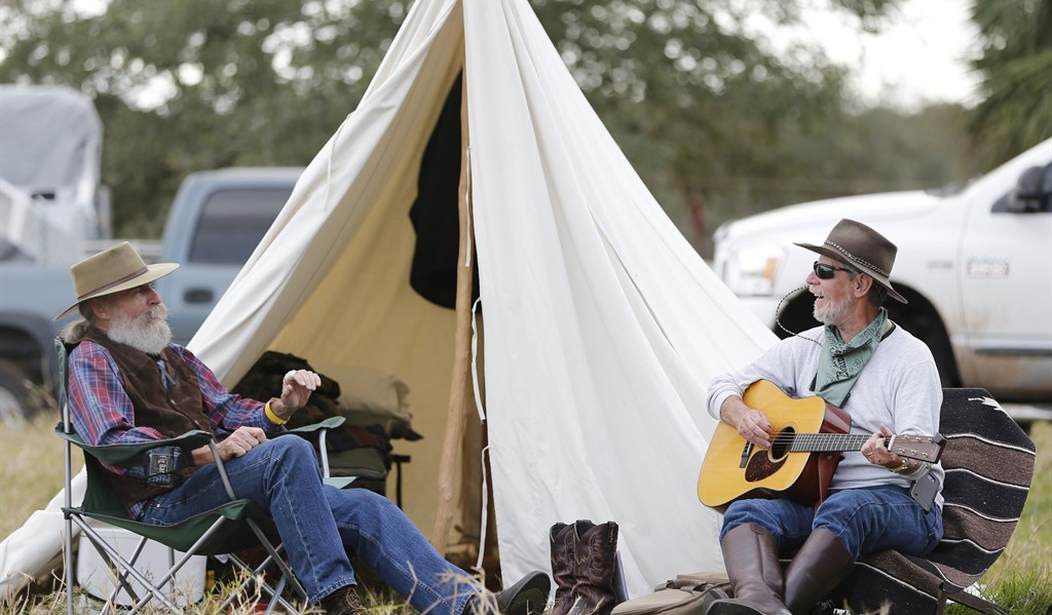

I love stories. I may love stories more than anyone you will ever meet. My grandmother described me as an infant, not even walking, begging for more stories to be told to me. My mother taught me to read when I was about twenty months old (I still have the workbooks to prove it) because she was so tired of reading stories to me. Once I had mastered the written word, I devoured everything put into my hands: the free abridged classics that used to come on Folgers coffee cans, Little Big Books, board books, Little Golden Books, encyclopedias. The Andrew Lang Colored Fairy Books were a favorite. The bookmobile was a weekly nirvana. Or I would listen to my grandfather, nicknamed Windy, as he spun yarn after yarn with varying degrees of truthfulness.
But even I can admit: sometimes stories turn bad. They might be hurtful lies, or media narratives that manipulate people, or stories that make people believe they are sinful and need to atone for things that are categorically not their fault.
This is the double-edged blade of narrative. The hunger that drew me to fairy tales and my grandfather’s tall tales as a child reveals a deeper truth about human nature: we are wired for stories, yet that wiring makes us vulnerable to their corruption. From ancient times to our present moment, the impulse to interpret misfortune as moral failure — to blame ourselves, our group, or our way of life for angering the gods, the system, or anthropomorphized History — has shaped how we respond to a hostile or indifferent world. Understanding this reflex is essential if we hope to reclaim storytelling as a force for truth, courage, and genuine human flourishing rather than guilt and control.
The Ancient Impulse: Self-Blame and Moralized Disaster
This pattern is so ancient we can’t even see its roots. When crops failed or rivers ran low, our ancestors rarely concluded that it was “random chance” or “complex environmental factors.” Instead, they saw intentional displeasure: the gods were angry. Mesopotamian flood myths attributed catastrophe to divine irritation over human noise or overpopulation. Biblical plagues and exile were framed as covenant failures. Aztec priests offered cruel and bloody sacrifices to keep the sun moving. Chinese dynasties rose and fell under the Mandate of Heaven, where the emperor’s virtue, or lack thereof, determined natural order. Medieval Europeans interpreted plagues as divine wrath for sin, and even the 1755 Lisbon earthquake, in the heart of the Enlightenment, triggered intense theological debate.
The impulse did not vanish with the rise of science. It simply transformed. Thomas Malthus framed population pressures in moral terms. Nineteenth- and twentieth-century environmental thinkers sometimes cast industrial humanity as a fallen species despoiling Eden. Today we see secularized versions in climate jeremiads and cultural narratives that treat emissions, consumerism, or Western success itself as a kind of original sin requiring atonement through sacrifice: degrowth, shame over everyday choices, ritual self-limitation. The moral framing persists even as the “gods” become abstract systems or a personified Gaia.
This self-blame reflex runs deep across cultures and throughout history because it reliably emerges from core cognitive and social adaptations that once helped our ancestors survive and cohere. When knowledge was scarce and the world felt full of unseen forces, turning misfortune into a moral story provided meaning, a sense of control, and a path forward: identify the sin, perform the penitential rite, restore order. And remember: historically, the penitential rite did not shy away from bloodshed.
Evolutionary Logic: Why We Turn to Stories Instead of Cold Facts
Our brains did not evolve to prioritize the dry, mechanistic explanations provided by science and logic. They evolved to survive among intentional agents — predators, allies, rivals, and spirits — and storytelling was a key tool for transmitting survival wisdom. Several interlocking adaptations explain why intentional, moralized stories so reliably defeat cold facts:
- Hyperactive agency detection: Evolution wired us to assume events have purposeful causes rather than pure randomness. A false positive (rustle in the grass equals a tiger) was far safer than a false negative; reacting to a false positive may make us look foolish, while failing to react to an unrecognized threat can be deadly. Today, when disaster strikes, the mind instinctively asks “Who is offended?” rather than “What impersonal forces are at work?” And as we once propitiated the gods, today in our overly secular world we often propitiate “Gaia,” the system, or other human beings.
- Just-world hypothesis: People want to believe the world is fundamentally fair. Undeserved suffering creates acute discomfort, so we rationalize that some group must have sinned, or the victim somehow deserved it. This restores personal psychological equilibrium, but often leads to horrific events: burning the witch or the Jew, murdering our greatest people, even wars.
- Narrative bias and social cohesion: Stories featuring agents, motives, heroes, villains, and moral arcs are far easier to remember, transmit, and use for group coordination than abstract data. “The gods are angry because we sinned” is compact, emotionally resonant, and actionable. It binds the tribe through shared meaning and prescribed rituals.
- Illusory control through penance: Ascribing events to moral failure gives a comforting illusion of agency. If we caused the problem through our behavior, then repentance, sacrifice, or behavioral change can fix it. This feels empowering even when the actual causal chains are indifferent or unknowable.
- Competition with mechanistic thinking: Mechanistic explanations require holding uncertainty, probability, delayed gratification, and complexity. Intentional stories win under stress or when information is incomplete because they light up emotional and reward centers more powerfully, and they offer immediate social payoff by signaling virtue, building coalitions, and justifying action.
- Status and interpretive power: Those who claim to read the omens — ancient priests or modern experts and media voices — gain influence by interpreting events and prescribing the necessary atonement. (Looking at you, Al Gore.) The reflex serves both psychological and social functions.
The Bushmen Foil: Mastery in a Legible World vs. Modern Opacity
The San people—often called Bushmen—of southern Africa stand as perhaps the clearest living foil to modern life (and I find them endlessly fascinating). For tens of thousands of years, they have maintained sophisticated, multi-generational oral knowledge of tracking, plant properties, water sources, animal behavior, weather cues, and intricate social dynamics. Their children receive rigorous, practical education tailored to the Kalahari. This is environmental mastery by any honest measure: deep, testable, adaptive expertise that allows them to thrive in a demanding landscape without constant resort to moral self-blame in ordinary times.
The key difference is environmental legibility. In their traditional world, cause and effect are more observable and testable at human scales. Rare disruptions such as drought or disease could still prompt ritual or blame responses when the usual toolkit fails, but stable conditions reduce the psychological need for them. Mastery in a comprehensible domain breeds confidence and pragmatism.
Modern existence is almost the opposite. Global supply chains, distant policy decisions, invisible infrastructure, statistical risks, and hyper-complex systems create a psychological “knowledge scarcity” even for highly educated people. An immigrant navigating New York City, or any of us confronting rapid technological or environmental upheaval, faces causal chains too long and opaque to master directly. When bad things beyond our normal control happen — economic shocks, extreme weather, pandemics — the old software reboots. The mind reaches for intentional stories and moral explanations because pure randomness or “it’s complicated” feels unsatisfying and powerless.
This is why low scientific or mechanistic literacy correlates with stronger supernatural or moral self-blame, but the reflex is not limited to the uneducated. Culture, group identity, media framing, and emotional needs can override knowledge. Complexity itself recreates the ancient conditions that once made moralized narratives adaptive.
The Need for Sin and Penance: A Strange Form of Control
At the heart of this ancient reflex lies a peculiar psychological bargain: people often need to feel sinful because it restores a sense of control. If misfortune is the result of our own moral failing — collective greed, hubris, consumerism, or inherited guilt — then we are not helpless before indifferent forces. We can do something about it. We can confess, sacrifice, atone, and thereby appease the powers and set things right. Guilt is better than terror.
The pattern is starkly visible in the oldest records. Mesopotamian flood myths, for instance, depict the gods becoming weary of humanity’s noisy chatter and overpopulation, deciding to wipe the slate clean. The fault lies with human existence itself. Similar logic appears across cultures. Today the script is secularized, but the structure remains: Gaia (or the climate system) is angry at human activity—our chatter now taking the form of cars, factories, flights, and meat on the table. The prescribed response is familiar: repentance through degrowth, shame, and ritual sacrifice of convenience and abundance.
Christianity stands as a profound foil to this endless cycle. Alone among major religious traditions, it acknowledges the reality of human sin and brokenness but declares that the ultimate atonement has already been accomplished. Jesus’ sacrifice is sufficient; the guilt is absorbed and the ledger closed for those who accept it. “It is finished” breaks the loop of perpetual appeasement. Humanity is not left groveling under the constant threat of divine irritation or systemic wrath. Instead, the foundation shifts to gratitude, forgiveness, and liberated responsibility. You are called to “go and sin no more,” to live as a redeemed steward exercising dominion, courage, and creative problem-solving under a benevolent order rather than cowering before perpetually offended powers.
This difference is enormous. Where other systems (ancient or modern) keep humanity trapped in guilt and ritual self-correction, Christianity offers a decisive release that makes genuine agency possible. It undercuts the reflexive turn to self-blame and scapegoating while still upholding moral seriousness.
Today’s atheistic secularism, by contrast, often returns us to a pre-Christian state, merciless and cruel. In place of a loving God who offers absolution, we face harsher deities: the shifting judgments of human opinion and elite gatekeepers, the indifferent machinery of cold technology and systems, and the crushing awareness of our tininess within a vast, impersonal universe. Our world, stripped of the grace of God, becomes Lovecraftian — cold, indifferent, and pregnant with cosmic dread. Stripped of that cushion of grace, we stand more exposed than ever to the raw demands of nature and natural law, with fewer philosophical resources for hope or forgiveness when we inevitably fall short. The old cycle of appeasement reasserts itself in new, often crueler forms.
Hybrid Stories as Antidote: The American Thread
The healthiest response is neither pure ritual self-blame nor cold mechanistic detachment. It is the hybrid story—one that marries clear-eyed understanding of causes with intentional, heroic narrative. We diagnose real problems, apply ingenuity and effort, and act as responsible stewards rather than perpetual penitents. This tradition runs deep in American culture.
Our forefathers faced wilderness, famine, disease, hostile environments, and political tyranny not primarily with pleas for forgiveness but with bold problem-solving. They built levees, bred resilient crops, engineered institutions, cleared land, and innovated their way forward. That thread repeats throughout our history: pioneers, inventors, entrepreneurs, and communities that treated challenges as obstacles to be mastered rather than proofs of collective sin. The moral arc was present — accountability, courage, redemption — but it pointed toward agency and abundance, not endless atonement.
Today we are bombarded with a counter-story: that some problems are unsolvable by anything other than human sacrifice, that inherited guilt (especially “white guilt”) renders large swaths of the population permanently tainted, and that the proper response is ritual self-limitation and deference. This narrative revives the ancient pattern in modern dress. It discourages the very hybrid vigor that built a prosperous society, replacing it with moral theater.
Reclaiming the hybrid model is vital. It allows us to tell stories of stewardship and ingenuity, redemption through courage and competence rather than self-flagellation. This is where conservative storytellers and cultural criticism have real work to do.
Stewarding the Commons of Story
The power of narrative is immense. Stories do not merely entertain; they shape how we interpret reality, assign meaning to suffering, and decide what actions are possible or necessary. The stories we tell ourselves and the stories we allow to be told about our culture really do shape future realities. A people who tell themselves a story of America’s greatness and the vast possibilities opened by innovators like Elon Musk will build, explore, and create abundance. A people who internalize a story of profound flaw and inherited sin, of advancements that have supposedly led to world destruction, will hesitate, atone, and ultimately step aside for others presumed to be less sinful.
From ancient flood myths to modern media narratives, this choice has always been with us. Christianity offers one of history’s most profound interruptions of the self-blame loop by declaring atonement accomplished, freeing humanity for grateful action rather than endless ritual penance. We can seize the psychological redemption Christianity offers — ironically, even for those who are not Christian — reclaiming the narrative for stories of truth, wonder, agency, and human flourishing rather than guilt and decline.
We stand at a crossroads in our cultural commons of language and story. We can continue feeding the ancient reflex that moralizes every misfortune and demands perpetual atonement, or we can choose stories that offer hope, heroism, and positivity, stories that embrace the idea of humanity as heroes rather than villains in need of constant penance. The choice matters. Stories do not just reflect reality; they help create the future we will all share.