







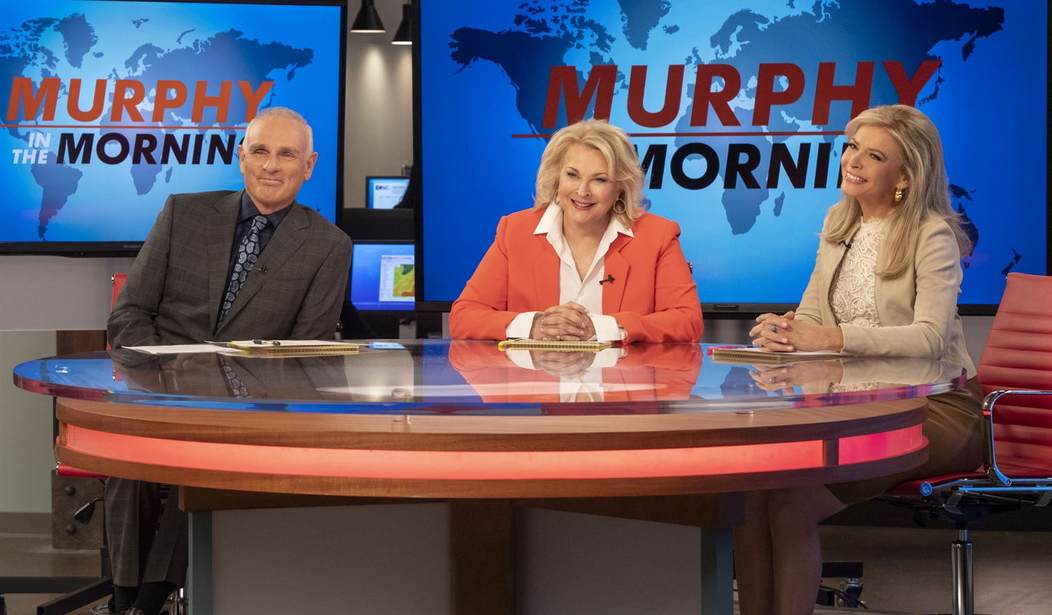
There was once a professional rule in American journalism that functioned as a real constraint: report the story; do not become the story. It was not a claim of purity. Ego, ambition, and moral certainty were known dangers, and the rule existed to keep them from overwhelming the work. Journalism was never perfect. Nothing is. But it was once constrained by this rule and by rivalry among competing papers, by scarcity of publishing platforms, by reputational risk, and by audiences willing to walk away. Those constraints mattered more than ideology.
The first visible crack came with Nellie Bly, fairly described as a stunt reporter. Her work was brave and effective, exposing abuses that would otherwise have remained hidden. But it also introduced a dangerous precedent: the journalist as protagonist. Readers followed the reporter as much as the facts. The tool proved powerful and reusable.
The profession corrected itself for a time. Through the 1940s and 1950s, likely learning from war reporting norms, American journalism emphasized impersonality and restraint. Authority came from distance. Reporters were meant to be interchangeable. Credibility rested on institutional voice rather than personality.
Television eroded that equilibrium. Once news had faces, voices, and time slots, personality became unavoidable. The anchor was no longer merely delivering information but performing steadiness and judgment. Journalism did not yet see itself as entertainment, but it had begun using entertainment tools: lighting, camera angles, makeup, vocal intonation, even on-scene reporting.
The decisive rupture came with Bob Woodward and Carl Bernstein. What they uncovered mattered. Watergate took advantage of a nascent mythic template: the journalist as lone truth-seeker standing between power and the people. Reporting, fed by classic Hollywood movies that romanticized the crusading reporter, became an identity rather than a function.
From that point forward, becoming the story was no longer a lapse. It was aspirational.
Hollywood, Myth, and Moral Authority
Watergate supplied the moment. Hollywood, already primed to heroize the reporter, crafted the meaning.
Films like All the President’s Men dramatized and then sanctified the Heroic Journalist. The journalist was patient, tenacious, hard-working, incorruptible, and uniquely qualified to Bring Truth to the public — a pattern that perfectly follows the Hero's Journey. Opposition was framed not as disagreement but as ignorance or corruption.
Journalism absorbed that image. It began to see itself as a secular clerisy: interpreters of reality rather than accountable informers. A clerisy assumes its authority by right of wisdom and superior knowledge. Questions are permitted only within bounds. Dissent is treated as moral failure rather than feedback.
Skepticism became asymmetrical. Journalists remained suspicious of every institution except one: their own. Tone displaced argument. Moral urgency crowded out evidentiary discipline. Entertainment tools such as emotion, narrative compression, repetition ceased to be aids and became substitutes for reasoning. And any pushback became grounds to cast the questioner out as a heretic.
The pattern is familiar enough to be lampooned, as in my favorite satirical novel The Narrative, which captures how story replaces fact once the reporter becomes the hero and the audience becomes a problem to manage.
How Journalists Rise on the Left Today
Once journalism adopted that heroic clerical self-image, advancement followed a different logic. Status stopped coming from readers and started coming from institutions adjacent to power.
Journalists rise by demonstrating narrative reliability, not truthfulness or factuality. Their stories must follow the Approved Narrative. Editors and other gatekeepers learn who can be trusted to frame events without destabilizing the approved story. This is rarely enforced explicitly. It works through selection. Those who create friction are sidelined; those who anticipate expectations are rewarded.
Peer validation replaces audience validation. Prestige circulates laterally within the profession rather than flowing upward from readers. Being admired by colleagues matters more than being widely read or viewed.
Worse, access functions as currency. Maintaining relationships with politicians, bureaucrats, NGOs, and approved experts becomes central to career survival and the key to rising in professional power; this is the "get," the ability to get high-level politicians and celebrities to sit for interviews. Asking any question that ends a relationship is rarely rewarded. Preserving access is. Supposedly reporters ask the hard questions? Not so much today, although that seems to be starting to reverse a little bit. As for ratings? Pshaw. They don't mean a thing. Many journalists are insulated from audience choice through institutional funding, internal cross-subsidy, foundations, and reputational capital.
As journalism became less accountable to readers, it grew more dependent on proximity to power.
A new career pattern emerged during the 2000s. A journalist builds status at a major outlet, transitions to a high-level role in the White House or one of its high-profile agencies, then returns to journalism at a higher level. The revolving door is open and understood. The incentives are obvious. Today’s source may be tomorrow’s employer. Losing credibility with your audience is survivable. Losing credibility with gatekeepers is not.
This mirrors what happened on the financial side of journalism. As I explained in my earlier piece on the collapse of the press’s revenue model, newspapers survived for decades on assumptions rather than measurement. When the internet made attention visible, that model collapsed. Institutions responded not by adapting fully, but by seeking insulation from consequence.
On the right, journalism operates under different constraints. Conservative journalists have rarely enjoyed institutional welcome and often lack the generous access enjoyed on the left, though the Trump administration is changing that significantly. Subsidy cannot be assumed. And prestige does not flow from elite consensus; rather, the mainstream ignores or mocks right-wing journalists. A very few choose to work in both media and politics, like Steve Bannon, but they stand out because they are unusual. For most right-leaning journalists, leaving journalism for politics does not lead back to a higher-status media role, nor is such a choice a guarantee of success.
Because right-leaning outlets lack institutional protection, they remain dependent on audience loyalty. Readers fund the work directly either by reading or by joining VIP programs. When the audience abandons an outlet or a journalist, consequences are immediate. This dependence creates its own distortions, but it preserves a crucial constraint: the audience still matters.
Calls for subsidy arise almost exclusively from legacy institutions on the left, who are responding not to conservative competition but to the loss of a position once assumed permanent.
The Last Remaining Correctives
Journalism was never pure. But it was once constrained by rivalry, scarcity, and audience pushback. Those constraints eroded slowly and then collapsed around the beginning of this century. What replaced them was not simply bias, but incentives that reward speed over care, narrative over verification, and performance over truth.
When those incentives hardened, journalism lost the ability to understand rejection as feedback. Audience exit became radicalization. Criticism became persecution. Survival decoupled from consent.
The supposedly noble "Fourth Column" of journalism is, for the most part, nothing but a form of entertainment, and often just as fictional. In the worst cases, it serves as a propaganda arm of its chosen side. Only when media is forced to be directly responsible to a truth-seeking audience through financial incentives does it truly function as it ought. But that's just common sense - actions have consequences. Good actions are rewarded. On the left, the definition of "good action" has come to mean something other than the ideals that journalism supposedly embraces, even the supposedly sacrosanct First Amendment.
How do you fix it? Only blunt correctives remain. Financial pressure. Legal liability. Lawsuits. Layoffs. These are crude tools, and they have not been used for very long, but so far they seem to be making an impact.
Media supported by anything other than its readers is not worth the paper it’s printed on or the pixels that form it. Once journalism stops answering primarily to its audience, it becomes whatever its funders need it to be.
The future belongs to outlets that accept humility as a condition of survival, where authority flows upward from readers, not downward from institutions, and trust is earned repeatedly rather than assumed.
Everything else is performance.
You can read Part I here: The Myth of the American Free Press: A History (Part I of II)
Editor’s Note: PJ Media is here to give you the news straight, but also to look at facts in a way most of the media won't today. Want to support real freedom of the press? Join PJ Media VIP and use the promo code FIGHT to get 60% off your VIP membership.


Join the Conversation
VIP members get the ability to comment on articles.