







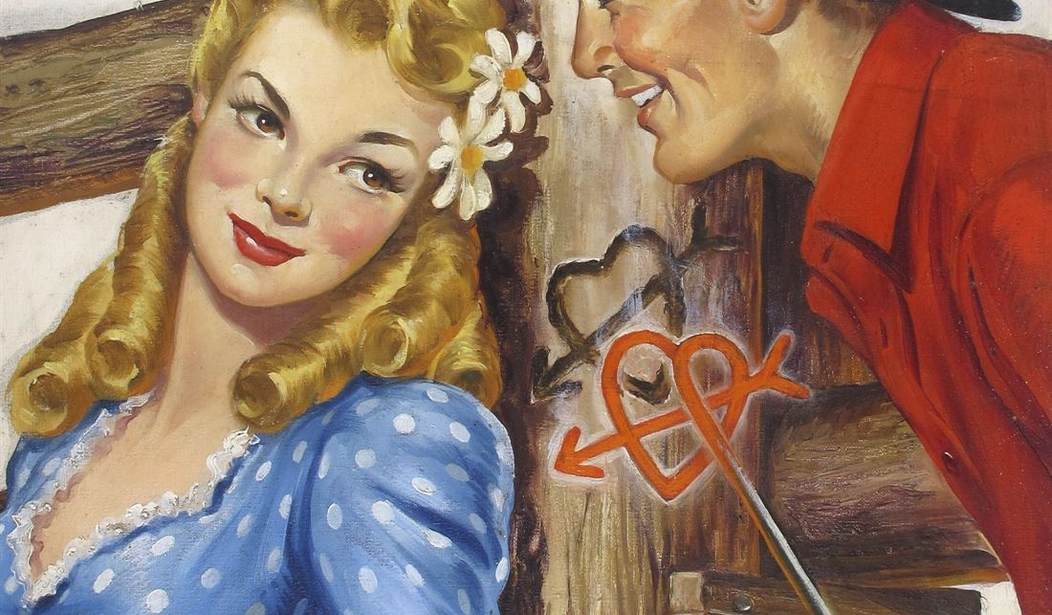
I am not ashamed of loving women’s romance novels. And I am not alone. These books are loved by tens of millions of readers — mostly quietly, often quietly guilty. Our culture has trained people to sneer at things women enjoy, especially when those things are pleasurable: fashion, fiction, good food, beauty pursued for its own sake. These pleasures are treated as frivolous at best and suspect at worst.
They are not things to be ashamed of because they are innately feminine. They are also not things men generally like, and that is fine. They are ways women make themselves happy — through beauty, adornment, comfort, and story. Men have their own equivalents, like games, hunting, fishing, or basketball or drinks with the boys. These pleasures are deemed acceptable; in fact, women often participate in some of these and are accepted. Yet when women read fashion magazines, go shopping, or lose themselves in romance novels, those enjoyments are treated as shallow or suspect, as if pleasure without an external purpose requires apology.
Romance sits squarely in that category. It exists to delight women, to speak to their inner lives, and to imagine futures that might make them happy. It's oriented toward love, marriage, and the future. And it takes permanence seriously rather than treating it as a trap, putting it at odds with much contemporary cultural messaging, especially within progressive feminism, which has increasingly taught women to distrust marriage, de-center family, and see long-term attachment as a form of compromise rather than fulfillment.
That tension, more than any literary weakness, explains the discomfort romance provokes.
Romance Isn’t Niche. At All.
Romance is not a niche genre. Without it, much of commercial publishing would collapse. It has been economically dominant and culturally resilient for decades, even as other genres rise and fall. Romance accounts for roughly a quarter of all fiction sales in the United States and has, at various points, made up nearly half of the mass-market paperback trade. In the ebook market, its presence is even larger, routinely occupying a majority of top bestseller slots and driving growth when other categories stagnate.
The readership explains this durability. Romance readers read often and read widely. They move easily between paperback, ebook, and audiobook formats. They follow authors across series and platforms. Romance is not an occasional indulgence for them. It is a habit.
That appetite carries through to writers as well. According to Authors Guild income surveys, romance and romantic-suspense authors report higher median book-related incomes than writers in mystery, thriller, or literary fiction; in literary fiction in particular, romance beats median income by several multiples. This is striking given how crowded the field is. With so many writers competing, basic economic logic would predict lower average earnings. Instead, demand is so high it supports both a large number of authors and comparatively higher median incomes.
Romance sustains an entire ecosystem. It does so quietly, without institutional approval, and often without cultural respect. It is the Rodney Dangerfield of literature.
Deep Cultural Roots — CONSERVATIVE Cultural Roots
Romance is not a modern invention, nor a disposable entertainment that appeared with mass-market paperbacks. Love stories built around courtship, testing, separation, and reunion sit near the center of the Western literary tradition. Jane Eyre, Sense and Sensibility, and Rebecca are all romances. Each centers a woman’s interior life. Each places love under constraint. Each resolves in a form of commitment that secures a future. These novels are studied, respected, and endlessly reprinted, yet they are rarely discussed as romances, as though the label itself would undermine their seriousness.
Want more evidence? Shakespeare understood the form perfectly. Much Ado About Nothing, Twelfth Night, and As You Like It are romantic comedies built on misunderstanding, moral testing, and social repair. They end in marriage because classical comedy restores order by binding people together. The Taming of the Shrew has been retold, softened, inverted, and reimagined for centuries, yet it keeps returning. The surface changes, but the problem remains the same: how two strong-willed people learn to live together. The persistence of the story is the evidence. The structure endures because the question does.
Shakespeare’s later romances The Winter’s Tale and Cymbeline stretch that logic across years and generations. Even Romeo and Juliet follows a romance structure until the surrounding social order proves too broken to sustain it. The love is not mocked. The world is.
Perhaps the discomfort modern literary culture has is not in the content of romance fiction, but in the quietly, structurally political nature of romance fiction: it is inherently conservative.
Romance presupposes continuity. Commitments bind. Choices have consequences. The future matters.
A romance must resolve in a durable bond. Trust and exclusivity are not optional. Infidelity breaks the story because it breaks the promise the genre is built on. Marriage, whether named or implied, solves real narrative problems: desire, vulnerability, belonging, and time. Sex means something. Pregnancy and babies are valued. Love builds rather than dissolves. The future is worth planning for.
Romance also enforces hierarchy in practical ways. The hero is competent and effective at the work he is meant to do. By the end of the story, he stands as an equal or an improvement in the heroine’s life. The heroine does not need professional distinction, but she must show intelligence, social awareness, loyalty, and the capacity to care for others. Sex-based traits matter. These patterns are not slogans; they are the conditions under which stable pair-bonding works.
None of this is argued. It doesn't have to be. It's in the structure of any functional romance story.
Structured, Not Formulaic
Romance follows a set of stable narrative beats:
- The leads meet early, usually in the first chapter.
- The story centers on a single pairing.
- Both interior lives are made legible.
- Mutual attraction is established and maintained.
- The first kiss is decisive and irreversible.
- Intimacy follows emotional escalation, not release.
- External obstacles and internal flaws delay union.
- Fidelity is required.
- The hero is competent and socially secure by the end.
- The heroine shows intelligence, care, and readiness for continuity.
- The ending resolves in a lasting commitment with a future.
These rules exist because romance answers a specific question: how two imperfect people form a bond that lasts. Readers enforce these rules because they can feel immediately when the answer fails. There is a structure because it is the pattern of life, just as the Hero's Journey is the structure and pattern for much men's fiction. Yet romance is dismissed as formulaic, as though its particular structure signaled a lack of thought. It is slandered as wish fulfillment, emotionally shallow, pornographic, regressive, or sexist. These judgments are nearly always made by people who have never read a romance novel.
One bad paperback, fairly lambasted for its lack of creativity and skill, becomes representative. One trope stands in for familiarity. Romance is judged by its weakest examples in a way other genres never are. This bias shapes behavior. Covers are hidden in public, or readers turn to ebooks. Readers qualify their taste in advance, insisting they read only the “good” ones, historical or literary or classic. We call romance novels a guilty pleasure, minimizing their impact on our lives.
That reaction is learned. Romance is coded as unserious because it is popular, pleasurable, and centered on female enjoyment. Over time, readers absorb the lesson that what they love should be minimized or concealed.
Romance readers, meanwhile, enforce standards with unusual rigor. They notice when emotional payoff is unearned, when character logic breaks, when structure collapses. Pleasure without craft does not last here. Romance novelists become skillful at their craft (yes, go ahead, insert jokes about sex scenes here) or they don't sell books.
What Contemporary Literature Has Lost, And Why Romance Endures
More than anything, romance novels focus on the Happily Ever After ending, or the HEA. A lot of contemporary literary fiction no longer believes in endings, any endings at all. It has shifted its focus to moments instead. Stories linger on feelings but avoid consequences. Characters reflect and narrate their inner states, yet rarely make choices that bind them, or find ways to opt out of those choices later. Everything is negotiable. Relationships begin and fade without demanding resolution. Time horizons shrink. A novel might cover a few weeks or a single crisis and then stop. The absence of an ending is often treated as sophistication.
That does not feel true to life.
Real lives are shaped by what carries forward. Choices stick. Relationships change what comes next. Love, marriage, children, and family, whether they go well or badly, set the direction of a life. Stories that refuse to engage these realities feel unfinished.
Romance never stepped away from that responsibility. It assumes that love has weight, that intimacy creates obligation, and that commitment closes off some choices while making others possible. Even when romance includes pain or failure, it moves toward repair.
Romance looks past the moment and asks what kind of life these characters will build. They create a template for our own lives: what to look for in a real man, how to behave in a relationship, what is truly important in life. Romance treats love as something that reshapes a life, not as a passing experience. It assumes attachment changes what people owe, what they risk, and who and what they choose. It respects the future rather than refusing it.
Romance also respects its readers. It makes promises and keeps them. The arc is clear. The ending resolves. Readers are not asked to admire evasion or call uncertainty depth. They are invited to follow a story that knows where it is going. That is why romance survives mockery and fashion cycles. It continues to reflect how people actually build lives. It remembers the past, acts in the present, and does not deny the future.
So I am not ashamed of loving women’s romance novels. You shouldn't be, either.
Editor’s Note: PJ Media is here to make our culture great again, rather than fearful and false. We understand politics is downstream from culture, and hope that you will support our efforts to bring conservatism back to the center of our culture. Join PJ Media VIP and use the promo code FIGHT to get 60% off your VIP membership!



Join the Conversation
VIP members get the ability to comment on articles.