





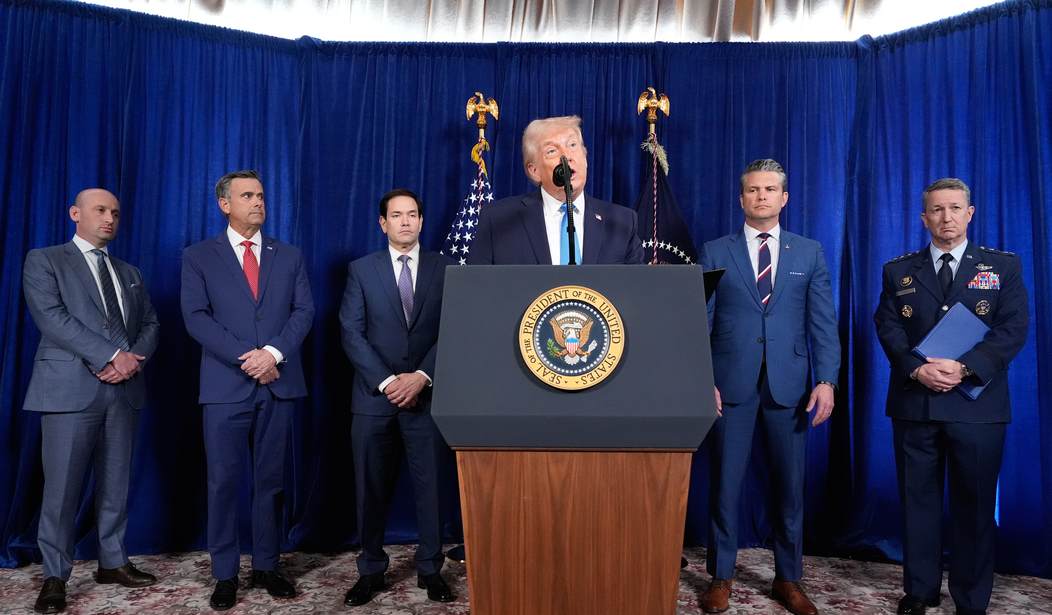
Once again, progressive and Marxist activists are using words as bludgeons to say things those words do not mean. I’ve been seeing activists online insisting that President Trump’s move to arrest Nicolás Maduro and his wife was illegal under both American law and international law, and it’s really irking me.
Not because I think my readers are confused. I'm certain you are not. You already know there’s something off about this, and many of you can explain what. But these claims keep circulating as if they’re self-evident truths, and they aren’t. They’re slogans dressed up as legal conclusions.
These are two completely different claims, and neither is true, but for very different reasons. I want to break them down, explain why they fail, and give you a few simple ways to dismantle these arguments instantly the next time someone tries to shut down a conversation by declaring something like this “illegal.”
Let’s start with American law, because that part is actually the easiest.
American Law: This Wasn’t a War, and It Wasn’t Illegal
First things first: this was not a war. It was an arrest.
Presidents have long exercised authority to capture foreign nationals accused of serious crimes, including terrorism, drug trafficking, and transnational criminal activity. This is not new. It’s not exotic. It’s not a constitutional emergency. An arrest is not a declaration of war. If it were, half a century of U.S. counterterrorism and counternarcotics operations would be unconstitutional, and no court has ever suggested that.
Let’s dispense with a few other bad arguments quickly.
Trump has so far complied with the War Powers Resolution. Even if you think that statute is meaningful in practice, which courts largely don’t, limited actions like arrests and short operations have never triggered real enforcement. Congress has tools if it wants to object. It hasn’t used them.
Due process has not been violated. Due process does not mean “you can’t be arrested.” It means you get notice of charges, access to counsel, and a fair trial. Maduro is in custody, represented by lawyers, and has entered a plea. That is due process where it matters: in court.
An arrest is not kidnapping. Kidnapping statutes apply to private criminal conduct, not to authorized executive action. If arrests conducted abroad were kidnapping, extradition and battlefield captures would be felonies. They are not.
And no, the president does not need Congress to approve individual arrests. The executive operates under standing statutory and constitutional authority. If Congress disapproved, it could legislate, defund, or impeach. Its silence is not an accident. It’s part of the constitutional design.
Which brings us to the hypocrisy.
Many of the same activists now screaming about legality enthusiastically supported Barack Obama when he authorized drone strikes that killed a U.S. citizen without trial. They supported Joe Biden when he continued that framework.
Killing a citizen without due process is far more constitutionally extreme than arresting a foreign criminal and giving him a lawyer. If this arrest is illegal, then those actions were worse. Much worse. The outrage wasn’t about law then, and it isn’t about law now.
Which brings us to what people really mean when they invoke “international law.”
What People Mean and Think They Mean by “International Law”
When activists say something “violates international law,” most people nod along because the phrase sounds authoritative. It sounds technical. It sounds settled.
It isn’t.
What people usually mean by “international law” is actually international norms, expectations about how states ought to behave. In other words, etiquette. Diplomatic manners. Shared habits among countries acting in good faith. Calling that “law” gives it a weight it doesn’t actually possess.
What we call international law is not a unified legal system. It has no legislature. No compulsory courts. No universal enforcement mechanism. It is a patchwork of treaties, agreements, customs, and norms that nations voluntarily enter into when doing so aligns with their interests. At its best, international law functions as a shared rulebook for negotiation and cooperation. It helps nations coordinate shipping, trade, aviation, communications, and diplomacy. It lowers friction when everyone wants roughly the same outcome.
That’s not a criticism. That’s an accurate description.
Why It Isn’t Really Law
Real law has a few defining features: compulsory jurisdiction, a final adjudicator, and penalties that do not depend on the "offender’s" consent.
International law has none of these by default.
Treaties bind only those who ratify them. Courts have jurisdiction only where states agree. Enforcement happens only when powerful actors decide it should. States comply with international law when it benefits them. They ignore it when it doesn’t. This is observable reality, not cynicism.
That’s why international law works reasonably well in boring, cooperative areas and collapses precisely where activists insist it must be absolute: war, security, power, and crime.
Law that vanishes when it matters most is not law in the sovereign sense. It is coordination. It is aspiration. It is etiquette with footnotes.
How Activists Use “International Law” to Avoid Arguing
Most people don’t actually know what international law consists of, and activists take advantage of that.
“Violates international law” functions as a rhetorical bludgeon. It sounds definitive without requiring specificity. It replaces argument with declaration.
In practice, it usually means:
- a norm someone prefers
- an NGO report
- an expert opinion
- a UN resolution
- or something they heard repeated often enough to trust
None of those are binding law. With the possible exception of a UN resolution, none of them are any kind of law at all. The phrase "international law" works precisely because it is vague. It shifts the burden of proof onto the listener to disprove something that was never defined in the first place.
There’s also a reason this language is so popular with globalists. International law, when treated as supreme, shifts authority away from voters and national legislatures and toward unelected international bodies. It replaces consent with process, accountability with expertise.
Law without representation is just taxation without representation wearing internationalist clothing. Expanding international law beyond cooperation and coordination is not neutral. It is ideological. It is an attempt to bypass democratic self-government.
That is why it is invoked so aggressively, and so imprecisely, by people who are interested in making your decisions for you.
Five Questions That End the Argument Instantly
Here’s the practical part. The next time someone insists something “violates international law,” don’t argue ideology. Ask them to do law.
Which law, specifically? Name the treaty. Cite the article.
Did the United States ratify it? And with what reservations?
Is it self-executing or implemented by Congress? This one matters more than most people realize. A self-executing treaty is one that automatically becomes enforceable U.S. law the moment it is ratified. Most treaties are not self-executing. They are promises between governments that require Congress to pass domestic legislation before they have any legal effect inside the United States. In other words, If Congress hasn’t acted, there is no enforceable American law. no matter how strong the international language sounds. Many activists don’t know this distinction. And some hope you don’t.
What court has jurisdiction? Did the U.S. accept that jurisdiction?
Who enforces it, and how? Against whom? At what cost?
If they can’t answer those questions, they are not making a legal argument. They are making a political or moral one. That’s fine, but it should be argued honestly.
Call It Preference, Not Law
The American-law argument doesn’t hold up; President Trump is following the law to the letter. The international-law argument is smoke, utter nonsense; there is no international norm of any kind that prevents what Trump did and plenty of precedent for doing it. It's not even the first time we've gone in and arrested a head of state for drug trafficking - and that's if you allow that Maduro was indeed a head of state.
What remains when you eliminate the legal arguments as valid is preference: discomfort with power exercised by people activists don’t trust, toward ends they don’t like.
That’s a political disagreement, not a legal one.
Demand specificity. Once you do, the spell breaks.
Editor’s Note: PJ Media tries to bring you clear-eyed reporting and commentary every day. Support our work so that we can continue to bring you the truth. Join PJ Media VIP and use the promo code FIGHT to get 60% off your VIP membership!

Join the Conversation
VIP members get the ability to comment on articles.