







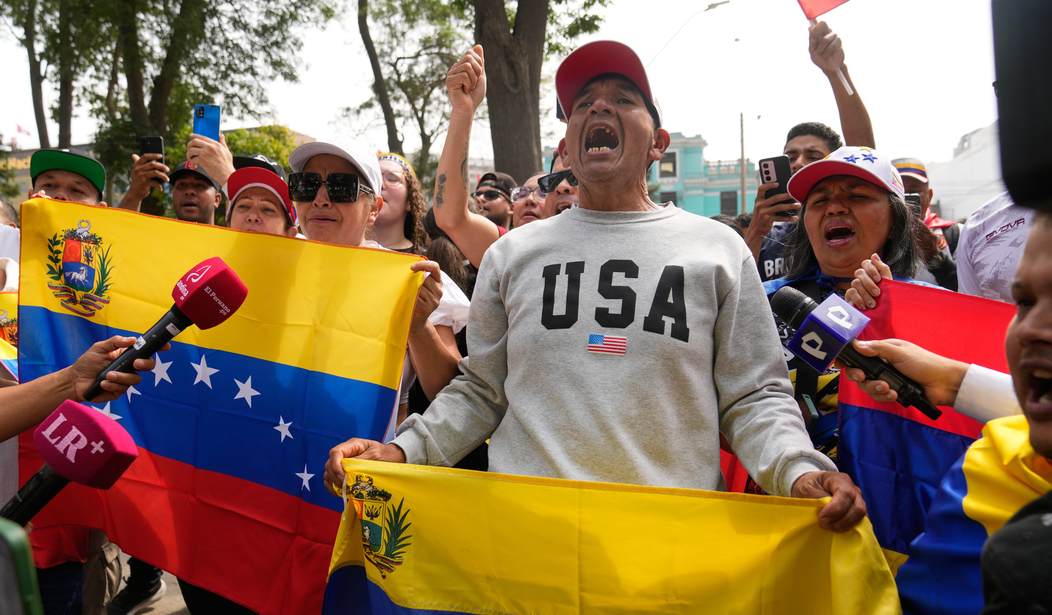
America woke up this morning to a changed world.
Iran is on fire. Years of sanctions, internal dissent, and last year’s American-Israeli infrastructure strikes appear to have fractured the regime’s grip on power in a way not seen since the shah fled in 1979. At the same time, President Trump ordered an air strike on Venezuela to provide cover for a U.S. team to enter the country and arrest sitting President Nicolás Maduro and his wife, returning them to the United States for criminal prosecution.
We have not seen this kind of American power exercised in decades: actual power, applied decisively, to accomplish a concrete national objective. That alone explains the shock on both sides. But it also raises a deeper question: if the United States has been the world’s dominant power since World War II, why has it so rarely acted like it?
The answer begins with the atomic bomb.
The Shock of Power
The bomb did more than end a war. It altered America’s relationship to power itself. When the United States became the first nation capable of annihilating cities in a single act, moral recoil was immediate and sincere. American culture, which Protestant seriousness and a belief that power entails responsibility shaped, absorbed the shock deeply. Strength ceased to feel morally neutral. It began to feel dangerous simply by existing.
That instinct was not wrong. Nuclear weapons demanded restraint. Prudence was rational. But the psychological effect did not remain confined to nuclear strategy. Over time, American power itself acquired an asterisk. It required justification, apology, limitation.
Responsibility subtly transformed from stewardship into suspicion.
The cultural shorthand for this instinct is almost embarrassingly familiar. As Stan Lee famously put it, “With great power comes great responsibility.” The line was never meant as a warning against action; nor was it a simple comic book slogan. It was a statement of duty. Power implied obligation, not paralysis.
America's leadership misread the lesson. Instead of understanding responsibility as the obligation to act wisely, decisively, and within limits, we gradually redefined it as the obligation not to act at all. Power itself became suspect. The mere exercise of strength began to feel like a moral failure. That hesitation proved exploitable.
From Responsibility to Self-Indictment
During the Cold War, the Soviet Union recognized that it could not outmatch American strength directly. Instead, it targeted American legitimacy. Through intellectual, cultural, and institutional channels, a narrative took hold: global instability flowed not from aggression or tyranny, but from disproportionate power. The stronger the nation, the greater the moral burden. America, as the strongest, became the implied problem.
This strategy did not require Americans to admire the Soviet system. It required only that they doubt their own. Responsibility hardened into self-suspicion. Self-suspicion drifted toward moral indictment. Power itself became the offense.
What followed was a kind of national overcorrection. America internalized the belief that using its strength risked harming smaller, weaker nations, and that restraint was therefore virtue in itself. This is often the mindset of large, strong, gentle men, and it can be admirable in individuals. In nations, it is dangerous.
The Gentle Giant and the Drift
Over time, this posture became habit, then doctrine, then bureaucracy. Decision-making migrated away from elected authority and into permanent institutions optimized for process rather than outcomes. Missions expanded instead of ending. Enforcement gave way to management. Clarity became a liability, because clarity creates endpoints.
America did not lose its power. It lost its credibility.
The world adapted accordingly. Allies learned to hedge. Adversaries learned to probe. Gray-zone conflicts flourished. The United States remained indispensable economically, but increasingly optional strategically. Freedom remained profitable. American enforcement became negotiable.
There was one interruption to this pattern. Under Ronald Reagan, the United States briefly reasserted that power could be exercised without apology and without imperial ambition. The goal was not cultural conversion, but pressure and containment. The Soviet Union was not remade. It was confronted with limits it could not evade. Strength restored deterrence, and deterrence reduced the need for constant intervention.
That lesson, however, was quickly misread and subsequently misapplied. After 9/11, the United States did act, and with clarity at the outset. The mission was to capture or kill Osama bin Laden and dismantle the network responsible for the attacks. Those objectives were largely achieved. The failure came afterward, when the bureaucratic state absorbed the mission – yes, once again the Swamp is to blame. The original strategic plan of limited enforcement metastasized into open-ended nation-building. and for multiple nations. Clear purpose dissolved into permanent engagement.
The lesson that the American elites drew was disastrously wrong. The problem, they decided, was not mission creep or institutional capture. It was, rather, the inherent danger of American power itself. Strength, not bureaucracy, was blamed for failure. That diagnosis ensured the cycle would continue, because it treated the symptom as the disease, and left the real pathology untouched. Power was not defeated. It was smothered.
Power as a Tool, Not a Creed
What has changed now is not America’s capacity, but its willingness to govern that capacity. The current administration does not treat power as a moral framework. It treats it as a tool. Power is not virtuous or evil by default. It is judged by purpose and consequence. Used narrowly, decisively, and then withdrawn, it restores deterrence, rather than eroding it.
This is not empire, despite what the left says. It is enforcement without conversion, action without sprawl. and strength paired with limits.
This kind of action is how peace is maintained in the real world: not the absence of conflict, which is a fantasy, but the containment of conflict before it metastasizes. This is the Superman America has held in its imagination for a century, not a ruler of the world, but a guardian, strong enough to stop predation, yet disciplined and wise enough to stop acting when the job is done.
This posture carries risks. Any reassertion of power does. Discipline matters more than enthusiasm. Consistency matters more than spectacle. But the alternative is not safety. It is drift.
A world in which American power exists only in theory is not a peaceful world. It is one in which predation spreads incrementally, conflicts multiply quietly, and instability becomes normalized under the cover of process. In reality, enforced limits, not endless hesitation, maintain peace.
The question before us is not whether American power should exist. It already does. The question is whether clear purpose, elected authority, and defined limits will govern it, or guilt, bureaucracy, and fear of acting will neutralize it. Whether this moment marks a correction or merely an interruption remains to be seen. But the world is being reminded of something it had nearly forgotten.
Restraint is a choice. So is resolve.
Editor’s Note: PJ Media tries to bring you clear-eyed reporting and commentary every day. Support our work so that we can continue to bring you the truth. Join PJ Media VIP and use the promo code FIGHT to get 60% off your VIP membership!

Join the Conversation
VIP members get the ability to comment on articles.