


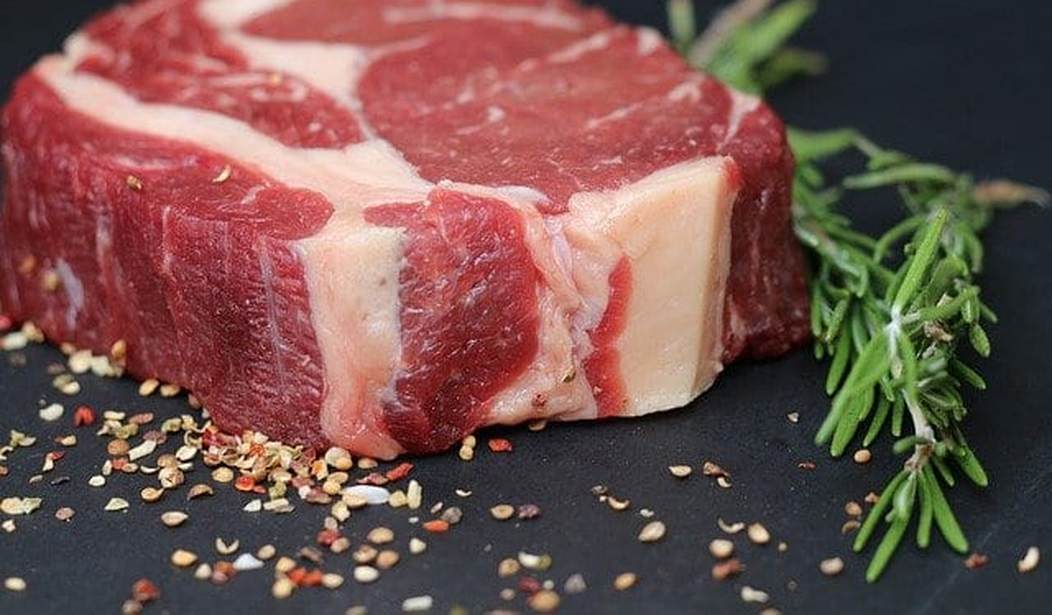
There is a particular smell that quiets a room or backyard: beef hitting heat, butter melting, fat crackling over open flame. Conversations pause. Children wander closer. Adults become very present, childlike in their eagerness. Something ancient has briefly reclaimed priority.
This response appears across cultures, centuries, and cuisines, persisting despite decades of scolding lectures about moderation, sustainability, and restraint. No one salivates at the thought of cricket flour. No one waxes poetic about lab-grown protein slurry. Even people committed to eating less meat tend to speak about steak the way one speaks about a lost love. We are told this reaction, this anticipation of pleasure, reflects indulgence, weakness, or conditioning, but a simpler explanation exists.
Pleasure can be information.
When something tastes this good this reliably to this many people across this much of human history, it is reasonable to ask whether the body is responding to something real.
Appetite Is Not a Moral Failure
Modern food discourse collapses desire into pathology with impressive efficiency. Cravings are labeled addiction. Preference becomes programming. Hunger itself is treated as suspect unless it points in an approved "virtuous" direction. This is both deceptive and foolish. Addiction is chaotic and self-defeating, while appetite, when the body is functioning properly, is conservative. Your body naturally seeks density, reliability, and nourishment that sustains.
Remove ultra-processed foods, stabilize blood sugar, eliminate the constant insulin spikes and artificial flavor tricks, and something happens. What most people want afterward is not novelty protein or engineered substitutes, but meat, eggs, dairy, fruit – foods that satisfy without negotiation. If the human body truly wanted insects, it would not require summits, campaigns, and moral pressure to persuade us; we'd simply go out into the front yard and grab a grasshopper snack or two. Hunger persuades on its own.
What Meat Actually Delivers
Meat is often treated as interchangeable with whatever happens to meet a protein target, as though nourishment were merely arithmetic. This misses what meat actually is: an exceptionally efficient nutritional delivery system shaped by evolution to meet human needs with minimal friction.
Animal protein arrives complete, providing all essential amino acids in proportions the body immediately recognizes and uses. Absorption is high. Muscle repair is straightforward, using precisely the amino acids our meals just provided. No pairing, combining, or supplementation is required. Fat, so long maligned, provides stable saturated and monounsaturated fats that slow digestion, stabilize blood sugar, support hormones, and carry fat-soluble vitamins. Speaking of fat, humans did not spend thousands of years figuring out how to obtain more fat because it was harming them.
Then there are the nutrients rarely discussed in fashionable debates but central to human function: vitamin B12 for neurological health, heme iron that the body absorbs efficiently (iron in supplements or vegetables is poorly absorbed), zinc for immune function and growth, creatine and carnosine for muscle and brain performance, choline for liver and cognitive health. These are not optional extras. They are foundational for good health and a properly functioning body.
Claims that humans do not “need” animal protein hinge on a technicality. With careful planning, supplementation, fortified foods, and modern logistics, it is possible to assemble these nutrients without meat. That is not equivalence. It is compensation. A diet that requires constant vigilance to avoid deficiency is not revealing a hidden natural balance; it is leaning heavily on modern intervention and often industrially manufactured frankenfood.
"Delicious" Crickets
Insects are often presented as the logical successor to meat, reduced to the claim that they “contain protein” and are therefore interchangeable. Biology is less accommodating.
Insects contain chitin, the substance that forms their exoskeletons, which humans do not digest well. Chitin inflates protein numbers on paper while reducing absorption in practice because it resists breakdown and in fact interferes with nutrient uptake. From a nutritional standpoint, counting chitin as protein is a bit like counting fingernails as food: it contains nitrogen, which looks impressive on a label, but the human body cannot do much with it. Edible, yes. Nourishing, not really.
Digestive discomfort after eating bugs is common enough that most insect products are heavily processed into powders, undermining both nutritional and environmental claims. Amino acid profiles vary widely by species, but they all tend to be lower in key amino acids such as leucine, which plays a central role in muscle maintenance and repair, particularly as people age.
Micronutrients present further problems. Vitamin B12, heme iron, and creatine are unreliable or absent, requiring supplementation to compensate. Allergy risks are also underplayed, as insects share protein structures with shellfish. Insects are edible, certainly, but edible is not the same as optimal, and bug protein is not in any way an upgrade over beef, chicken, or fish.
The Lab-Grown Illusion
But wait, activists say. You can just grow meat in a factory! Of course you can. Sort of. Lab-grown meat is marketed as a guilt-free solution, often framed as vegetarian-adjacent despite having started its existence as animal tissue grown from animal cells. Early versions relied on fetal bovine serum, and while synthetic growth media not sourced from animals now exist, they remain expensive, resource-intensive, and chemically complex.
Lab-grown meat is not analogous to real meat. Muscle grown in isolation does not develop the fat structures, connective tissue, or micronutrient complexity found in living animals shaped by movement, metabolism, sunlight, and diet. Real meat integrates nutrients through biological processes we still do not fully understand. Lab-grown meat produces protein, true, but there's more to meat than protein and fat. Much of what makes meat nourishing and satisfying is diminished or missing.
Flavor follows the same pattern. Taste and texture do not arise from protein alone, but from fat distribution, connective tissue, and chemical reactions that occur during cooking. This is why lab-grown products require extensive post-processing to approximate what real meat does naturally. Calling lab-grown meat a substitute for real meat misunderstands what meat is. Calling it vegetarian misunderstands vegetarianism.
When the Market Quietly Votes
Given all this, the collapse of insect-protein ventures should not surprise anyone. As Catherine Salgado recently reported, Europe’s largest insect-protein company went bankrupt despite generous government and private funding, institutional support, and ideological enthusiasm. Consumers understood the pitch. They declined and went back to their delicious steaks (and seriously, trying that in France, the home of butter and cream and deliciousness? What were they thinking? But then, they do eat snails.)
Foods that work do not require mandates, subsidies, or moral pressure. Bread spread without a campaign, in fact rising independently in multiple cultures (pun intended). Cheese did not need rebranding. Steak endured because it nourished people reliably, generation after generation, and was delicious. Only something unnatural and not ideal for humans needs people to be convinced.
Food, Symbolism, and a Shift Back to Health
Food debates have drifted from nourishment into symbolism. Steak becomes indulgence. Butter has become sin, and margarine, intended to replace that sin, has become even worse sin. Bugs, however, are responsibility. Eating bugs proves you care about the earth (ignore the fossil fuels and large land footprint required to turn bugs into protein-ish powders). This pattern appears whenever abstraction replaces appetite and control replaces experience. Healthy food cultures do not moralize eating; they trust it and enjoy it.
What makes the present moment interesting is the growing return to practical biology. Interest in whole foods, fewer chemicals, and fewer ultra-processed products is rising, along with a recognition that eating well should not require constant self-surveillance. Rhetoric from figures such as Robert F. Kennedy Jr. reflects this shift toward health rather than industrial convenience. When food policy begins with how bodies function, people tend to eat better without coercion.
Related: Virtue as a Liability: Climate, AI, and the West’s Crisis of Moral Orientation
Why I Trust Butter
I grew up in the country, where food was not an abstraction. You knew where it came from because you could see it. You knew what went into it because you put it there.
My grandmother was a country cook. Breakfast meant lard because it worked. Buttermilk. All-purpose flour. Fresh eggs. Pork chops. These were not indulgences but staples, used to prepare a hearty meal early that was meant to carry you through real work. When I grew up, I gravitated instinctively toward the same things: butter instead of margarine, lard instead of Crisco, whole foods as close to their original state as safety allowed. I did not do this for health reasons. I did it because everything made that way tasted better, and my kids and husband loved it.
Processed foods can deliver sugar-and-fat bombs engineered to hit pleasure receptors quickly, but they do not taste better than real food made with care. A homemade chocolate-chip cookie lovingly crafted with real butter and brown sugar still beats anything in a plastic sleeve. A simple meal cooked from basic natural ingredients satisfies in a way substitutes never quite manage.
That difference is not nostalgia. It is recognition. Our bodies are not stupid. When they are not hijacked by additives and constant stimulation, they tend to know what nourishes them. Taste, satiety, and satisfaction are signals, not moral failures.
If the future of food requires us to override that ancient recognition, the problem is not our reluctance to eat bugs. Some things were already working just fine.
Pass the butter.
Editor’s Note: Happy New Year from all of us at PJ Media! You can support our work with a special holiday discount this year. Join PJ Media VIP and use the promo code MERRY74 to receive 74% off your membership.








Join the conversation as a VIP Member