







A few days ago, I read a piece in which a man was quoted as saying, flatly, “I ate dog food,” because he was so poor. The line snagged in my mind, not because I doubted that he had struggled, but because I doubted the arithmetic.
It brought back a much older memory. In the 1980s and 1990s, media stories, television shows, and political rhetoric frequently claimed that elderly Americans were so destitute, they were “forced to eat cat food,” because it was all they could afford. I remember hearing this as a child, and even then it didn’t ring true. I’ve been a pet owner most of my life. I know what cat and dog food cost, even the cheap stuff. And as a mom who often lived on the edge of poverty, I know what human staples cost, too. Tuna, ramen, rice, beans, oatmeal — these have always been cheaper, pound for pound and calorie for calorie, than commercially prepared pet food.
So I started wondering: where did this story come from?
The answer, as it turns out, has very little to do with actual diets, and a great deal to do with symbolism.
The “eating cat food” trope did not emerge from grocery receipts or nutritional studies. It emerged from political rhetoric in the late 1960s and 1970s, during debates over Social Security, Medicare, and elderly poverty. It appeared in speeches, fundraising appeals, and eventually television scripts, usually off-screen and never examined too closely. The phrase was meant to shock, not to be audited.
That’s a tell.
When a claim is emotionally powerful, but strangely resistant to scrutiny — never shown, never priced, never compared to alternatives — it is usually doing symbolic work rather than descriptive work. “Cat food” was not chosen because it was realistic. It was chosen because it carried a moral payload. It signaled humiliation and dehumanization, not a literal menu.
From Brioche to Kibble
In that sense, the trope belongs to a long tradition of food-based moral symbolism. The most famous example is qu’ils mangent de la brioche — “let them eat brioche” — a phrase commonly attributed to Marie Antoinette, though it almost certainly originated earlier, most notably in the writings of Jean-Jacques Rousseau. The power of the phrase was never in whether anyone actually said it. Its power lay in what it conveyed.
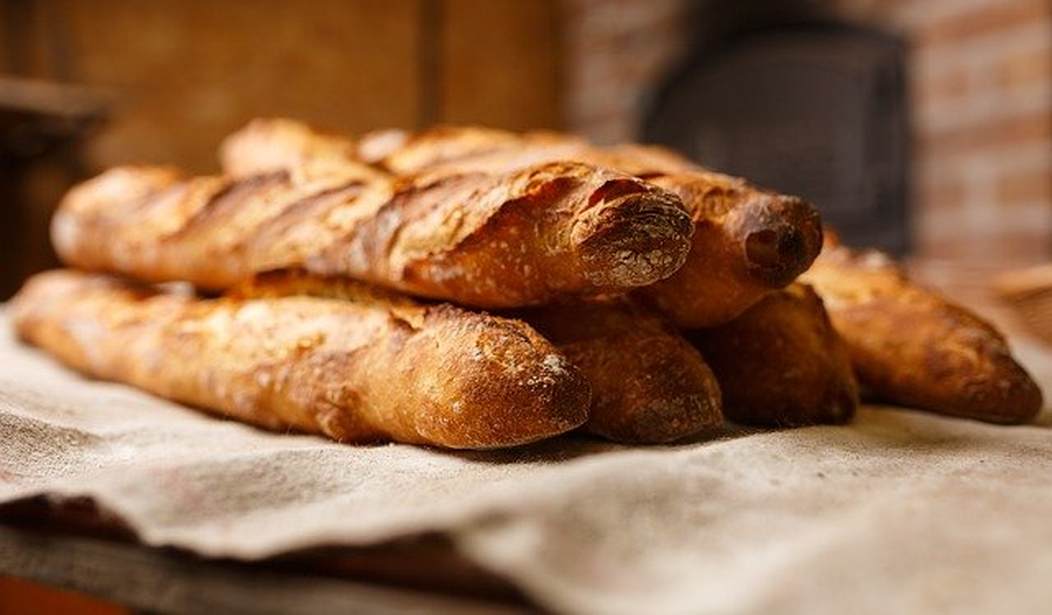
This was not a confusion of bread and cake. It was a confusion of pain and brioche, of coarse, dense peasant bread calibrated to physical labor versus the enriched, sweetened breads of the nobility that assumed leisure and abundance. Brioche was food, but it was the wrong food. It revealed detachment from the logistics of survival.
Modern dog-food and cat-food stories function the same way. They are not claims about what people actually eat. They are symbolic accusations, images of humiliation designed to bypass questions of price, substitution, and access. Like brioche, pet food is chosen not because it makes sense, but because it carries moral weight.
Once you see this, the persistence of the story makes sense. It survives not because it is true in a literal sense, but because it is rhetorically efficient.
What “Food Insecurity” Actually Means
That same symbolic logic now dominates modern discussions of food deprivation.
We are told that millions of Americans are food insecure. The phrase sounds like hunger, but it is not synonymous with hunger. Under the official definitions used by the United States Department of Agriculture, food insecurity includes worry about food running out, inability to afford preferred foods, reduced dietary variety, reliance on repetitive low-cost meals, and occasional skipped meals.
Only a small subset involves repeated missed meals over extended periods. Actual starvation is rare, episodic, and explicitly distinguished from the broader category.
In other words, someone eating rice and beans every night, someone stressed about grocery prices, and someone unable to afford or easily access fresh produce may all be counted as “food insecure.” None of this requires caloric deprivation. None of it resembles famine.
Yet when these statistics are presented to the public, they are routinely paired with imagery and language that imply people simply cannot eat. The definition describes constraint and stress. The rhetoric implies starvation.
This is brioche logic, updated.
When elites talk about food deserts or access to nutritious food, they are rarely describing an absence of calories. They are describing an absence of foods that meet elite preferences — fresh, varied, aesthetically pleasing, and most importantly morally approved foods — and treating that absence as if it were hunger itself. Cheap, filling foods are dismissed. Repetition is treated as pathology. Subsistence diets that sustained entire civilizations are framed as indignities.
Fat, Hungry, and Undernourished
If Americans were facing widespread caloric deprivation, we would see wasting bodies. That is what hunger looks like historically. Instead, we see the opposite: widespread obesity paired with chronic fatigue and persistent hunger. This is not a contradiction. It is a mismatch.
Calories are not interchangeable units of nourishment. Three hundred calories of snack cakes do not function the same way in the body as three hundred calories of eggs, beans, or a simple sandwich. Cheap modern food excels at delivering calories that fill briefly and addict long-term, and, crucially, they are ready to eat.
That last point is almost always ignored.
Ultra-processed food is cheap not only in money, but in time. It requires no planning, no cooking, no cleanup, and no attention. It can be eaten in a car, between shifts, or late at night when the day’s energy is gone. Moon Pies and RC Cola didn’t become cultural staples by accident. In the 1930s, they were explicitly marketed together as a complete, portable lunch for working men, especially in the South, something cheap, filling, shelf-stable, and easy to carry to a job site. They were engineered for immediacy: calorie-dense, instantly consumable, requiring nothing from the eater but a free hand. This is not incidental. It is the product. What we see today traces back to that one movement.
By contrast, nearly every food that actually produces lasting satiety requires preparation. Beans must simmer. Meat must cook. Even rice requires time and heat. These costs are trivial to someone with predictable hours and mental bandwidth. They are not trivial to someone exhausted, stressed, or constantly interrupted.
The foods that fail to satisfy are optimized for immediacy. The foods that sustain require forethought. And the people most likely to struggle with hunger are the very people whose lives leave the least room for planning ahead.
What Would Actually Help
Once the problem is correctly diagnosed, the solutions stop looking grand and start looking mundane.
First, reduce preparation time. Any food that requires sustained attention at the end of the day is a nonstarter for people who are exhausted. One of the simplest fixes would be to provide a basic slow cooker — a $20 appliance — alongside food assistance. Not a lifestyle product. Just a durable tool that allows food to be assembled in the morning and eaten hot at night. It shifts effort to when energy is higher, makes cheap ingredients usable, and lowers the cognitive cost of cooking.
This is not charity. It is infrastructure.
Second, provide a simple recipe book — and show people exactly how to use it. Ten to twelve meals. Plain language. One page per recipe. No substitutions. No aspiration. Each meal nutritionally complete on its own. Paired with short instructional videos that simply demonstrate the process from start to finish. Cheap to produce, easy to distribute, and designed for exhausted cooks, not inspired ones.
Third, normalize boring, repetitive food. Every subsistence culture in history ate the same few meals repeatedly. Stability, not variety, is what made those diets work. When repetition is framed as failure, people abandon workable solutions. Food does not need to be exciting. It needs to be dependable.
Fourth, rebuild the meal. Humans regulate appetite best when eating is discrete: a real, hot meal eaten at roughly the same time each day. You cannot snack your way out of hunger. Swing shifts and night shifts destroy our natural eating schedule, stressing the body and spiking glucose. By making it normal for people to eat at least one meal at the same time every day, we could short-circuit several hormonal problems that are making us sick.
Finally, redefine food insecurity to mean hunger, not aspirations. If we want to address hunger, we should address hunger: insufficient calories, insufficient protein, misaligned nutrition, and sustained disruptions to eating over time. Anxiety about grocery prices, dissatisfaction with diet quality, and lack of variety are real issues, but they are not the same problem. By conflating them, we muddy the waters, and chase symbols instead of outcomes. The result is a population that is overfed in calories, underfed in nourishment, and still hungry.
Clear language matters. A definition of food insecurity that reflects what people actually envision when they hear the term — not a Whole Foods ideal — would let us target real deprivation directly, instead of dissolving it into a grab bag of lifestyle complaints. It would directly benefit the poor, not the elite virtue-signaling class. Not the Marie Antoinettes of our culture.
The lesson of “let them eat brioche” was never about cruelty. It was about detachment. Modern rhetoric repeats the mistake in reverse, imagining deprivation where there is misalignment and responding with symbolism instead of structure.
Food works when it fits the life people are actually living. Anything else is just another way of telling people to eat Twinkies and Moon Pies, while missing the point entirely.
Editor’s Note: Merry Christmas from all of us at PJ Media! You can support our work with a special Christmas discount this year.
Join PJ Media VIP and use the promo code MERRY74 to receive 74% off your membership.



Join the Conversation
VIP members get the ability to comment on articles.