


In 1996, Benjamin Netanyahu’s political movement supported a policy paper, “Clean Break: A New Strategy for Securing the Realm.” It listed countries to target for regime‑change: Libya, Iraq, Syria, Lebanon, Somalia, Sudan, and Iran. After recent protests in the streets failed to upend the Iranian government, President Donald Trump now may be days away from launching what amounts to a regime-change bombing attack on Iran.
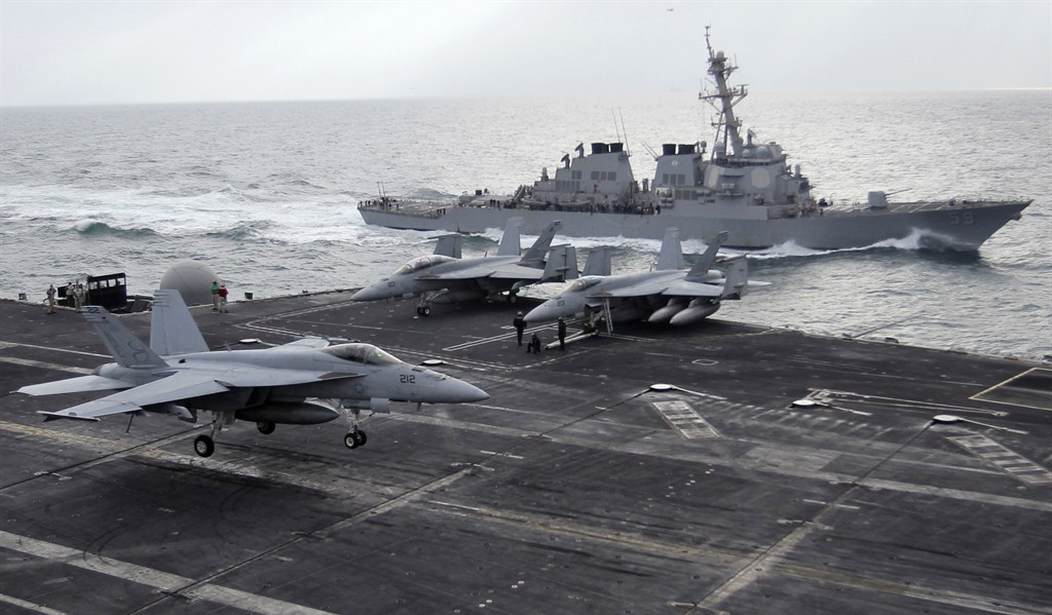
A vast armada has been assembled for this purpose if this big stick does not produce results at the bargaining table.
Everyone from Sen. Lindsay Graham to the late Sen. John McCain has long advocated a military attack on Iran, echoing the clean break strategy for small wars to stabilize the Middle East. During his presidential campaign in 2008, McCain was caught on an open mic singing “Bomb bomb bomb, bomb bomb Iran” to the tune of the Beach Boys’ classic “Barbara Ann.” Fun times, and bombs away, I guess. But are small wars always small?
In a letter to Theodore Roosevelt, John Hay called the Spanish-American War “a splendid little war.” It lasted 113 days. It ended before many troops even arrived in Cuba. Meanwhile, on the other side of the world, Admiral George Dewey won a stunning victory at Manila Bay.
This led to the annexation of the Philippines and, a few months later, to a new 1,300-day war. This time to pacify those who wanted both Spain and America gone. Rudyard Kipling’s poem, “The White Man’s Burden — The United States and the Philippine Islands,” was his take on the moral obligation for the United States to wage war in Asia for civilization. World War II would up the ante on the Philippines.
Small wars, even when you win them, have a long history of feeding into bigger wars. Air superiority, the backbone of America's small-war strategy, has a long history as a tool that can set the table but not achieve victory. Occupation forces are needed. In Korea, Vietnam, and Afghanistan, air superiority didn’t translate into clear victories.
Korea is a classic case. Post‑war assessments by the U.S. Air Force estimate that between 40% and 90 % of the buildings in North Korea were destroyed. The assessment for the capital Pyongyang was that 75% was destroyed, with 18 of the 22 major North Korean cities suffering at least 50 percent damage. This was our substitute for victory, however. The frozen conflict remains.
If you are going to throw a punch with airpower, it would be imprudent not to assess how much manpower is needed for a follow-up punch. What is that number for Iran? I’ll let the armchair generals out there make that call and calculate how many active and reserve forces the United States is ready, willing, and able to commit to any possible campaign.
The argument is often made that this won’t be necessary since the people will greet regime change with open arms. They will do the work, so American forces won’t need to. This was true, and not true, in Iraq and Afghanistan. Unfortunately, many there hadn’t read Emma Lazarus’s poem about the teeming masses yearning to be free, and required guns to convince them. What is our contingency plan for a longer conflict in Iran?
There are three wildcards today. If Iran fights back by bombing aircraft carriers, bombers, bases, and the Israeli homeland, what would happen if things go badly? What would happen if an American aircraft carrier were sunk or a stealth bomber shot down? Would Congress issue a declaration of war? At what point would we need to have an all-in response? And at what point in an extended conflict could Israel think it needs to deploy its nuclear arsenal? And if it did, would Pakistan, perhaps prompted by the Saudis who have long funded them, supply a bomb or two to Iran?
In the meantime, Russia and China may see this as a nice little proxy war to take Uncle Sam’s economy down a few pegs. Their military technology, if deployed to Iran, is not antiquated. Would the United States bomb the direct freight railway linking China and Iran?
There is an old song about knowing when to hold them and when to fold them. Is this such a time? I know many will laugh off these risks. My crystal ball is currently in the shop for repair. The last I checked, it was reading about 60-40 for a peaceful settlement. But when I shook it, the date May 1905 kept popping up.
The decisive Battle of Tsushima proved a disaster for the overconfident Imperial Russian Navy. It marked the decline of a major European power and the rise of Imperial Japan. Revolts broke out in Russia after the defeat. During the year-and-a-half war, Russia lost about 11 battleships, along with cruisers, destroyers, and smaller vessels. Pride precedeth a fall?
Related: USS Gerald Ford Waits to Attack Iran While Its Toilets Are Backed Up
President Theodore Roosevelt exerted back-channel influence to convene a peace conference in Kittery, Maine, and a treaty was signed in Portsmouth Naval Yard to end the war. Despite his reputation for New York bluster, TR was a master of diplomacy. It earned him the Nobel Prize.
Let’s hope another president with New York bluster can bring a diplomatic peace to this unsettled region before the bombs detonate a fuse that could start a new Asian war.
Join PJ Media VIP today and get 60% off with promo code FIGHT. Join now to support this news site, go ad-free, and comment as you see fit.






Join the conversation as a VIP Member