





Greetings, and welcome to Thursday, Oct. 1, 2026. We made it through September — a month that gave us pumpkins, polling data, and at least two hung juries' worth of national conversation. October, try to keep up. And here comes Pumpkin Spice everything.
My calendar says it's Vegetarian Day, Pumpkin Spice Day, Homemade Cookies Day, Raccoon Appreciation Day, and Day of Older Persons. Pour yourself a cup, skip the bacon just this once if you're feeling virtuous, grab a pumpkin spice something since apparently we're contractually obligated now, bake some cookies, appreciate a raccoon from a safe distance, and call an elder in your life — they've earned at least one phone call a year that isn't about Thanksgiving logistics.
Today in History:
1800: Spain cedes Louisiana back to France under the secret Treaty of San Ildefonso.
1890: Congress establishes Yosemite National Park.
1903: The Boston Americans and Pittsburgh Pirates play Game 1 of the first modern World Series, with Pittsburgh winning 7-3.
1908: Henry Ford introduces the mass-produced Model T.
1910: A dynamite explosion destroys the Los Angeles Times building, killing 21 employees.
1946: An international tribunal at Nuremberg sentences 12 top Nazi leaders to death.
1949: Mao Zedong proclaims the founding of the People's Republic of China.
1957: "In God We Trust" begins appearing on U.S. paper currency.
1961: New York Yankees slugger Roger Maris hits his 61st home run, breaking Babe Ruth's single-season record.
1962: Johnny Carson debuts as host of The Tonight Show, a run that will last 30 years.
1964: The Free Speech Movement launches at the University of California, Berkeley.
1971: Walt Disney World opens near Orlando, Florida.
1982: Sony releases the first commercial compact disc player.
2017: A gunman opens fire on a crowd at a country music festival in Las Vegas, killing 60 people in the deadliest mass shooting in modern U.S. history.
Birthdays Today include: Jimmy Carter, the 39th president; Julie Andrews, actress and singer from The Sound of Music; Walter Matthau, actor from The Odd Couple; Vladimir Horowitz, classical pianist; and Mark McGwire, Major League Baseball slugger — if today's your birthday, too, happy birthday from all of us here.
* * *
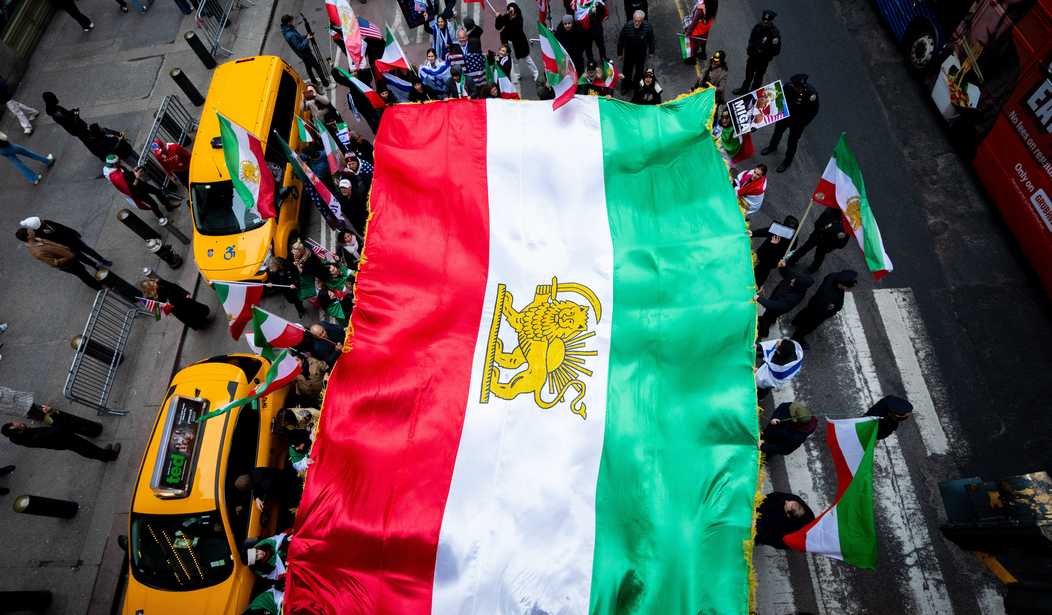
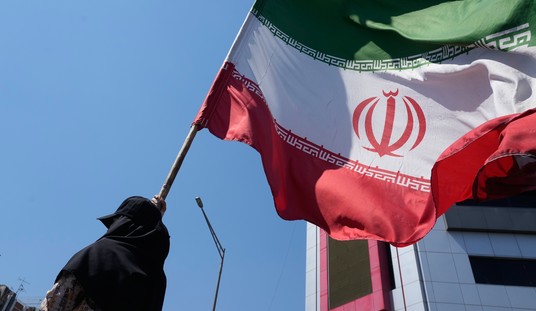
Those watching the fighting in and around Iran are beginning to recognize something the headlines routinely miss: The fault line that matters most isn't between Iran and the rest of the world. It's between the Islamic Revolutionary Guard Corps (IRGC) and the Iranian people themselves.
For nearly five decades, the Islamic Republic has presented itself as the embodiment of Iran, as though opposition to the regime meant opposition to the nation. That's a convenient fiction, and millions of Iranians have spent years protesting, resisting, and sometimes dying in the streets to demonstrate the distinction. What we're watching now isn't another chapter in the familiar Iran-versus-foreign-powers story. It's an increasingly open struggle between a regime determined to preserve itself and a population that increasingly sees the chance to throw it off. Outside pressure has intensified that struggle, certainly, but let’s be honest: It didn't create it. The roots of that struggle are inside Iran itself.
Start with the body count. Protests broke out across the country in December 2025, driven by a collapsing economy — currency devaluation, water and electricity shortages, the basic government failures ordinary people feel long before diplomats do. The regime's answer wasn't negotiation. It was repression. By January, the crackdown had reportedly killed thousands, with the government itself acknowledging more than 3,000 deaths while insisting many of the dead were "terrorists." Independent reporting from the period put the toll at hundreds during particular phases of the unrest, with thousands more injured. Whatever number history settles on, the point doesn't change: Those people weren't killed on a battlefield against Israel or the United States. They were killed inside Iran, by the Iranian regime. The IRGC wasn't defending Iran from an invading army. It was defending itself from Iranians. And the anti-regime protests continue to get louder.
Then there's a detail more revealing than the body count itself. Families retrieving relatives killed in the crackdown have reportedly been charged a so-called "bullet fee" before they're permitted to bury their dead — in some cases, they're pressured to sign documents falsely identifying the deceased as a Basij militiaman killed by "rioters." That's not a government protecting its citizens. It's a government protecting itself from them, and billing the survivors for the ammunition in the bargain.
The Internet blackout tells the same story from a different angle. Iranian authorities shut down internet access for nearly five months, producing a 97% collapse in connectivity and isolating the population from the outside world and from each other. The official excuse was security — but security from whom? Washington wasn't responsible for the bulk of Iranians trying to reach each other. Israel wasn't responsible for families trying to learn whether their children were alive. The people who supposedly needed silencing were the people inside Iran. An authoritarian government doesn't shut down communications at that scale because it has nothing to hide, but because controlling information is itself a weapon, and here the weapon pointed inward.
Then came the leadership vacuum. Ali Khamenei was killed in a February 28 strike, and his son Mojtaba was installed as Supreme Leader amid the chaos. But the succession didn't translate into a clean transfer of authority — the IRGC emerged with greater control over the machinery of state than the office of Supreme Leader itself. That matters because the Guard isn't just another military branch; it has built enormous political and economic power with its own institutional interests over the decades. The real question isn't who holds the title — it's who actually runs Iran. That question sharpened further when President Masoud Pezeshkian publicly apologized to the Iranian people for the crackdown — an extraordinary move for a sitting president, and a tell that the regime's problem isn't disagreement with foreigners but with its own population, one that increasingly appears to extend into the ruling structure itself. The IRGC keeps up the pretense of there being a civilian government because it needs that pretense to hide behind.
Seven out of ten is not a fringe movement. A recent GAMAAN survey found roughly 70% of respondents oppose continuation of the Islamic Republic — not one policy, not one president, but the system itself. The whole thing, say the people, needs to be gone. And understand, that 70% figure is likely more than a little bit low compared to reality. After all, polling inside an authoritarian state comes with real methodological limits. But even as it is, if that number is anywhere close to accurate, the regime has a legitimacy problem for which there are no propaganda-driven fixes.
This may explain an IRGC commander's line describing the Iranian people as "our atom bomb" — meant as a boast about the regime's ultimate strength, but carrying an uncomfortable irony now. If the people are the regime's real source of strength, what happens once those people stop believing in it, as seems to have happened? A government can survive military defeat, sanctions, and diplomatic isolation. What it will in no way survive is its own population concluding it has no legitimate claim to their loyalty.
The IRGC itself is not united. It's often described as a single disciplined organism with one mind. It probably isn't. Foreign Affairs argues one key fault line inside the Guard runs generational — senior commanders forged in the Iran-Iraq War of the 1980s versus younger, mid-ranking officers for whom the revolutionary mythology carries far less weight. That's not just sociology. An authoritarian system depends on its security services staying loyal to the system itself; once those officers start asking whether they're protecting the country or protecting a ruling class, the calculus changes. And if the IRGC fractures, the question stops being whether the regime falls and becomes what replaces it — since the collapse of one authoritarian structure has a long history of simply producing another. I suggest that’s already happening.
And look, let's stop confusing Iran with the Islamic Republic. Iran is a country. The Islamic Republic is a political system. The IRGC is the institution that has become one of that system's principal guardians. Those are three different things, and the distinction matters, because millions of Iranians have spent years, and many gave their lives, demonstrating that they don't regard the Islamic Republic as synonymous with their country. The rift between them is getting larger and more out of control even as you read this.
So the next time somebody frames this entirely as America versus Iran, or the West versus a defiant Islamic Republic standing against foreign pressure, point them to the bullet fee. Point them to the blackout. Point them to the families burying people killed by their own government, and the president apologizing to his own people for what the IRGC did to them. Point them to the polling. The war that matters most here isn't being fought across an international border, and it’s not even about oil at its root. The Strait of Hormuz is a sideshow, being animated by the regime's need for money to keep the Iranian people in line.
The real battle is being fought in the streets of Iran, between a regime that has spent nearly half a century demanding its citizens' loyalty and a population that increasingly refuses to give it.
The question isn't whether Iran survives. Iran will survive. It's too large not to. The question is whether the Islamic Republic, and the IRGC that has spent decades enforcing it, will. We had better hope they don't. Understand a fine point here: This is not regime change from outside. This is the Iranian people rising up and dealing with it.
Recommended: Sen. Kennedy Utterly Dogwalked Jack Smith at Senate Hearing
Speaking of outsiders changing regimes, here’s where we swerve into domestic politics stateside, and particularly the midterms, where the IRGC has decided to make its wishes known. It's spent decades chanting “Death to America” but now is chanting “Vote Democrat.” Victoria Taft picked up on this yesterday.
Funny, I kinda figured Death to America and voting Democrat amounted to the same thing. Either way, that change of tone suggests the IRGC knows very well that if the boot of the West isn’t taken off its neck (which the Democrats will surely arrange, given the chance), it will not survive and Iran will be free of it.
There’s much history to back this idea, as Steve Kruiser notes this morning:
The Islamic thugs in Iran have struggled with strong American Republican presidents since they first came to power in 1979. They effortlessly toyed with Jimmy Carter while he was still president. The specter of Reagan becoming commander in chief got the jihadi flop sweat flowing and an agreement to release the American hostages they'd held since late 1979 was finalized the day before his inauguration. The hostages were released shortly after he was sworn in on January 20, 1981.
Had Jimmy Carter been reelected, who knows if those hostages would ever have made it home.
Yeah, I think there’s no reason to believe they would have gotten home. Clearly, as Steve says, “A Win for the Democrats Is a Win for Gayatollah Khamenei." That’s the choice we face in November, and it’s not at all a close call.
= = =
Thought for the Day: "In God We Trust" went on the currency the same year the Soviets launched Sputnik — proof that even a nation staring down a new kind of fear reaches first for the oldest kind of reassurance.
Editor's Note: The mainstream media continues to gaslight, spin, and lie about President Trump, his administration, and conservatives.
Help us continue to expose their left-wing bias by reading news you can trust. Join PJ Media VIP and use promo code FIGHT to receive 60% off your membership.

Join the Conversation
VIP members get the ability to comment on articles.