





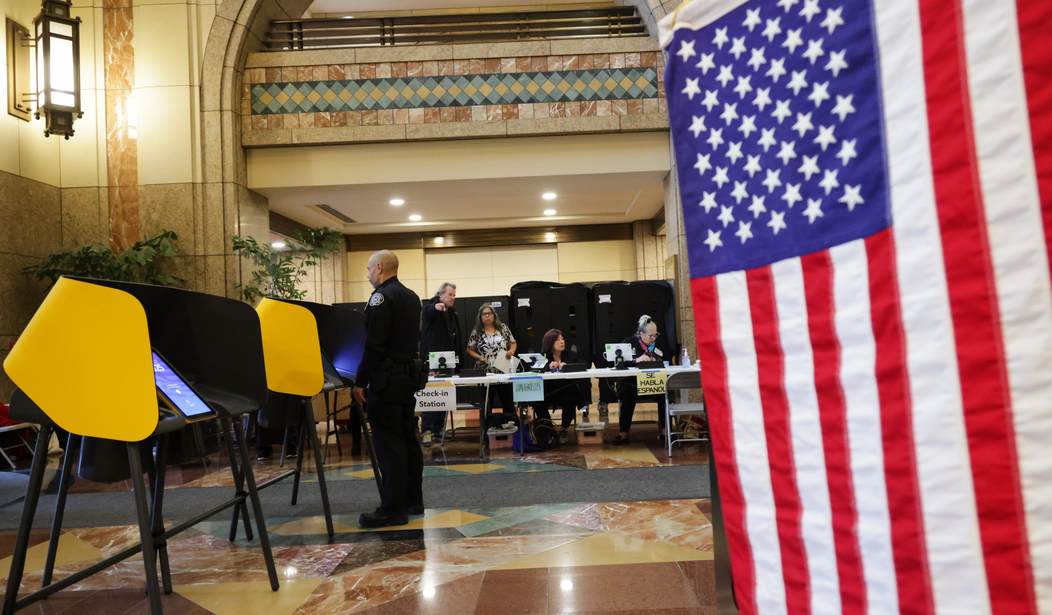
Hey! Nice to have you here. Today is Thursday, Sept. 3, 2026.
My calendar says Welsh Rarebit Day and Bowling League Day are sharing a pretty quiet calendar today, which honestly might be a welcome break after this week. Melt some cheese over toast, hit the lanes tonight, and enjoy the fact that today's observances don't require a single ounce of overthinking.
Today in history:
1189: England's King Richard I, the Lionheart, is crowned in Westminster.
1609: English navigator Henry Hudson, searching for a passage to India on behalf of the Dutch, discovers Manhattan.
1658: Oliver Cromwell, Lord Protector of England, dies.
1777: The American flag reportedly flies in battle for the first time, during a Revolutionary War skirmish at Cooch's Bridge, Del.
1783: The Treaty of Paris is signed, formally ending the Revolutionary War and securing American independence.
1878: The pleasure boat Princess Alice collides with another vessel on the River Thames, killing more than 600 people.
1914: Giacomo della Chiesa is elected pope, taking the name Benedict XV just weeks after the outbreak of World War I.
1929: The Dow Jones Industrial Average peaks at 381.17 before beginning the decline that leads to the stock market crash later that year; it won't reach that level again until 1954.
1939: Britain and France declare war on Germany, two days after the Nazi invasion of Poland, formally opening World War II in Europe.
1943: The British Eighth Army invades Italy, the same day Italy secretly signs an armistice with the Allies.
1967: Motorists across Sweden switch from driving on the left side of the road to the right, overnight, in a coordinated nationwide changeover.
1976: The unmanned Viking 2 spacecraft lands on Mars, capturing the first close-up color photographs of the planet's surface.
Birthdays today include: Charlie Sheen, actor (Wall Street, Platoon); Shaun White, Olympic snowboarder and skateboarder; Fearne Cotton, English radio and television presenter; and Al Jardine of the Beach Boys.
If today's your birthday, too, happy birthday. Enjoy your day.
Wow, what a weather day here in Western New York yesterday was. Very nasty thunderstorms, both in the afternoon and early evening, spawning at least one tornado about 30 miles northwest of me. We're still waiting on damage assessments and the official word. Nearly continuous thunder and quite loud. Some serious rainfall, too. I gather they had some flooding in Syracuse near the State Fairgrounds. Not that flooding that place is too hard, anyway — the whole thing is built on what was once swamp. I'm betting the waterfalls around here will be putting on a show today.
* * *
It seems unquestionable at this point that Democrats are having a rough year. As a result, there's a lot of wishful thinking going around in that camp. Roger Kimball over at American Greatness noted this just this morning:
As I write, most polls say that the Democrats are likely to win back the House and possibly the Senate in November. I have never thought that likely. As for the polls, remember what those fake partisan megaphones said about Francesca Hong and Karen Bass.
I tend to agree with Roger. I've never thought Democrats would make serious gains in either chamber this November. His observations about Hong and Bass are spot on, and they mesh rather nicely with historical polling data measured against actual election outcomes. Democrats nearly always seem to do pretty well in polling, right up to the point of the only poll that actually matters: Election Day. I've said as much in these pages several times now, and I still hold that the numbers will miraculously tighten up about three days out from the vote, right on schedule, same as always. In fact, that's already happening, as you will see further on in this column.
Here's where I'll go a step further than Roger did: He's quite right that the Hong and Bass polls weren't just wrong; they were fake. On purpose.
Yeah, I know — I'm just some guy with a couple of computers and an unusually loud megaphone, so that's a fairly bold accusation. Possibly even the kind that invites a lawsuit. Except for one small inconvenience: Median Strategies, the outfit that produced the numbers, admitted the whole thing had been faked. In writing, no less. Voluntarily. Before anyone even had to threaten it with a subpoena.
So I figure I'm standing on reasonably solid ground here, and I brought the receipts to prove it. Fox News explicitly credits the LA Times as first to break the story. AP's version, as filtered through the deep-blue halls of PBS, confirms every detail. And Poynter's own media-analysis piece quotes the Median Strategies confession email to the Times directly, word for word. Three separate outlets, none of them exactly sympathetic to MAGA, all telling the identical story.
Here's how it went down. Median Strategies released a "poll" in mid-August showing Democratic Socialist Francesca Hong walloping Milwaukee County Executive David Crowley by more than 20 points in Wisconsin's gubernatorial primary. Around the same time, it dropped one showing LA Mayor Karen Bass leading Councilmember Nithya Raman by 12 points. Bass's own campaign celebrated the Hong-adjacent numbers on social media, crowing about "momentum" as if it had actually earned any. One California outlet even ran an entire headline built on top of numbers that didn't exist.
Then, shockingly, Median Strategies simply confessed. In a statement to the LA Times, the company admitted it had been "created as a short-term social experiment to examine how purported polling information could enter and spread through the political information ecosystem without independent verification." It shuttered its website days later, retracting every number it had ever published and warning that none of it "should be cited or treated as genuine polling data" — which is a remarkably polite way of saying "we made all of this up and you idiots believed it instantly."
Read that admission again, slowly. Make sure you absorb the implications. Somebody built an entire fake polling operation, from scratch, specifically to test whether the media and Democratic campaigns would swallow flattering numbers without checking a single thing. And the experiment worked exactly as designed. They took the bait, the rod, the reel, the fisherman, and a few miles of coastline.
Bass's own campaign promoted the fabrication before (very quietly) deleting it once the jig was up. This wasn't a Republican dirty trick, either — when you take the admissions at face value, nobody had any partisan skin in Median Strategies at the outset. It's simply proof of how starved the political press and campaign apparatus were for a story that confirmed what they already wanted to believe, regardless of whether the numbers underneath it were real.
And Hong lost her actual primary anyway, despite that fabricated 20-point cushion — a data point worth remembering the next time somebody waves a poll at you three months out from an election like it's settled science, equal to global warming, er, cooling, ummm… Climate Change.
Now, as to who Median Strategies actually was.
I'll admit my sourcing on this started out thin. The Hill's coverage reported that The Guardian identified the source behind Median as a 21-year-old named Rahil Prakash, a recent college graduate. I dug further, and it holds up better than I initially expected. Prakash publicly identified himself in a Guardian report published on August 20, as the sole creator of Median Strategies, which he built and operated entirely by himself, using AI tools. When the LA Times reached him by text after the Guardian story ran, Prakash confirmed the reporting was "fully accurate" — meaning this isn't a single-source outside identification hanging by a thread. The man confirmed his own identity, directly, to a second outlet.
Worth pausing to tip the cap, grudgingly, to the LA Times for actually chasing this story down. That's not something you see often these days, and I can't help but wonder whether the same reporting energy would've materialized if Hong and Bass had simply won their races on the strength of fake polling nobody ever bothered to question.
As for motive, Prakash says he was inspired by the polling miss in Michigan's Democrat Senate primary, where surveys and prediction markets had Abdul El-Sayed winning by a wide margin, only for the real result to come in much closer. His own words: "I wanted to see if fake polls could really penetrate the ecosystem that easily. And as it turned out, it could."
Gee. Big shock. Prakash also denied receiving any money for the project and denied trading on prediction markets tied to the races he faked. I've got no proof either way on those specific claims, but for this purpose, I suppose that point isn’t a must-have.
Thing is, even taking his “social-experiment” framing entirely at face value (which, for the record, I'm not sure that I do), it doesn't exactly flatter the Democrats caught in the blast radius. They ran with numbers that felt good and never once bothered vetting the company that supplied them. And even that assumes they have no internal polling. If they did, and I assume so, that external polling data must have run afoul of their own internal polling. Hard to imagine they didn't know.
And think about this: Prakash's premise was that the polling data — which may have helped propel Abdul El-Sayed into a primary win — was faked. So he went about proving it was possible to do. Ding, ding, ding! Give that man a cigar and his choice of prizes from the second shelf.
A lack of vetting? Wow. Imagine that. Graham Platner, coincidentally, was unavailable for comment.
The point standing underneath all of this seems undeniable: Manufacturing fake numbers showing Democrats comfortably ahead turns out to be remarkably, embarrassingly easy. Perhaps we owe Prakash a small debt of gratitude for proving it so cleanly.
And this isn't limited to one 21-year-old with a laptop, either.
Even a quick glance back at 2024 turns up plenty of wishful thinking that simply didn't survive contact with the actual ballots. Every single swing state broke for Trump, one after another, an outcome pollsters missed entirely. Trump outperformed his final polling by roughly three points — right at the edge of a normal margin of error, but landing in the identical direction every time, which stops being a coincidence and starts being a pattern. In the safe states, the miss got worse. Florida and Texas were both projected for Trump by around seven points; he won each by roughly 13. Pollster Ann Selzer's famous Iowa survey had Harris winning by three; Trump carried the state by 13 — a 16-point miss, on a single high-profile poll that plenty of outlets treated as gospel right up until the votes said otherwise. The American Association for Public Opinion Research (AAPOR)'s own blunt postmortem: pollsters "failed to reliably measure the preferences of … Republican voters in GOP-leaning areas, Hispanic voters, and those who had voted in 2024 but not 2020."
2020 tells the same story, just less remembered because Biden happened to win anyway. Polls overestimated Biden's margin over Trump by roughly four points nationally in competitive states — a bigger miss than 2024's, even though 2020 gets filed away in the public memory as "the polls were basically fine." (I still consider that outcome questionable myself, given the vote-fraud questions we've already covered in these pages, but that's a separate argument for a separate day.)
Then there's 2016, where the national numbers were closer to accurate, but the Rust Belt — Michigan, Pennsylvania, Wisconsin — got badly missed, with Trump overperforming enough to flip the Electoral College out from under everyone's confident predictions. Which, in turn, led to some gloriously shocked faces on air at CNN and PMSNBC.
Now, I'm not claiming pollster bias toward Democrats ranks somewhere among the laws of physics. There's always 2022 as the counterexample, where the predicted red wave never showed up, and Republicans underperformed their own polling instead. Fair enough — I'll grant that one openly, because pretending the pattern is flawless would make me exactly as dishonest as the people I'm criticizing. But 2022 remains the notable exception, not the rule. The broader, multi-cycle trend — 2016, 2020, and 2024, three out of the last four national cycles — consistently inflated Democratic strength in the same direction, cycle after cycle.
Now, as to the upcoming midterms, Democrat polling has already peaked. Emerson College had the Dems up by 11 points, CNN by eight. The rest of the pollsters fell in line at that peak. Today, however, a different picture emerges. A detailed tracker at PlusMinus4 lays out the most granular recent movement I've found: YouGov's latest poll has Democrats' lead down to just two points, their smallest margin since last September. Several other pollsters corroborate the same downward drift: CivicScience Labs moved from D+9 to D+3; TIPP from D+3 to D+2; and Marist from D+14 all the way down to D+9. That Marist swing in particular is a genuinely large single-pollster shift.
Right on time. Our Matt Margolis touched on this trend yesterday as well. Recommended.
You can understand, then, why I refuse to take this year's polling at face value. History's given us every reason not to, and Rahil Prakash just handed us a bonus one.
Thought of the Day: When a Christian man says “Praise the Lord,” you smile, knowing something good happened. When a Jewish man says “Baruch Hashem,” you smile, because they’re grateful for something good happening. When a Muslim man shouts “Allahu Akbar,” you run, because somebody’s gonna get killed.
VIP members: Your voice matters. Make use of it in the comments.
Take care, gang. I'll see you tomorrow.
Exclusively for our VIPs: It Took Just 13 Days for the Institutional Class to Throw the Switch on Trump
Editor's Note: The mainstream media continues to gaslight, spin, and lie about President Trump, his administration, and conservatives.
Help us continue to expose their left-wing bias by reading news you can trust. Join PJ Media VIP and use promo code FIGHT to receive 60% off your membership.
Join the Conversation
VIP members get the ability to comment on articles.