





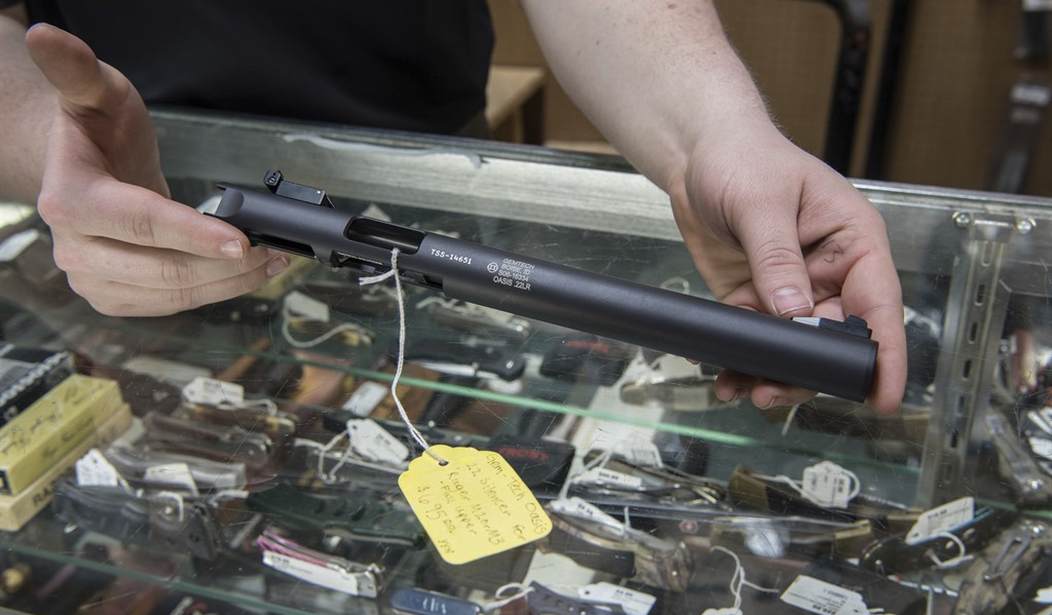
A Wisconsin gun owner looking at a suppressor now confronts an unusual split in the law. Washington says it will stop enforcing federal registration rules. Wisconsin still has a statute that ties an exception to its silencer ban to compliance with federal registration. A Texas judge started the dispute, but President Donald Trump’s Justice Department has now taken the response nationwide.
I think we need to define the terms “silencer” and “suppressor.” They describe the same device, but “suppressor” more accurately describes its function.
A suppressor attaches to a firearm’s muzzle and controls the release of rapidly expanding gases to reduce gunshot noise. It doesn’t eliminate the noise, the supersonic crack of a bullet, or the need for hearing protection in many shooting situations.
Hollywood has popularized the idea of nearly silent gunfire, but actual suppressors don’t work that way. Federal law still uses the term “firearm silencer,” which is why it appears in statutes and court decisions.
The distinction is terminology, not two different types of equipment.
On Friday, October 9, the Bureau of Alcohol, Tobacco, Firearms and Explosives announced it would no longer enforce major National Firearms Act registration, prior-approval, and tax-stamp requirements for suppressors, short-barreled rifles, short-barreled shotguns, and certain other weapons.
Attorney General Todd Blanche directed the broader change after the DOJ decided not to appeal an August ruling.
From the ATF:
Under ATF’s guidance, ATF will not enforce the requirements for individuals to apply and receive ATF approval before making or transferring short-barreled rifles, short-barreled shotguns, suppressors (silencers), and certain other concealable firearms known in the law as “any other weapons.” ATF also will not enforce the NFA’s registration, tax-stamp or related requirements for those covered items. The $200 tax remains in place for machine guns and destructive devices. The NFA requirements apply in full to those weapons.
The guidance does not supersede state and local laws that restrict NFA firearms. Because many state laws require individuals to register NFA firearms, ATF will continue to process NFA applications that are submitted. The guidance also does not affect the Gun Control Act’s requirement to obtain ATF approval before transporting short-barreled rifles and short-barreled shotguns in interstate commerce. Individuals may obtain that approval by filing a Form 20, whether or not the item is registered under the NFA.
The story began with Congress. Trump’s 2025 tax legislation cut the National Firearms Act’s $200 making and transfer taxes to $0 for those categories, effective Jan. 1, 2026. Congress left the paperwork and registration system in place. The $200 tax on machine guns and destructive devices survived, as did occupational taxes on firearm businesses.
On August 5, U.S. District Judge James Wesley Hendrix ruled that the challenged registration provisions could no longer rest on Congress’s taxing power once the underlying taxes disappeared. He found no basis to revive the rules through the commerce power, since Congress hadn’t invoked it when it enacted the law. The judge didn’t decide the Second Amendment claims, and his injunction protected the plaintiffs and specified related parties rather than everyone in America.
Friday’s shift came from the executive branch. Blanche chose nationwide nonenforcement to avoid applying one set of federal registration demands to plaintiffs and another to everyone else. ATF Director Rob Cekada said the agency would redirect attention toward violent crime. The government has changed its enforcement position without Congress repealing the underlying statutory provisions.
For covered items, individuals generally no longer need federal Form 1 or Form 4 approval before making or transferring them under ATF’s policy. The agency will continue taking voluntary registrations, partly because some states will require proof of federal compliance.
Recommended: Sunday Is National Coming Out Day, but My Secret Can’t Wait
A person buying through a licensed dealer still faces Form 4473, a federal background check where required, and the Gun Control Act’s other restrictions. Gun-safety organizations have criticized the retreat from federal registration, warning that it weakens public safeguards.
From the Associated Press:
Groups that support gun restrictions decried the judge’s ruling and the Justice Department’s decision to let it stand as reckless and argued that the regulations are important for public safety.
In a statement on Friday, John Feinblatt, president of Everytown for Gun Safety, said Cekada had embraced the “smash-and-grab lawlessness of the Trump administration by attempting to pick and choose which federal gun laws he enforces.”
Wisconsin makes the complications hard to ignore. State Statute 941.298 generally treats possession, sale, or delivery of a firearm silencer as a Class H felony. One exception covers people who comply with federal licensing and registration requirements. Section 941.28 separately regulates short-barreled rifles and shotguns and includes several exceptions.
Neither provision vanished because ATF changed enforcement priorities.
The Firearms Policy Coalition moved immediately. On October 9, it urged attorneys general in 15 states, including Wisconsin, to stop enforcing laws connected to federal NFA registration and seek permanent legislative changes. Its request is advocacy, not an amended state law. The ATF itself says it can’t determine whether an unregistered item satisfies a state’s federal-compliance exception.
Another caution appears deep in ATF’s own guidance. A future administration could reverse the nonenforcement policy, a court could change the legal landscape, or Congress could restore a tax. The ATF warns that unregistered NFA firearms generally can’t be registered afterward, and no automatic grandfather protection exists. A possible registration amnesty would depend on the attorney general’s discretion.
Even interstate travel carries conditions. The ATF still requires prior Form 20 approval to transport short-barreled rifles or shotguns across state lines, despite its separate decision not to enforce the NFA’s unregistered-transport prohibition.
Gun owners need to know where federal discretion ends, and enforceable rules begin.
Trump’s DOJ has made a consequential enforcement choice with national implications. Congress could permanently clarify the law, while Wisconsin lawmakers and prosecutors must sort out the state’s own requirements. Until then, a policy announced in Washington may spare someone federal paperwork without eliminating the risk that an unrevised state statute poses.
Support independent journalism and get more of the news, commentary, and analysis you enjoy at PJ Media. Join PJ Media VIP today and save 60% with promo code FIGHT.


Join the Conversation
VIP members get the ability to comment on articles.