If you've driven I-94 between Eau Claire and Osseo, you've passed Foster. You may have even taken Exit 81 without giving much thought to the little unincorporated community sitting among the farms and hills of western Wisconsin.
Foster will never be mistaken for a metropolis. Its history, however, contains enough Wisconsin for a place many people barely notice: lumber, railroads, stubborn settlement, and one terrible summer evening when the sky turned deadly.
The community was originally known as Emmett. Its later identity became tied to the Foster family and a remarkable railroad enterprise that grew from the lumber business of Nathaniel Foster, who arrived in Wisconsin in 1854 and eventually settled in Fairchild.
Foster bought large stretches of timberland in Eau Claire and Clark counties and built mills at Fairchild. Moving all those logs required transportation, so Foster built it himself. His earliest operation included a horse-drawn tramway with wooden rails before steam locomotives and iron rails took over.
The railroad eventually stretched through a large part of western Wisconsin. One branch reached the community that would become Foster and continued toward Cleghorn. Local residents gave Foster's railroad one of those nicknames that could only have come from Wisconsin: the "Foster & Nobody Else."
Nathaniel Foster reportedly financed much of his railroad work without the mountain of debt normally associated with such construction. His railroad helped open territory that had previously depended on primitive roads, giving farmers and small communities connections to markets beyond their immediate neighborhoods.
Eventually the timber disappeared. The railroad struggled, changed hands, lost sections of track, and finally vanished. Foster remained.
Then came August 27, 1994.
That afternoon, my brother Dean and I went fishing at a small pond, locally known as Bullhead Pond, created by a flooding Eau Claire River. Because the pond received a new batch of fish from every spring flood, you'd never know what you'd end up catching.
Heck, I caught my first muskie there, around 20 years before that fateful Saturday. In the days prior, I had been practicing casting with an open-bail rod-and-reel. Back then, I stank; I couldn't hit the grass if I were in the middle of a field.
As my casts were flying in all directions, my dad was becoming a bit angry with me. On my next cast, my Rapala ended up around a branch sticking out of a brush pile, hanging about three inches above the water.
Just as I was about to get a verbal lambasting from Dad, a muskie jumped up and grabbed my Rapala. It took several minutes for me to land a 40-inch fish, too small to keep, but my adrenaline spiked.
That August day in 1994, however, fishing was cold. We caught nothing. Then a front flew through, bringing a quick downpour. Once the storm left, my brother and I caught a small northern pike (we called them "hammerheads") on 27 consecutive casts, 13 by me and 14 by Dean.
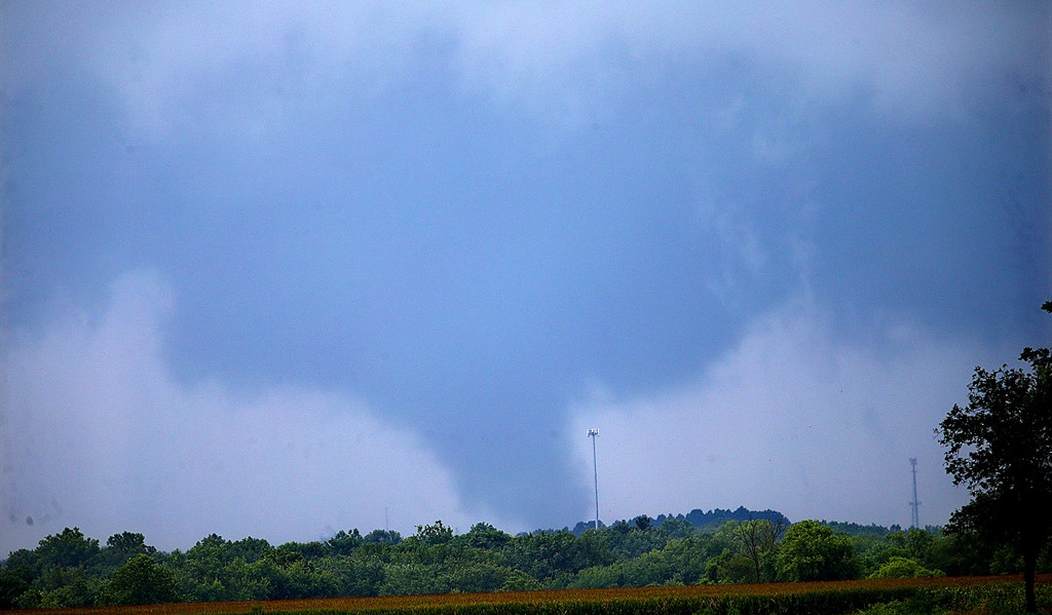
Later that Saturday, about 7:15 p.m., an F3 tornado tore through the Foster area, cutting across Pleasant Valley, Clear Creek, and Otter Creek. The storm left a trail of destruction roughly nine miles long.
One was a 3-year-old girl whose family's mobile home was overturned by the tornado. The other was a woman killed after the storm blew a van off I-94. Although she was wearing her seatbelt, the wind ripped her away from her husband, who was driving, and out the passenger window.
Driving north on I-94, I could tell where she died: when the tornado hopped across the highway, it landed on a hill, and it appeared as though a giant shovel had scraped the top of the small hill.
The official National Weather Service tornado fatality record lists Foster's storm as an F3 and confirms the two deaths. Eau Claire County's later hazard planning records say nearly half of the 52 tornado-related injuries recorded in the county's historical dataset came from the Foster tornado alone.
The storm didn't stop at Foster. A little more than an hour later, another F3 tornado struck near Big Flats in Adams County, killing two more people. Four Wisconsinites died in tornadoes that evening.
For Foster, though, the numbers don't convey what happened.
A community that had survived the disappearance of the railroad that helped give it an identity suddenly found itself confronting something that couldn't be negotiated with, rebuilt something else, or waited out economically. In minutes, an F3 tornado did what decades of changing transportation and industry hadn't managed to do: it left Foster, Wisconsin with a date people would remember.
Today, Foster is still there.
The trains are gone; Nathaniel Foster died in 1923, and his railroad disappeared piece by piece during the following years. The great lumber operations that once drove western Wisconsin's economy belong to history.
But take Exit 81 from I-94, and the name remains. So does the community.
Maybe that's the part of small-town Wisconsin history we sometimes miss. Places don't have to be large enough for skyscrapers, stadiums, or history textbooks to accumulate stories worth remembering.
Sometimes all they need is a railroad track, a few generations of people unwilling to leave, and one August evening nobody who lived through it will ever forget.