


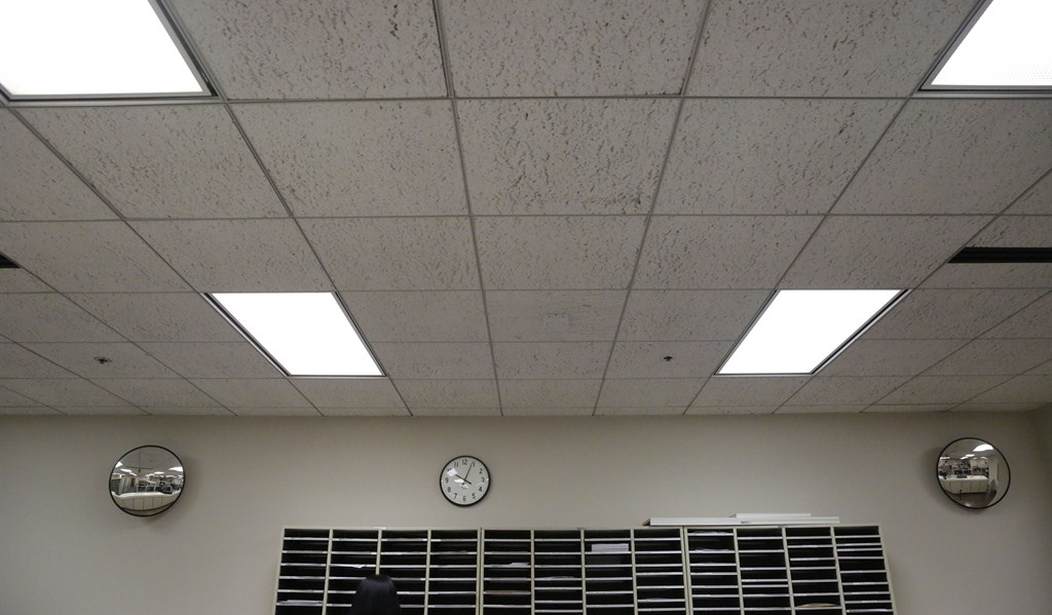
Transportation Secretary Sean Duffy inherited an office portfolio with too many empty desks and a bill taxpayers continue to pay in full.
A July review found 168 of the Department of Transportation's 189 office buildings were below the federal government's 60% utilization standard. Rent, operations, and maintenance for those underused properties total $370 million each year.
The federal auditor reported on July 15 that 89% of the department's 189 facilities that it examined nationwide in August and September 2025 fell short of the 60% occupancy rate required by the federal USE IT Act to stay open.
The agency’s largest spaces had an occupancy rate of just 34% on average, the GAO found, and among those underutilized buildings are the Department of Transportation's headquarters and the Federal Aviation Administration headquarters in Washington, D.C.
“With seven out of every ten desks sitting empty in thousands of government buildings, Washington needs to follow this simple rule: use it or lose it,” Iowa Republican Sen. Joni Ernst told the Washington Times this week. “Taxpayers can’t afford to waste more than $1 billion every year on Taj Mahals for bureaucrats.”
A DOT official told the outlet that the agency is working to “centralize operations and enhance the efficiencies” of its workforce and is working to relocate 950 FAA employees to the DOT headquarters next summer.
“USDOT is committed to unifying the Department under one roof and maximizing our space,” the official said. “We’re already making significant progress: one of our FAA buildings has already been returned to GSA, and over 800 FAA employees have already been relocated to DOT HQ.”
DOT's entire 189-building portfolio costs about $382 million annually, and nearly the whole bill goes to buildings the government's own auditors classify as underused.
The largest buildings performed among the worst. DOT headquarters averaged 34% utilization, while FAA headquarters averaged 33%. Those two complexes alone carry more than $128 million in yearly rent, operations, and maintenance expenses.
One Aviation Plaza in New York averaged only 13% utilization while collecting more than $15 million in annual rent.
The review wasn't based on a single slow morning; attendance was measured across four weeks in August and September 2025, using the standard of 150 usable square feet per worker.
All 12 offices visited in Washington, Virginia, and California fell below the federal benchmark, ranging from 27% to 50% utilization. The period included a federal holiday, but DOT's March 2025 filings produced largely consistent results.
Some expenses would remain during any consolidation, so the full $370 million isn't an instant savings estimate. The findings still reveal large opportunities to cancel leases, reduce office footprints, and return federally owned space to the General Services Administration. Every one of DOT's 10 most expensive office buildings was underused.
President Trump ordered executive agencies to end most remote work and require full-time in-person attendance in January 2025. DOT also reinstated office requirements and reduced its workforce. Its largest buildings still averaged only 34% utilization, and department officials acknowledged that headquarters was underused even before the pandemic. Telework only aggravated a management failure already present.
Duffy's department has started moving Washington-area FAA personnel into DOT headquarters and intends to vacate the FAA headquarters complex by summer 2027.
The move is underway, while the financial plan remains incomplete. As of June, DOT had no definitive location for 950 FAA headquarters employees and no detailed estimate showing what the consolidation would save. From the GAO:
The Department of Transportation (DOT) and its component agencies are underutilizing their office space department-wide based on the Utilizing Space Efficiently and Improving Technologies (USE IT) Act benchmark of 60 percent utilization. Specifically, GAO found that 89 percent of DOT’s 189 office buildings, including the DOT and the Federal Aviation Administration (FAA) headquarters complexes, were underutilized in August and September 2025 based on the USE IT benchmark. This was largely consistent with DOT’s USE IT Act reporting in March 2026. DOT’s underutilized office space costs hundreds of millions of dollars annually to lease, operate, and maintain.
In August 2025, DOT announced its intention to consolidate Washington, D.C.-area FAA office space, including fully vacating the FAA headquarters complex by summer 2027. As of June 2026, DOT is reconfiguring its headquarters without a definitive housing plan for 950 of the FAA headquarters personnel or detailed savings estimates. Due to these uncertainties, the agency may complete the consolidation without fully vacating the FAA headquarters complex, potentially offsetting any savings from the consolidation.
DOT has not pursued department wide-consolidation to increase space utilization or implemented space-maximizing strategies to address underutilized office space. Specifically, as of March 2026, DOT did not have plans to consolidate other DOT offices beyond FAA headquarters despite widespread underutilization. There are department-wide opportunities to consolidate, as 89 percent of DOT office buildings did not meet the USE IT Act utilization threshold for a period in 2025, and its largest office buildings averaged 34 percent utilization. In addition, adopting space-maximizing strategies could help DOT efficiently use its office space and support further consolidations and savings. For example, implementing a desk reservation system could help DOT use space more efficiently and increase utilization because DOT officials said that many employees spend roughly half their time offsite conducting investigations or inspections. By developing and implementing a department-wide consolidation plan that includes space-maximizing strategies, DOT may be better able to meet the 60 percent utilization threshold throughout its portfolio of office space and reduce facility costs by hundreds of millions of dollars.
The problem extends far beyond two Washington buildings. As of March, DOT had no department-wide consolidation plan beyond the FAA move. Separate funding streams have encouraged component agencies to maintain independent offices, while many investigators and inspectors spend roughly half their time working offsite.
Recommended: The View Wants a News Exemption — While Telling Viewers to Vote Democrat
Nearly all DOT employees still qualify for dedicated desks under the department's space policy.
Federal office waste has lingered for decades. The government spends about $8 billion a year to lease, operate, and maintain office space, while federal real property management has remained on the government's High-Risk List since 2003.
President Trump's attendance order puts more employees back inside federal buildings. Agencies still have to surrender leases and properties they can't justify.
Some government waste is impossible to miss. Other waste hides in automatic payments, half-empty floors, and offices nobody has been forced to close. Duffy's department has so far accepted two recommendations: finish the FAA consolidation and build a department-wide plan.
Taxpayers should see a building-by-building timetable, canceled leases, quarterly savings figures, and fewer doors left open simply because Washington has always paid the bill.
Washington counts on waste being too dull to hold anyone’s attention. PJ Media keeps following the money and naming who must act. Join PJ Media VIP today and get 60% off with promo code FIGHT.






Join the conversation as a VIP Member