







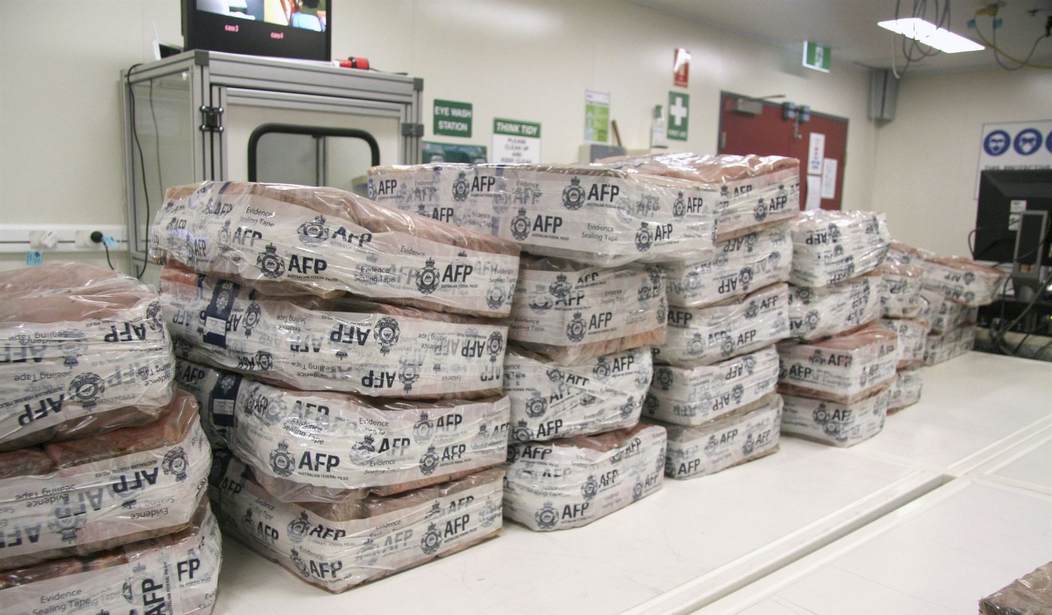
Project Bay pulled more than 3,700 pounds of illegal drugs and 17 firearms out of a cross-border network tied to Ontario's commercial transportation system.
One weapon was an anti-tank rifle, proving that America's border map extends far beyond Texas and Arizona.
The haul included roughly 2,145 pounds of suspected cocaine, 1,455 pounds of suspected methamphetamine, 108 pounds of opium, and 230 oxycodone pills.
Investigators also seized ammunition, cash, jewelry, money counters, 43 cellphones, and six laptops. Twenty-one people face more than 100 offenses, with 19 arrests and two still wanted.
“This work is never done,” said Windsor Police Service Chief Jason Crowley, but it’s “a very large dent in someone’s business.”
The visual centrepiece of the press conference, however, which also involved federal and local law enforcement agencies, was not the plastic-wrapped bricks of drugs, but a rare antique Finnish anti-tank rifle, the Lahti L-39 .50 calibre, developed for use against Soviet forces in the Second World War, and with no legitimate modern civilian application. It was among 17 firearms seized in recent police raids in the Windsor and Toronto areas.
“The fact it is in the hands of organized drug traffickers is concerning,” said OPP Chief Superintendent Mike Stoddart of the Organized Crime Enforcement Bureau.
More than a dozen other seized long guns were also on display. Police also seized cash, ammunition, prohibited weapons such as brass knuckles, one vehicle, high end jewellery, money counters and electronic devices. One image released by police showed a brick of cocaine stamped “019.”
“It’s an impressive visual,” Crowley said of the drugs haul, and it is physical proof of a crime network with “multiple tentacles throughout North America…. This runs very deep and it’s disturbing, to be honest.”
The Government of Canada has been resolute in its commitment to doing whatever it takes to keep our border secure, because we know that a strong border is essential to our economy, national security, and the safety of our communities. Through the $1.3 billion Border Plan, the Government of Canada has invested in equipment and technology for border and law enforcement agencies to tackle the flow of illegal fentanyl, other illicit drugs, and precursor chemicals; deter organized crime and illegal migration; and increase information sharing and operational coordination with partners.
Strengthening Canada's Immigration System and Borders Act (Bill C-12)
On March 26, 2026, the Strengthening Canada's Immigration System and Borders Act (Bill C-12), received Royal Assent, strengthening our immigration and asylum systems and providing law enforcement agencies with more tools to keep our borders secure, combat transnational organized crime, illegal fentanyl, and illicit financing.
Investigators uncovered a broker-style operation inside commercial transportation. Established connections arranged for drivers to knowingly carry illegal cargo within legitimate supply chains. The operation depended on trucks, routes, businesses, and people trusted to move freight.
Commercial freight is the central concern. Criminal organizations can conceal enormous quantities inside the daily movement of legal goods. A security policy built mostly around people crossing on foot will miss networks arriving with manifests, schedules, and established routes. From the Canadian Government's press release:
On Tuesday, July 14, 2026, two search warrants were executed in Markham and Caledon.
On Monday, July 20, 2026, two search warrants were executed in Brampton.
Throughout the investigation and as a result of the search warrants, the following items were seized with approximate quantities:
- 973 kg suspected cocaine
- 660 kg of suspected methamphetamine
- 49 kg suspected opium
- 230 oxycodone tablets (5 mg)
- 17 firearms, including an anti-tank rifle
- Ammunition
- Prohibited devices and weapons including brass knuckles, magazines and baton
- C$80,000
- US$10,000
- One vehicle as offence-related property
- High-end jewellery
- Money counters
- 43 cell phones and six laptops
The estimated street value of the drugs seized is more than $139 million, representing a significant disruption to the illegal drug supply chain in Ontario.
The OPP Provincial Asset Forfeiture Unit has been engaged to investigate any proceeds of crime offences and assist in the seizure of offence-related property.
Twenty-one individuals have been charged with 102 offences contrary to the Criminal Code and the Controlled Drugs and Substances Act. Nineteen of the accused were arrested and two remain outstanding. Arrest warrants have been issued. Information on the accused and their respective charges are included in the below Addendum of Charged Persons.
Cocaine is not produced domestically and enters Canada through international drug trafficking networks. Methamphetamine seized in recent OPP investigations originates from multiple sources and is either produced in clandestine domestic laboratories or imported into Canada. The investigation into the source and full scope of the trafficking network remain ongoing.
President Donald Trump pushed Canada to strengthen border security in 2025 and treated northern smuggling as a national security issue. The southern border remains the larger daily challenge, especially for illegal crossings and fentanyl trafficking. Canada still can't be treated as exempt from drug trafficking, human smuggling, or organized criminal networks.
The U.S. Border Patrol's Detroit Sector recorded 681 narcotic seizures from fiscal 2019 through March 31, 2026, more than any other northern sector. Agents averaged 150 seizures a year during the previous two fiscal years. Those figures describe persistent activity along routes connecting Michigan and Ohio with Canada.
Canada has responded with a $1.3 billion border plan, roughly 10,000 frontline personnel, and plans for 1,000 new border officers. Investments include helicopters, drones, mobile surveillance towers, intelligence tools, and expanded coordination with American agencies.
Project Bay shows the value of cooperation; police and border agencies crossed jurisdictions and removed an industrial-sized shipment before it reached more communities. Their success also raises a hard question: how much cargo moved before investigators found the network?
Washington should keep pressure on the southern border while expanding northern intelligence, cargo screening, anti-corruption work, and joint investigations. Project Bay exposed one network using legitimate commerce as cover. America can't afford to discover its northern gaps only after the drugs, guns, and brokers are already in place.
PJ Media VIP membership is now 60% off with promo code FIGHT. Join us and help support commentary that follows the facts wherever they lead.


Join the Conversation
VIP members get the ability to comment on articles.