







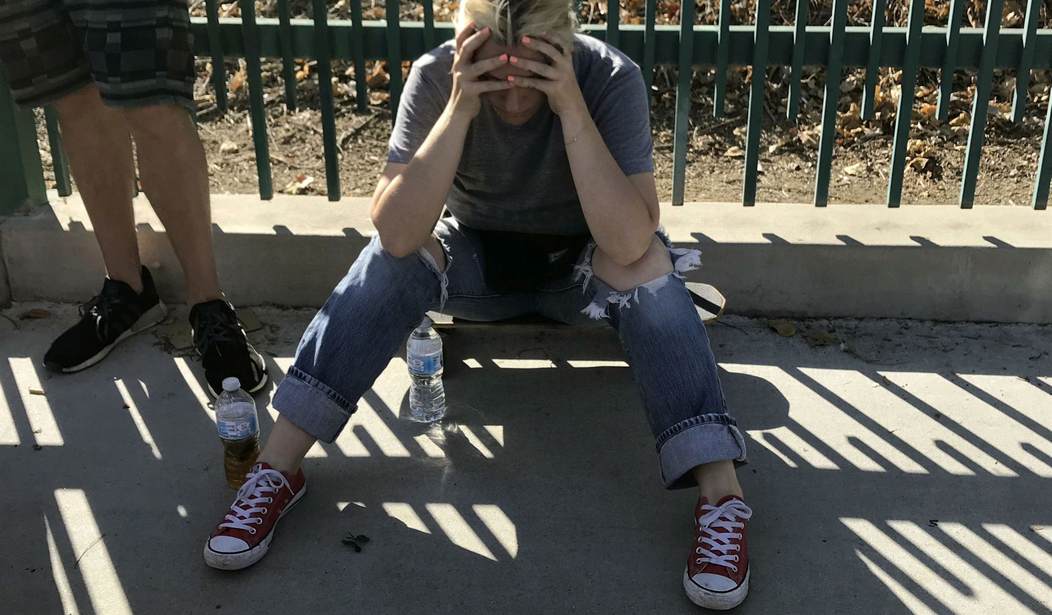
If you've ever been cut off by family over politics and wondered how something so trivial could cause a permanent rupture, a new Wall Street Journal report might have your answer. It's not you. It's your relative's therapist.
According to the report, a growing number of therapists now advise patients that cutting off parents or other close relatives is a legitimate form of self-care. A trend that treats walking away as the “healthy choice” has quietly replaced decades of therapy built around repairing family bonds.
Critics call it unsupported by evidence and destructive to families.
Shoshana Rubli, a 42-year-old freelance marketer, cut off her mother after her therapist recommended it in their second session together. The therapist had impressive credentials, so Rubli didn't question it. "It was an argument made from authority, so I followed it," she says.
It’s scary how prevalent this has become.
About 25% of the U.S. population is estranged from, or has cut ties with, a close relative at any given time—and 10% is estranged from a parent or child—according to research by Karl Pillemer, a family sociologist and professor of human development at Cornell. He believes that more rifts are likely, as tensions over politics and social issues continue to rise.
In an April survey of roughly 7.000 estranged parents conducted by Massachusetts therapist Peter Anderson, a third believed their adult child's therapist had influenced or recommended ending the relationship. "A lot of therapists are taught to believe whatever the client is saying at face value," Anderson says. "They're forming conclusions based on one person's account."
ICYMI: The Noncitizen Voter Scandal in New Jersey Just Got a Lot Worse
William Doherty, a therapist and professor emeritus at the University of Minnesota, has studied how therapy can do real harm. He says cutting off a parent should be a tragic exception, not standard operating procedure. "It should be the tragic exception that you cut off a parent or loved one, not business as usual in therapy," Doherty says.
And, of course, social media has poured gasoline on the fire,
Social media has played an outsize role in both the growing awareness of estrangement—or going “no contact,” in internet lingo—and the role of therapists in it. In recent years, the number of users sharing personal stories of how cutoffs have improved their mental health has skyrocketed. Meanwhile, therapists and “estrangement coaches” have been producing a growing slew of offerings, from quizzes (“The Emotionally Immature Parent Assessment”) to courses (“Navigating a Family Cut-Off”) to books (“No Contact, No Guilt.”)
“People are coming into a therapist’s office and parroting what they hear on social media,” Anderson says. “They’re looking for affirmation for a decision they’ve already made.”
Jay Lebow of Northwestern's Family Institute has treated people other therapists talked into severing ties, and says it solves nothing. "You are not solving the right problem, which is the mental-health crisis," Lebow says. "And this is the most tragic part: you may be encouraging them to cut off their best source of support."
Cornell research backs him up: People who cut off relatives feel temporary relief, then face significantly higher rates of chronic unhappiness and depression later, a pattern Pillemer calls the "exiter cost."
Christine Droney, a Pennsylvania clinical social worker, says there's no scientific evidence that estrangement helps anyone. "You can have somebody die during the estrangement," she says. "There are lifelong consequences."
Editor's Note: Do you enjoy PJ Media's conservative reporting that takes on the radical left and woke media? Support our work so that we can continue to bring you the truth.
Join PJ Media VIP and use promo code FIGHT to receive 60% off your membership.

Join the Conversation
VIP members get the ability to comment on articles.