





A family paying the electric bill doesn't care how noble a subsidy sounds in Washington. They care whether the lights stay on, the furnace runs, the air conditioner works, and the bill leaves enough money for groceries.
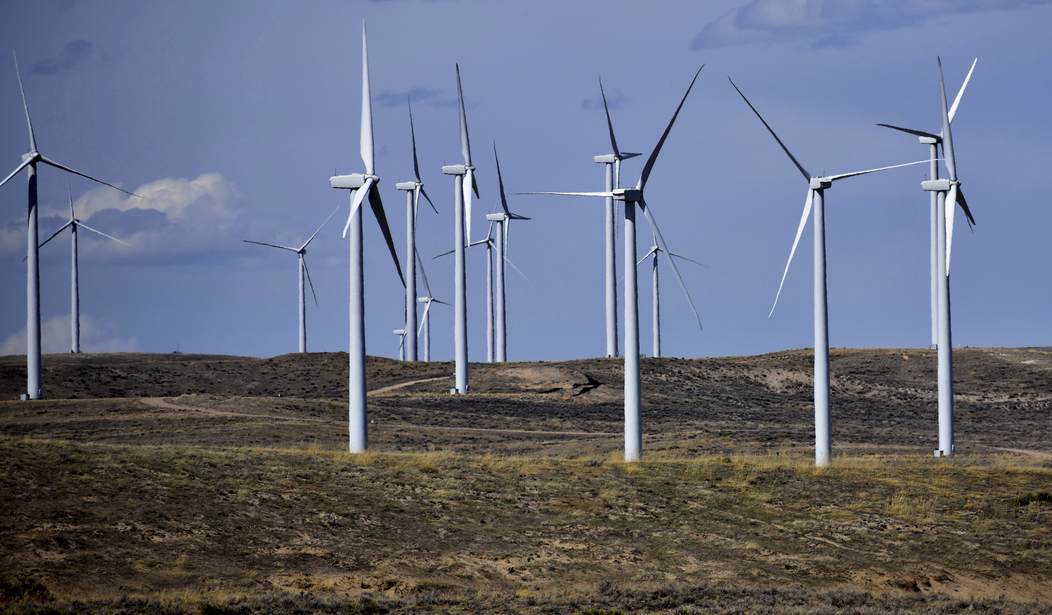
President Donald Trump's tax law set July 4, 2026, as the deadline ending federal tax credit subsidies for new wind and solar projects not already under construction. U.S. Secretary of Energy Chris Wright called the deadline the end of roughly 35 years of federal support for wind and solar, and he noted that in 2025 they comprised about 3% of total U.S. primary energy consumption. From Just the News:
The Working Families Tax Cuts, a signature piece of President Trump's tax legislation signed a year ago, set Saturday as the deadline for federal tax credit subsidies on any new solar or wind projects not currently under construction.
U.S. Department of Energy Secretary Chris Wright touted the subsidy deadline and criticized solar and wind energy projects in a video posted to social media Thursday.
"The wind doesn’t always blow, and the sun doesn’t always shine," Wright said. "They drive up the system costs and increase Americans' electricity prices."
From 2010 to 2023, solar and wind energy projects received more than $141 billion in government subsidies combined, according to an analysis by the Texas Public Policy Foundation. The projects received more in government subsidies than any other energy source in the United States, the group reported.
"Beyond their direct costs, subsidies are causing artificially low or negative wholesale prices, scarcity prices during periods of high demand and low wind and solar generation, inefficient use of existing assets, and increased transmission costs," Brent Bennett, a researcher at the Texas foundation wrote.
The original argument for subsidies was patience. Give the industry help, let technology improve, then let the market decide. After decades of federal support, taxpayers were still being asked to finance energy sources that need backup, transmission buildouts, land, materials, and favorable rules to compete.
Patience became a policy shift; policy drift becomes a bill the public never really got to vote on.
The White House executive order signed July 7, 2025, said federal policy would rapidly eliminate market distortions and taxpayer costs tied to green energy subsidies. The order directed the Treasury Department to strictly enforce the termination of clean electricity production and investment tax credits under sections 45Y and 48E for wind and solar facilities.
It also directed the Interior Department to review policies that favor wind and solar over dispatchable energy sources.
A Just the News report placed the cost in plain sight. Wind and solar subsidies were estimated at more than $141 billion from 2010 to 2023, more than any other energy source. Before the cuts, the Congressional Budget Office estimated the two programs would increase the federal deficit by $308 billion from 2026 through 2035.
Those figures should settle the basic question. Taxpayers shouldn't be forced to bankroll electricity that still struggles when demand peaks and weather refuses to cooperate. America needs power that can run steel mills, hospitals, data centers, farms, factories, and homes without asking families to pray for sunshine or a breeze.
Wind and solar have a role where they make sense. Let them compete; let investors risk their own money; let customers decide what they want to buy.
A market can handle that, but a rigged market can't keep asking the waitress, welder, truck driver, and retiree to carry favored industries on their backs while Washington calls the burden “progress.”
The next honest fight should include ethanol. The Renewable Fuel Standard isn't the same kind of tax credit, but it still uses federal power to force a market.
EPA Administrator Lee Zeldin finalized 2026 and 2027 Renewable Fuel Standard volumes at the highest levels in history. U.S. Secretary of Agriculture Brooke Rollins said the rule is expected to create a $3 billion to $4 billion increase in net farm income, while the EPA said it would maintain the 15 billion gallon conventional biofuel level for 2026 and 2027.
Today at the White House Great American Agriculture Celebration, President Trump announced that U.S. Environmental Protection Agency (EPA) has finalized the historic Renewable Fuel Standard (RFS) “Set 2” final rule. The final rule realigns the program with Congress’ original intent—increasing the use of homegrown American biofuels—putting American farmers first and promoting American energy independence. In the 20th year of the RFS program, “Set 2” establishes the renewable fuel volume requirements for 2026 and 2027 at the highest levels in program history. EPA’s final rule demonstrates the Trump administration’s ongoing commitment to America’s farmers and unleashing American energy by reducing America’s reliance on foreign oil, delivering long-term certainty and stability for America’s farmers and biofuel producers, and ultimately creating a path for rural economies to boom.
“President Trump promised a Golden Age of American agriculture. Once again, his administration is delivering. Overall, ‘Set 2’ creates a larger, more stable, and more reliable domestic market for U.S. crops, strengthening farm income and rural economies,” said EPA Administrator Lee Zeldin. “For 20 years, this program has diversified our nation’s energy supply and advanced American energy independence. EPA is proud to deliver on this mission and to do so at historic levels.”
“Today’s announcement is truly historic for our nation’s farmers and energy producers. These numbers represent the highest levels of biofuels ever required to be blended into our fuel supply,” said U.S. Secretary of Agriculture Brooke L. Rollins. “With President Trump and Administrator Zeldin’s leadership, these historically high volumes are expected to create a $3 to $4 billion dollar increase in net farm income. The Renewable Fuel Standard Set 2 Rule will create a $31 billion dollar value for American corn and soybean oil for biofuel production in 2026, which is $2 billion more than in 2025. Our farmers are stepping up to grow American energy dominance.”
Under Administrator Zeldin’s leadership, the agency has been working tirelessly to further America’s energy independence and future, and these new requirements are another major step in that direction.
Farmers deserve respect; corn growers aren't villains; rural America has been battered by fuel prices, fertilizer costs, interest rates, and years of policy chaos. Respecting farmers doesn't require pretending every mandate is wise forever.
If Washington is finally willing to question subsidies for wind and solar, it should also question every energy mandate that hides costs inside fuel prices, compliance credits, and political favors.
The U.S. Energy Information Administration said higher blending targets drove Renewable Identification Number prices close to record highs in 2026. It also forecast record-high production of fuel ethanol and renewable diesel because of high blend mandates, high gasoline and diesel prices, and rising production capacity.
America doesn't need an energy policy built around sacred cows. Wind, solar, ethanol, oil, gas, coal, nuclear, and hydropower should all face the same hard test: can they deliver reliable, affordable energy without turning taxpayers into unwilling investors?
Trump's July 4 deadline is a good start because it treats taxpayers like citizens with rights instead of wallets with legs.
Now keep going.
PJ Media is running a special right now. Get 74% off with promo code FIGHT and help keep independent conservative voices in the fight.



Join the Conversation
VIP members get the ability to comment on articles.