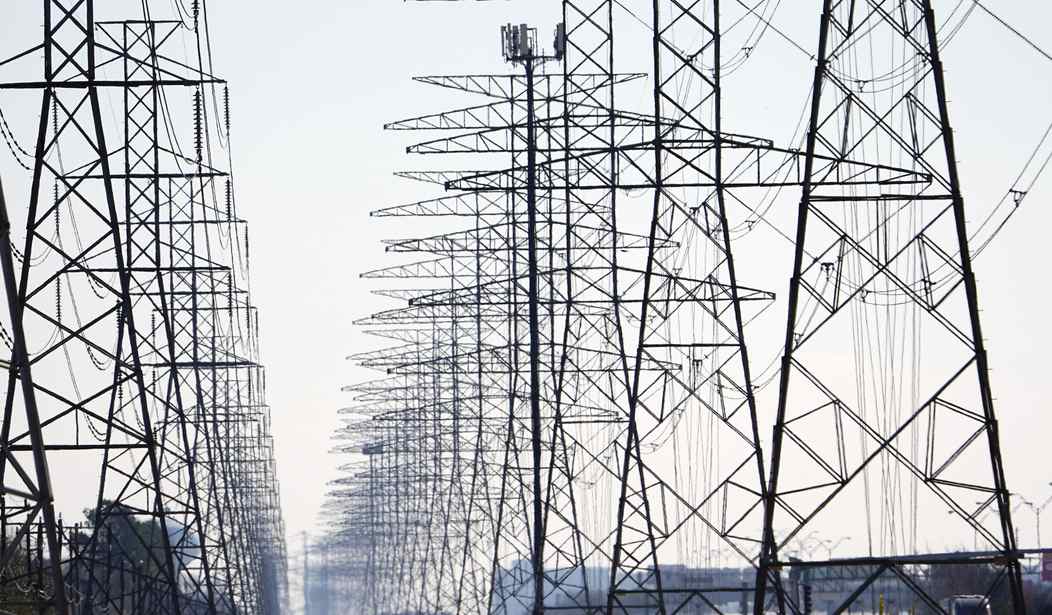

America's most advanced technology is making an old demand: build.
Data centers no longer sit offstage as quiet warehouses for the internet. They're becoming industrial campuses with massive appetites for electricity, water, cooling equipment, backup power, fiber, roads, skilled labor, and local patience.
Technology has changed how Americans work, travel, shop, learn, bank, and talk to each other. Now the infrastructure behind all of it has to catch up.
The numbers are no longer small enough for mayors, utility boards, or ratepayers to shrug off. Data centers used about 4.4% of all U.S. electricity in 2023, and federal energy analysts projected they could reach 6.7% to 12% by 2028. Power use climbed from 58 terawatt-hours in 2014 to 176 terawatt-hours in 2023. By 2028, the same category could draw 325 to 580 terawatt-hours. From Connected World:
The latest Black & Veatch 2026 Water Report paints a clear picture of the challenges ahead. Aging infrastructure remains the top concern for utilities. Funding gaps continue to widen. Confidence in serving large industrial customers has declined in recent years, while concerns about long-term water availability continue to increase. At the same time, utilities are being asked to support new economic development opportunities, including data centers, advanced manufacturing facilities, and energy-intensive industries.
This creates a convergence of challenges that cannot be solved in silos. Energy planners, water utilities, technology providers, and policymakers must begin viewing infrastructure as an interconnected ecosystem. Decisions made about data center siting, energy generation, water management, and grid modernization are no longer independent issues. They are part of a larger resilience strategy.
The good news is that innovation is creating new opportunities. Digital technologies are enabling utilities to better monitor assets, predict failures, optimize operations, and manage resources more efficiently. Advanced analytics can help forecast demand. Intelligent sensors can provide realtime visibility into water and power systems. Digital twins can help planners model future growth scenarios before investments are made. These tools provide the visibility needed to make smarter decisions and maximize existing infrastructure investments.
AI turns the pressure higher; global data center electricity use reached about 415 terawatt-hours in 2024, or 1.5% of global electricity demand, and could more than double to 945 terawatt-hours by 2030.
The uncomfortable part is speed; a data center can come online in two to three years. New generation, transmission lines, substations, water upgrades, and permits often move on a much slower clock.
The grid is where the promise meets the bill. The Federal Energy Regulatory Commission ordered all six regional grid operators on June 18 to justify or reform tariff rules for data centers and other large energy users. From FERC:
The Federal Energy Regulatory Commission (FERC) today issued tailored show cause orders under section 206 of the Federal Power Act to each of the six regional grid operators under its jurisdiction, directing them to justify or reform the rules that govern how data centers, manufacturing facilities, and other large energy users connect to the electric grid.
The orders mark one of the most significant actions the Commission has taken to modernize the nation's electric markets and push the economy into the future by speeding integration of large energy users onto the grid with additional rigorous consumer safeguards. By requiring Regional Transmission Organizations (RTOs)/Independent System Operators (ISOs) and their transmission operators to either defend or revise their tariffs, FERC is moving to ensure that Americans have reliable, affordable power—even as electricity demand and technology accelerates.
Today's orders advance the Secretary of Energy's Advance Notice of Proposed Rulemaking directives, delivering the speed to power that is critical to supporting the innovation economy, leading the global race on artificial intelligence, and reshoring manufacturing jobs back to the United States.
“We are setting the stage for a resilient, reliable, and forward-thinking grid that empowers communities and safeguards consumers by transforming the way large energy users access the grid. It also is critical that FERC provide certainty for investors by directing the markets to protect existing deals and unlock opportunities for technological advancement and economic expansion. We can facilitate both, which is exactly what we did today,” said FERC Chairman Laura V. Swett.
FERC's action focuses on the unique operational profiles of large energy users, including those co-located with their own generation, and on the distinct challenges each regional grid operator faces in meeting soaring demand from the proliferation of large loads. Because the six grid operators are unique in their individual advancement toward large load innovation and structure, market design, stakeholder composition and geography, the Commission's orders recognize that a one-size-fits-all solution is not the current most efficient solution for integrating large, energy-intensive loads onto the nation's electric grid.
The FERC framed the action around faster access to power, investor certainty, and safeguards for consumers. Those three goals have to travel together. Speed without cost discipline lands on household electric bills.
President Donald Trump's July 2025 executive order pushed faster federal permitting for major data center infrastructure. U.S. Energy Secretary Chris Wright later directed FERC to begin rulemaking to speed large-load interconnections, including data centers, while advancing affordable and reliable electricity.
The direction is clear; Washington wants America to win the AI race, but even a national priority still needs copper, concrete, turbines, transformers, and crews.
Regional stress will decide whether the boom becomes strength or backlash. PJM Interconnection, which manages the grid across parts or all of 13 states and the District of Columbia, projects summer peak load growth of 3.6% per year over the next decade.
Its forecast reaches 222,106 megawatts in 2036, a 65,733-megawatt increase. Growth tied to data center load already appears in several local zone adjustments.
Water brings another hard question; many data centers need large cooling systems, and large facilities can consume millions of gallons per day. Local water systems already face aging pipes, funding gaps, drought stress, and rising demand from homes and industry. From the World Resources Institute:
Data centers require huge amounts of water to keep servers cool enough to function. Mid-sized facilities can use up to 300,000 gallons of water a day, while large facilities can consume as much as 5 million gallons daily — comparable to what a small town uses. Recent estimates project that by 2028, AI-related data centers in the U.S. could require up to 32 billion gallons of water annually. This is enough to support roughly 360,000 households’ indoor water use.
This massive demand is a pressing problem for communities already facing drought or depleting water supplies. Two-thirds of all data centers built or in development since 2022 are located in water-stressed areas like southern Arizona, the Colorado River Basin and Texas.
This has prompted public concern and governance action in some communities. In South Carolina, for example, residents near an overdrawn aquifer sought limits on data center ground water withdrawals. Others are asserting greater oversight through water-use monitoring, drought contingency planning, and site-specific water risk assessments that evaluate impacts on local water supplies. Some data centers are using cooling approaches that reduce water demand, such as traditional air cooling or liquid immersion. Others are leveraging reclaimed wastewater from utilities instead of drawing from local supplies.
A community can welcome jobs and investment while still asking who pays for water upgrades, emergency capacity, backup systems, and long-term supply.
The answer can't be reflexive opposition. Data centers support hospitals, banks, farms, factories, small businesses, schools, national defense, and nearly every phone in every pocket.
America needs them.
Yet need doesn't erase duty; developers should pay their fair share of grid and water upgrades. Utilities should be transparent about costs. Local officials should demand firm plans before celebrating ribbon cuttings.
The future may be digital, but the load-bearing work remains stubbornly physical. Build wisely, or the bill will arrive in the mailbox before the benefits reach Main Street.