





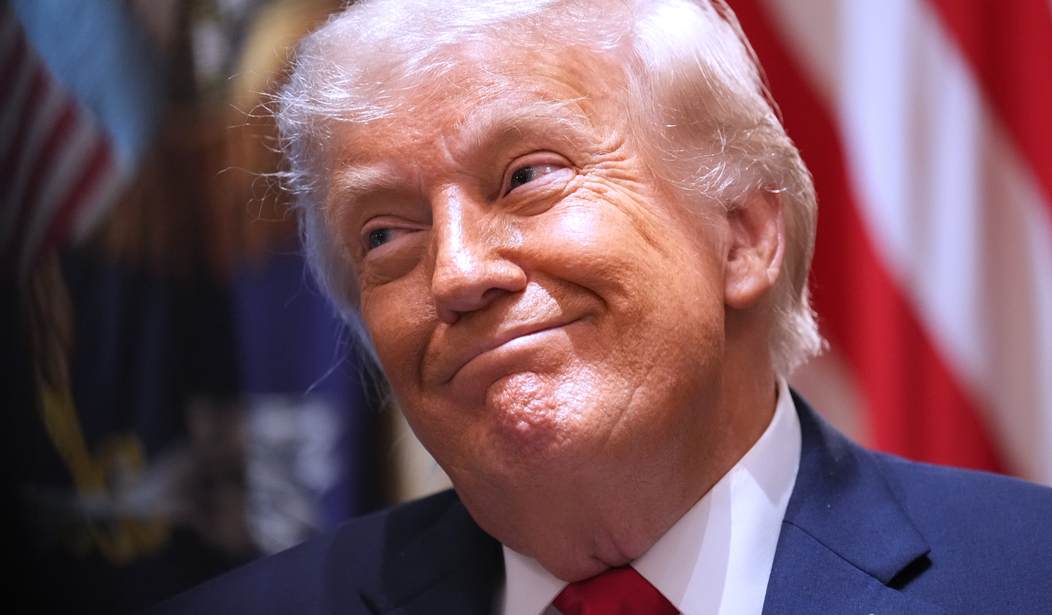
Axios is reporting that President Donald Trump's administration appears ready to drop the proposed $1.776 billion Anti-Weaponization Fund, and the move may prove smart. The concern behind the fund remains real: Federal power did get used as a political weapon, and Americans deserve answers, names, records, hearings, firings, and prosecutions where evidence supports them. From Just the News.
The Trump administration is reportedly planning to cancel plans to create a $1.776 billion "anti-weaponization fund" amid bipartisan backlash, Axios reported, citing "two senior administration officials."
The Department of Justice announced the fund as part of a settlement to President Donald Trump's lawsuit against the IRS over the leak of his tax returns by contractor Charles Littlejohn, who pleaded guilty.
Originally intended as a fund to allow the victims of alleged political weaponization by the Biden DOJ, the fund drew backlash from Republican and Democratic lawmakers alike over concerns it could be used to enrich Trump allies.
Yet even a well-intended remedy can become a political trap when critics get to define it before victims ever get heard.
Acting Attorney General Todd Blanche announced the fund on May 19 and described it as a process for people harmed by lawfare and government weaponization. The Department of Justice said the settlement would create a path for claims tied to political targeting.
The purpose makes sense.
People crushed by selective prosecution, federal pressure, or political intimidation shouldn't have to absorb the damage quietly while the officials who caused it retire with pensions and book deals. The trouble came from the structure, not the principle.
U.S. District Judge Leonie Brinkema temporarily blocked the fund on May 29 after a challenger argued the program lacked legal authority and could allow poorly supervised payouts. U.S. District Judge Kathleen Williams also reopened Trump's IRS case to examine the settlement behind it.
Those moves didn't prove the fund was wrong; they did prove the plan had become vulnerable, and vulnerability in Washington has a way of swallowing the original purpose.
Senate Majority Leader John Thune (R-S.D.) and other Republicans questioned the fund's broad reach. Rep. Brian Fitzpatrick (R-Pa.) asked Blanche for more transparency. Senate Minority Leader Chuck Schumer (D-N.Y.) attacked the fund as corrupt and promised a fight. Schumer's outrage was predictable, but Republican caution deserved attention because it showed how easily the fund could shift the debate away from weaponized government and toward the mechanics of compensation. From the Associated Press.
Senate Republicans who are returning to Washington on Monday say they won’t have the votes to pass the Homeland Security spending bill until the White House works with them to place parameters on a new $1.776 billion settlement fund designed to compensate Trump’s allies. But Trump has shown little interest in doing so, even after a judge temporarily halted any payouts.
It’s unclear how they will settle the dispute.
The Trump administration is “going to have to come up with some suggestions and ideas,” Senate Majority Leader John Thune said before the Senate left town on May 21. Thune, of South Dakota, said that the settlement money — some of which could potentially go to Trump supporters who beat police and attacked the Capitol on Jan. 6, 2021 — “just makes everything way harder than it should be.”
The impasse over the “anti-weaponization” fund could be an inflection point as Republicans try to keep their majority in this year’s elections and advance their agenda. Trump’s campaign year push to defeat GOP lawmakers who he sees as disloyal, including some of Thune’s most reliable Republican votes in the narrow 53-47 Senate, has only added to the tension.
Trump has a stronger lane available: investigate the abuses, release the records, put officials under oath, let inspectors general dig, let prosecutors bring cases where the facts meet the law, and fire federal employees who misused power.
FBI Director Kash Patel can keep weaponizing concerns near the center of bureau reform, and Blanche can pursue accountability without giving opponents a clean opening to call the whole effort a payout scheme.
Trump's opponents want the argument to move away from FBI abuse, IRS misconduct, selective prosecution, and federal retaliation. A $1.776 billion fund makes that easier for them; when every hearing could become a fight over “payouts,” every victim could get buried under questions about eligibility, favored allies, and who approved the checks.
Trump doesn't need to carry extra weight into a fight he can win with documents, witnesses, sworn testimony, and the record left behind from the Biden years.
Victims of weaponized government deserve justice, and a future compensation process may still deserve consideration if Congress builds it with clear limits, public oversight, and narrow rules.
For now, the better path runs through exposure and accountability; Congress can hold hearings, agencies can release files, prosecutors can pursue charges, and judges can review misconduct.
The Trump administration has many lawful ways to prove that federal power punished enemies and protected friends. Pulling back from a politically vulnerable fund doesn't mean retreating from the fight.
It keeps the focus where it belongs.
President Trump appears ready to drop the Anti-Weaponization Fund before critics turn it into a gift. The weaponization fight remains real, but a $1.776 billion taxpayer fund gave the other side an opening. PJ Media VIP brings sharper analysis without the corporate filter. Use promo code FIGHT for 60% off.



Join the Conversation
VIP members get the ability to comment on articles.